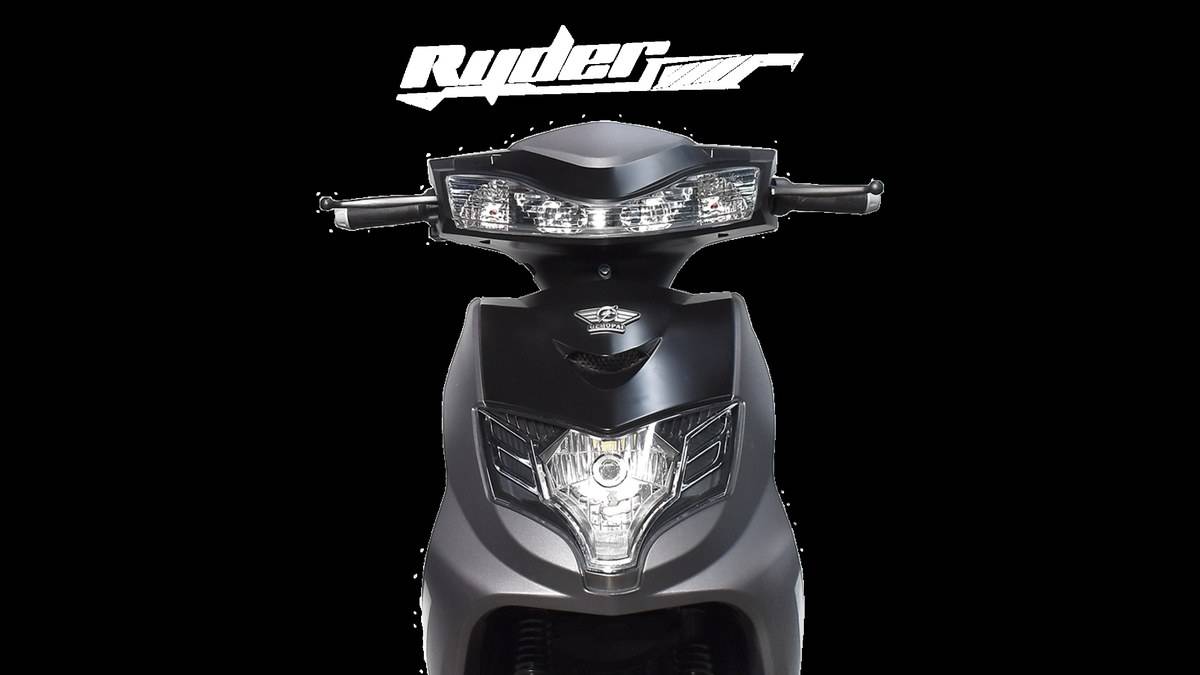
NEW DELHI: Gemopai's Ryder starts lower at Rs 70,850 ex-showroom, while Ryder Supermax is listed from Rs 79,999 on the official homepage. Despite their shared name and several common features, the published speed and motor specifications describe markedly different commuting propositions. This compares regular prices; conditional figures are separate.
| Item | Official listing |
|---|---|
| Ryder, regular starting ex-showroom | Rs 70,850 |
| Ryder Supermax, regular starting ex-showroom | Rs 79,999 |
| Listed maximum speed, Ryder / Supermax | 25 kmph / 60 kmph |
| Listed motor, Ryder / Supermax | 250 W / 2.7 kW peak |
| Manufacturer range claim, Ryder / Supermax | 90 km / 100 km per charge |
| Listed vehicle weight, both | 80 kg |
| Listed maximum load, both | 120 kg |
Price as of 18 November 2026, 23:26 IST. The figures below are published website prices, not a personalised on-road quotation.
Two prices, different road-use questions
The table includes both models linked under the Ryder name in Gemopai's current product navigation. The regular prices match the corresponding product pages. Those pages also show lower effective figures, but the fetched material does not provide complete eligibility and validity terms. They are not used here to imply a universally available discount.
Ask that a quotation state Ryder or Ryder Supermax in full. A shared family name is not enough when the performance claims differ this substantially. Keep accessories and other delivery-related charges separate, and check that the demonstration scooter is the same model as the written estimate before comparing the totals.
The speed difference sets the context
For Ryder, plan a demonstration around the local streets where the vehicle would be used. Consider the traffic flow, junctions and the places where faster vehicles would need to pass. The task is to establish whether the intended journey suits the scooter's published capability, rather than deciding solely from the lower starting price.
For Supermax, the more useful questions concern how the scooter accelerates into ordinary traffic and how comfortable the rider feels using the controls. A claimed top speed is not a recommendation to travel at that speed. Use a controlled, appropriate test route and assess the way power arrives when starting, slowing and turning.
The motor fields use different descriptions, so the table preserves them. It would be misleading to turn a listed motor rating and a peak-output claim into a simple numerical performance ratio. A direct riding comparison is more informative than presenting unlike labels as if they were a laboratory test under identical conditions.
Common equipment does not make them interchangeable
Both pages list a front disc and rear drum brake, keyless entry, central locking, USB charging and a digital colour display. Both also explicitly mark the side-stand sensor as absent. At handover, have the locking and display functions demonstrated, and understand the starting procedure rather than assuming an interlock that the equipment sheet does not promise.
The common loading figure deserves attention if the scooter will routinely carry a pillion or shopping. Ask the seller to explain how the limit is applied to rider, passenger and luggage. Then try the seating and foot placement with the people who will actually use the vehicle. A similar outline in photographs does not settle comfort.
Range and charging claims need careful reading
The range figures are manufacturer claims, not measured results from this desk. Compare them with the complete routine, including the return journey and unscheduled stops. A small difference between advertised distances does not establish how either scooter will behave on a particular road, with a particular rider or battery condition.
The Ryder page contains a conflicting acceleration entry that refers to a speed above its own listed maximum. This guide excludes that entry. Obtain the correct model specification in writing instead of treating the conflict as evidence of hidden performance. The maximum-speed field remains the relevant published reference for the comparison here.
Charging descriptions on the product pages and homepage are also not sufficiently consistent to support a dependable model-specific charging-time comparison. Ask for the charger supplied with each quoted scooter and a written explanation of the charging interval. Do not assume a quick-charge claim applies to every charger or to a complete charge.
A useful comparison against another model
The Astrid Lite is also shown on the official Gemopai homepage from Rs 1,11,195 ex-showroom. It serves as a reference above the Ryder pair, but comparing it should begin with a physical demonstration and the intended route. Moving to another price point is useful only if it resolves an identified need in the current shortlist.
For either Ryder, check parking access and the charging process alongside the ride. Ask the regular user to handle the scooter while stationary, reach the controls and place the items normally carried. These exercises help distinguish a convenient local vehicle from a scooter that looks attractive on paper but asks compromises on the actual journey.
What should settle the shortlist
Keep the model name, regular price, included equipment and any conditional reduction on the same written estimate. Separate promotional arithmetic from the basic vehicle comparison. The choice between Ryder and Ryder Supermax should follow from the route and the demonstrated behaviour, because their shared badge conceals a much larger capability difference than their appearance alone suggests.
Related reading: Scooter and bike price guide; TVS Zest price list: Rs 71,350 to Rs 78,400; Hero Xoom 125 price list: Rs 84,294 to Rs 88,150.
Official sources: Gemopai Ryder Supermax and Ryder product page; additional official model information; additional official model information.