
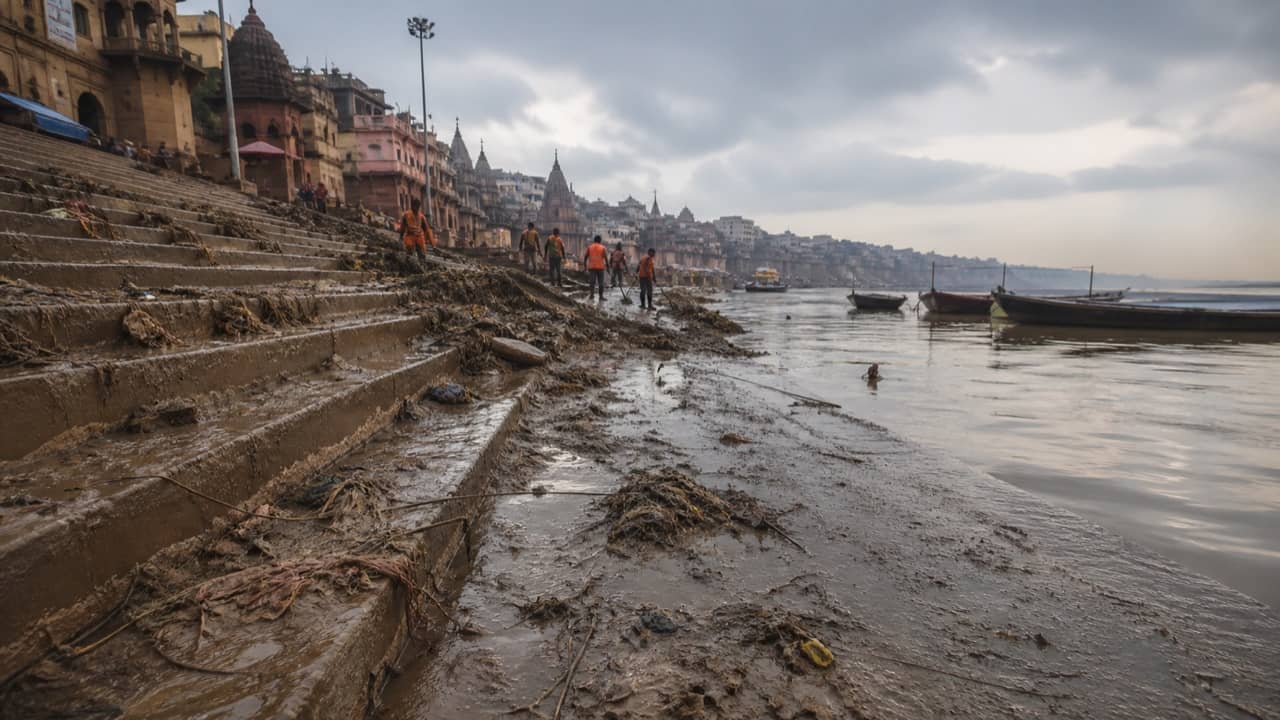
VARANASI: The Ganga's level dropped by roughly 80 centimetres over 24 hours, offering measured relief after weeks of flood anxiety and allowing some families affected along the Varuna to begin returning home. The retreat is visible on the ghats, but it has not restored normal life: mud, waste and damp walls remain, and some households are still staying in relief shelters.
The source report said the decline was continuing and that displaced residents were assessing homes as water moved out of low-lying areas. Ghat steps emerged coated in silt, while debris left by the flood complicated access. Families returning near the Varuna faced the practical work of checking walls, wiring, drinking-water sources and stored food before rooms could be used safely.
A receding river changes the city's risks rather than ending them. The current may remain strong at the edge, newly exposed stone becomes slippery and a thin crust can hide deep mud. Inside flooded homes, plaster may fall without warning and electrical systems can stay dangerous after surfaces look dry. The urge to clean quickly must be balanced against structural and health checks.
Flood recovery in Varanasi is uneven because elevation changes sharply across short distances. One lane may reopen while the next retains water. Ganga levels also affect the Varuna and local drains, so a fall at one gauge does not instantly empty every neighbourhood. Upstream rainfall can slow or reverse the trend, making continued bulletins essential even during a visible decline.
Civic teams now need to shift from rescue to cleaning without withdrawing support too early. Silt removal, disinfection, carcass disposal and restoration of toilets and hand pumps should be prioritised before cosmetic washing. Relief shelters should remain available until a family's home is actually safe, not merely accessible. Returning residents need a clear channel to request an electrical inspection or report a cracked wall.
The administration should publish locality-level recovery updates: which roads are open, where tankers are operating and when waste will be lifted. Health teams should watch for diarrhoeal illness, skin infections and fever. Damage assessment must include tenants and informal workers whose tools, stock or documents were lost, not only property owners with visible structural damage.
Residents entering a flooded home should switch off the main electricity supply from a dry location, photograph damage before clearing it and discard food or medicine touched by floodwater. Children should be kept away from exposed mud and sharp debris. The 80-centimetre fall is encouraging, but recovery begins where the water stops; it does not finish there.
This report is based on a Live Hindustan account published on 26 August 2026. Dalimss News independently rewrote, checked and contextualised the available information. Where a claim, allegation or opinion is attributed to a person or institution, it remains their statement; no on-scene reporting or independent interview is claimed.