Five-Station Underground Metro Plan Links Gurugram to Airport Line
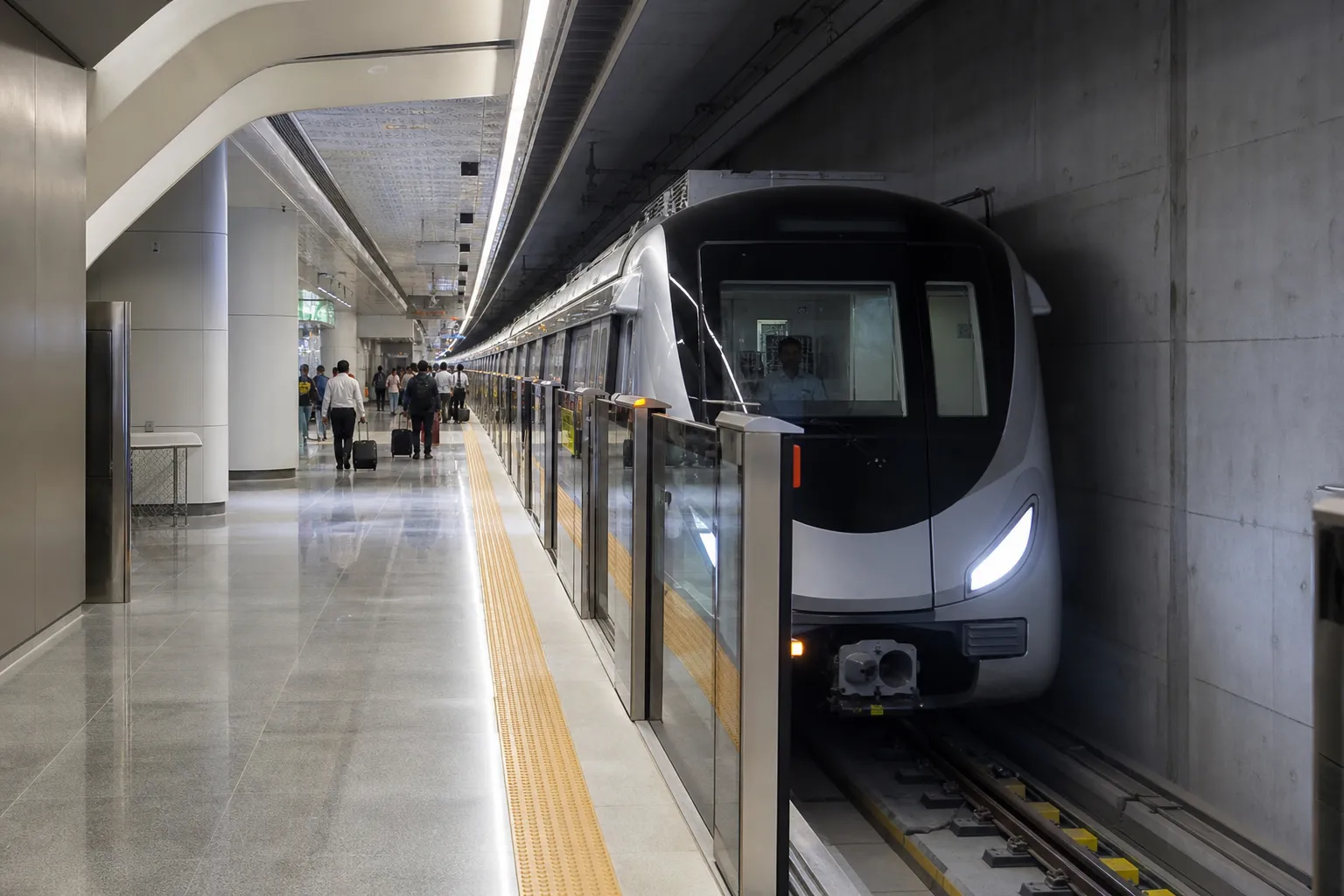
Gurugram's long-discussed airport metro connection has acquired a defined route, price tag and station list. A merged draft detailed project report proposes a roughly 20-kilometre underground corridor from Yashobhoomi to Rajiv Chowk, stopping at Bijwasan, Kapashera, Sector 22 and IFFCO Chowk before reaching the city centre.
The corridor is estimated to cost about Rs 13,500 crore and has been sent by Delhi Metro Rail Corporation to Haryana Mass Rapid Transport Corporation for finalisation. It would effectively extend rapid transit from the Airport Express ecosystem into Gurugram's employment and residential core, giving commuters an alternative to the NH-48 bottleneck.
For residents near Dwarka Expressway, the proposal addresses a mismatch that has deepened with every new tower: housing and offices have expanded faster than dependable mass transport. Sector 22 is the only Gurugram stop listed between the Delhi border and IFFCO Chowk, so interchange design, feeder buses and safe walking access will decide how useful the line is beyond people living close to a station entrance.
The all-underground choice reduces conflicts with surface roads and dense development, but it also raises cost and construction complexity. Utility mapping, land for entry structures, ventilation shafts, emergency access and traffic management around station boxes will need early coordination. A clean line on a DPR map can become a messy neighbourhood project if agencies begin shifting services after excavation starts.
A separate 8.4-kilometre proposal from Rezangla Chowk in Palam Vihar to Dwarka Sector 21 remains under consideration. Haryana had cleared that spur in 2022 at an estimated Rs 1,851 crore. The two concepts should not be casually presented as a single approved network: they have different alignments, costs and decision histories, and both still require a final central call.
The five-station plan also leaves important operational questions open. Authorities have not yet announced a construction start, completion target, fare integration model or final interchange arrangement at Rajiv Chowk. Nor has the public seen a detailed ridership forecast explaining how many airport-bound travellers, office commuters and local passengers are expected to use each station.
Gurugram already has a metro project under construction between Millennium City Centre and Cyber City. The airport corridor will be most valuable if it is planned as part of that broader network rather than another disconnected line. Seamless tickets, short interchange walks and coordinated service hours matter almost as much as kilometres built.
The merged DPR is real progress because it turns several competing ideas into a route that can be evaluated. It is not, however, a construction approval. The next milestones are technical finalisation, funding, Union government clearance and a transparent delivery schedule. Until then, the city has a serious plan for an airport metro, but not yet a train date.
Sources and reporting
Based on the merged draft DPR prepared by DMRC and submitted to HMRTC, including the reported alignment, station list, estimated cost and pending central approval.
Related Stories
Four Held for Stone Attack on Manesar Drive
GMDA Plans Rs 20 Cr Dwarka Sector Road Works
Metro Phase-2 Tender Delay Puts 2029 at Risk
SC Flags IAF Depot Buffer Encroachments
DTCP Seals 17 Sites in Sushant Lok Drive