Five Held As Police Trace Fresh Interstate Mule-Account Network
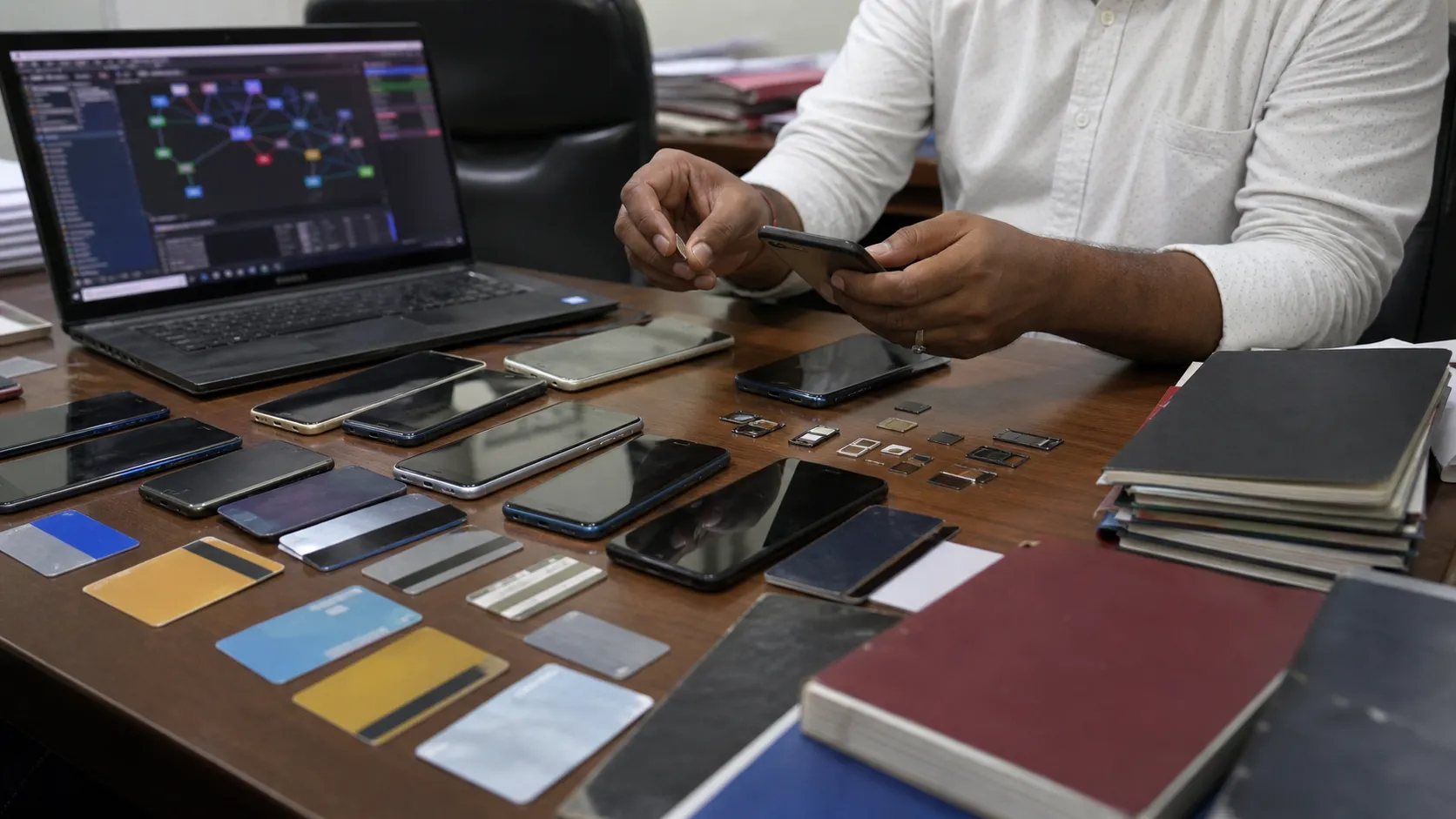
VARANASI: The city’s cyber crime police have arrested five people in a fresh interstate investigation into bank accounts allegedly opened in the names of financially vulnerable residents and then handed over for use in online fraud.
Police said the group approached people who needed money and offered payment in return for opening accounts. Once an account became active, the operators allegedly collected its ATM card, passbook, cheque book, registered SIM card and internet-banking details. That gave them effective control while the account continued to exist in another person’s name.
The five arrested men are residents of Varanasi, Mirzapur, Azamgarh, Muzaffarnagar and Mau, underlining the networked nature of the case. Police have alleged that the controlled accounts were supplied to cyber criminals operating in India and abroad. Investigators are now examining transactions, devices and contacts to establish how many accounts moved through the chain and which fraud complaints may be connected.
According to the police account, transaction applications supplied by foreign associates were installed on devices linked to the registered mobile numbers. The arrangement allegedly allowed remote access to accounts and helped money move through several layers. Such layering is designed to make a victim’s payment difficult to follow after it leaves the first recipient account.
During questioning, the accused allegedly spoke of commissions linked to the value of the money routed through an account. Police also suspect that two vehicles recovered in the case were purchased and maintained using the proceeds. Those claims remain part of the investigation and will have to be tested through bank records and the legal process.
The recovery includes Android phones, iPhones, dozens of ATM cards, passbooks, cheque books, SIM cards, a laptop, cash, a diary and two vehicles. A case has been registered under relevant provisions of the Bharatiya Nyaya Sanhita and the Information Technology Act. The accused are entitled to due process, and the allegations are yet to be established in court.
For residents, the case is another warning that “renting” a bank account is not a harmless shortcut. The person whose documents and mobile number are attached to an account may become the first visible link when a fraud victim files a complaint. Even if someone did not make the fraudulent call, surrendering banking access can bring account freezes, police questioning and serious legal exposure.
Banks repeatedly advise customers never to share passwords, one-time codes, SIM cards or debit cards. Job offers that ask a worker to receive and forward money should also be treated with suspicion. A legitimate employer does not need full control over an employee’s personal bank account.
The latest arrests are distinct from an earlier account-kit case reported in the city. They show why investigators are shifting attention from only the person who contacts a victim to the supply chain that allows stolen money to travel. Breaking that chain may be less dramatic than chasing a viral scam call, but it is central to making cyber fraud harder to run.
Related Stories

AISA’s Azamgarh meeting calls for teachers, laboratories and libraries

ABVP’s DUSU manifesto puts student housing and academic services on the campaign agenda

AP TET 2026 results released; check the correct examination cycle

Supreme Court Sets January 1 Deadline to Vacate Unsafe Chintels Flats

Human Rights Panel Orders Citywide Audit of Gurugram Drains