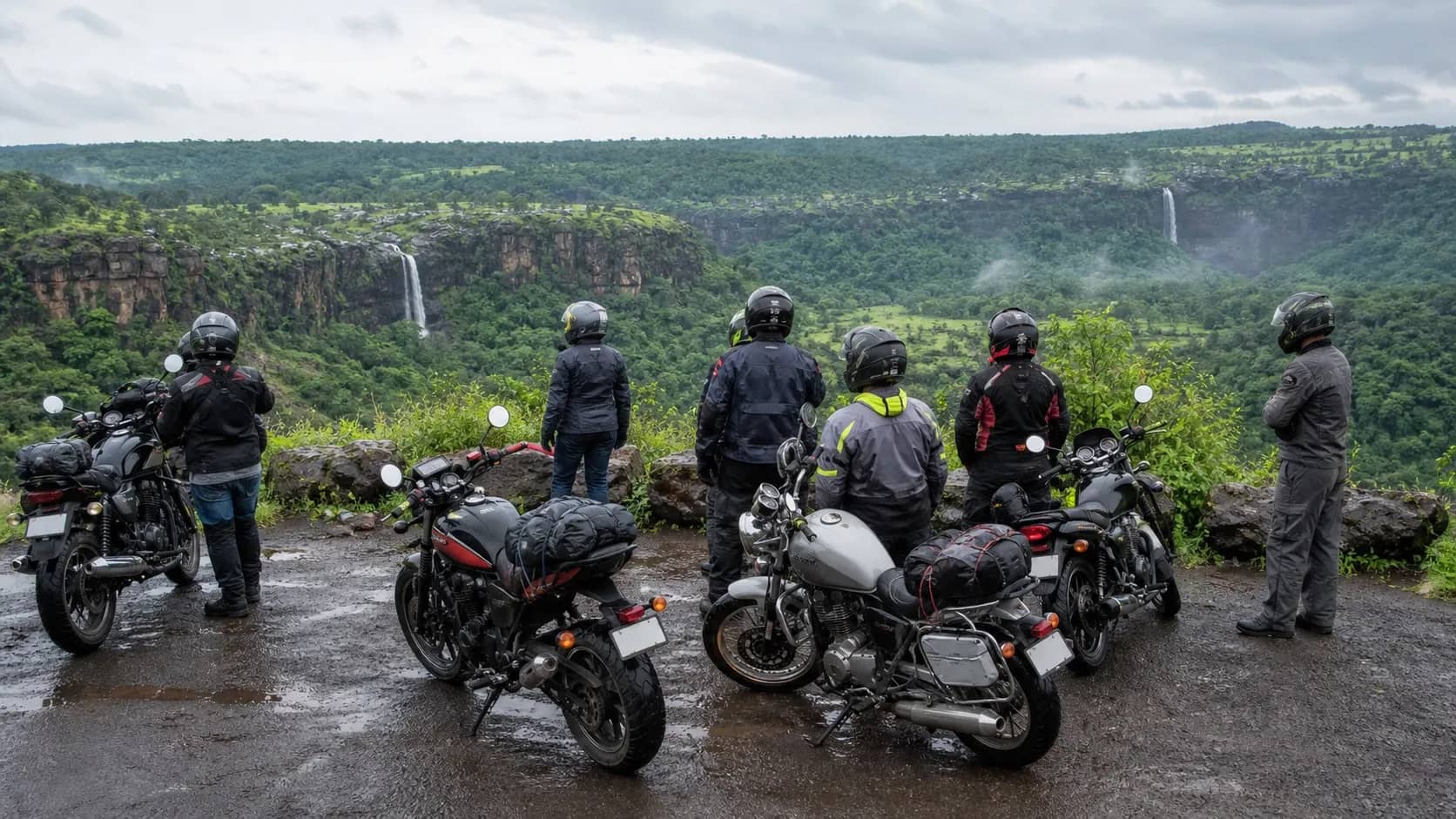
VARANASI: A group of 80 motorcycle riders completed a two-day tour of historical and natural sites around Varanasi, linking Sarnath, Chunar, Shooltankeshwar and the forested waterfall belt of neighbouring Chandauli in a single weekend circuit. The riders travelled from Lucknow through Sultanpur and Jaunpur before entering the Varanasi region.
The itinerary began with Sarnath, where the group visited the Buddhist archaeological zone associated with the Buddha’s first sermon. From there, the riders moved towards Chunar Fort, the sandstone stronghold overlooking the Ganga in Mirzapur district. The fort’s layered history and the river road offered a sharp contrast to the highway stretch that had brought the convoy from the state capital.
After an overnight stay in Kashi, the group visited Shooltankeshwar Mahadev and attended Ganga aarti. The final leg headed towards the Rajdari and Devdari waterfalls in Chandauli, where the plateau landscape changes rapidly during the rains. Participants Harshvardhan Gupta and Garima described the route’s greenery and security arrangements positively, according to the organisers’ account.
The ride is a useful reminder that Varanasi’s tourism economy extends well beyond the old city. Within a few hours, travellers can move from a major Buddhist site to a medieval fort, a riverside shrine and seasonal waterfalls. Yet these places are often promoted separately, leaving visitors to piece together transport, timings and safety information on their own.
Motorcycle groups are increasingly building such circuits because two-wheelers make short detours and rural stretches easier to manage. They also bring a different kind of spending to the region: fuel stops, roadside eateries, local guides and small hotels all benefit. The model works best when organisers keep group sizes controlled, plan parking in advance and avoid disrupting village traffic or sensitive heritage zones.
The monsoon makes the Chandauli end of the route especially attractive, but it also adds risk. Slippery rock, sudden water flow and poor visibility can turn a scenic stop into an emergency. Riders and day visitors should follow local restrictions, stay away from the edge of waterfalls and resist entering streams during heavy rain. Helmets and protective gear remain essential even on short rural sections.
For the administration, the route highlights a practical tourism opportunity. Accurate maps, marked rest points, clean toilets and real-time advisories would make it easier to disperse visitors across the wider region. Chunar and Chandauli do not need to imitate Varanasi’s busiest attractions; their value lies in offering slower, landscape-led experiences that complement the city.
The 80-member convoy has now returned after completing the circuit. No major incident was reported in the account of the ride. Its larger takeaway is simple: with careful planning and responsible road behaviour, a weekend journey can reveal how closely Varanasi’s religious, archaeological and natural geographies are connected.