Drones and AI Join Varanasi’s Shrawan Security Plan
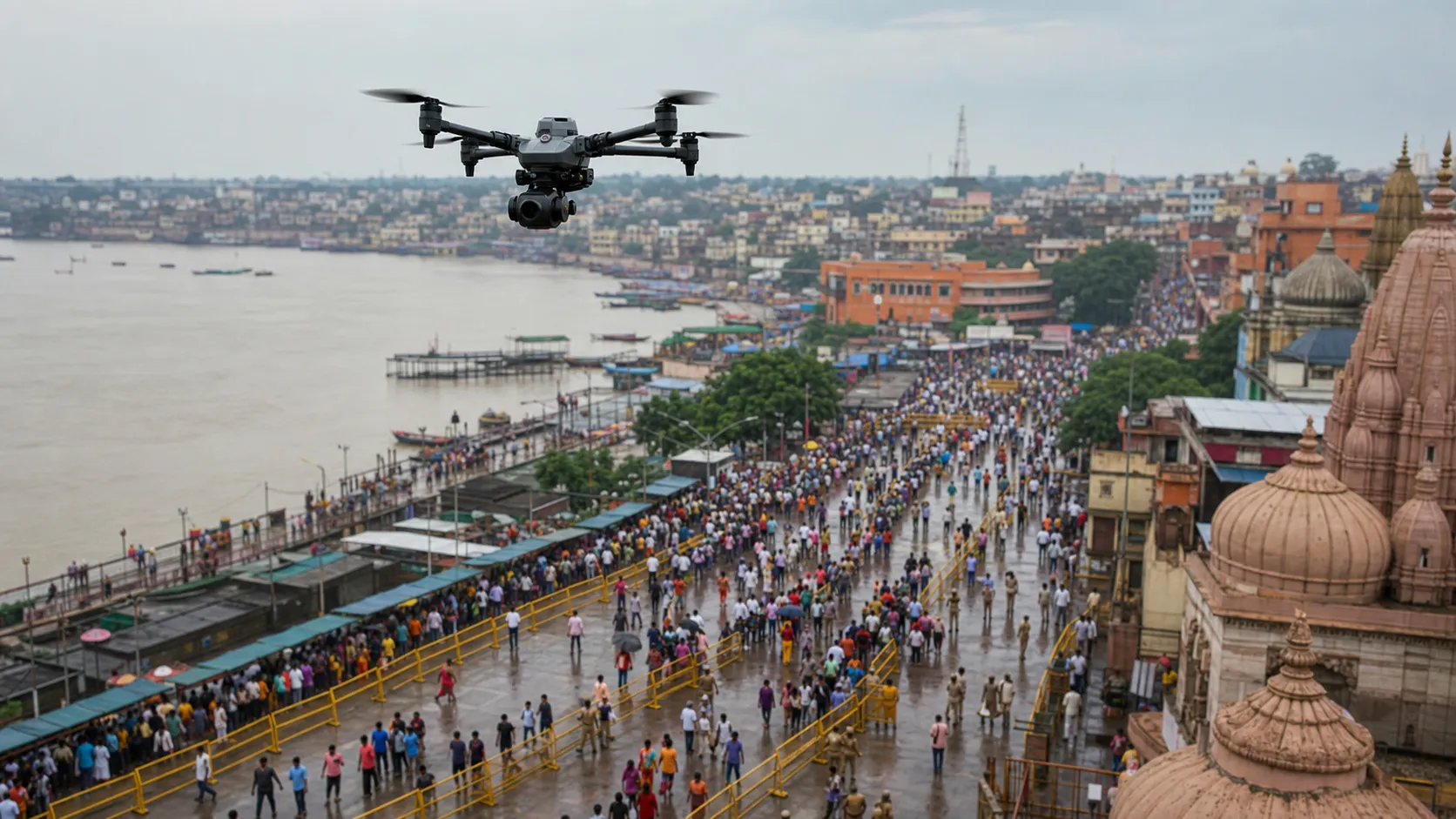
VARANASI: The city’s Shrawan security plan will extend from the lanes to the river and the air, with police preparing a round-the-clock network of drones, artificial-intelligence tools and camera systems around Shri Kashi Vishwanath Temple, major ghats and pilgrimage routes.
Police Commissioner Mohit Agarwal has said that the temple premises will be protected through geo-fencing, creating a virtual restricted zone around one of the most sensitive and crowded parts of Kashi. Private drones will not be allowed to fly without permission. An anti-drone system is expected to respond if an unauthorised device enters the protected area.
Ten drones available with the Varanasi Commissionerate will be used to watch temple approaches, prominent ghats, traffic movement and crowd flow. Two tethered drones are also planned at strategic points. Unlike regular battery-operated drones that return after a short flight, a tethered unit can remain in the air and transmit a continuous live feed. Officials say the system can observe an area of up to four kilometres from a height close to 400 metres.
The camera network adds another layer. Automatic number plate recognition systems at city entry points will help identify vehicles, while face-recognition cameras at major crossings and sensitive locations are intended to flag persons of interest. AI-assisted monitoring will also look for unusual patterns, including somebody remaining at the same point for an extended period, so that control-room teams can alert officers on the ground.
The technology is being deployed for a difficult public-space problem. Shrawan brings lakhs of devotees into a compact old-city zone where temple queues, neighbourhood traffic, emergency vehicles and ghat movement have to coexist. A camera may spot a crowd building up, but the response still depends on field personnel opening an alternative route, holding a vehicle stream or guiding pedestrians before a narrow lane becomes unsafe.
That is why the live feed and the control room will be central to the plan. The practical value of AI will be measured by how quickly its alerts reach the right team and whether officers can distinguish a genuine risk from normal festival behaviour. Clear public announcements and visible route signs will remain essential, especially for visitors unfamiliar with Kashi’s lane network.
The restrictions also carry a direct message for residents, tourists and content creators: recreational drone filming near the temple zone is not a harmless activity during the month. Airspace control is part of the security arrangement, and unauthorised flying can interfere with official surveillance.
Varanasi has used cameras and integrated monitoring during earlier high-footfall occasions, but the Shrawan plan brings several systems together on a wider scale. The city is betting that earlier detection, not last-minute crowd control, will keep the pilgrimage safer and the surrounding streets more manageable.
Related Stories
Supreme Court Sets January 1 Deadline to Vacate Unsafe Chintels Flats
Human Rights Panel Orders Citywide Audit of Gurugram Drains
Manesar Demolishes Unauthorised Concrete Plant in Nawada

MCG Cuts Small-Load Construction Waste Fee to Rs 50 Per Tonne
Gurugram Sanitation Workers Return as Haryana Strike Ends