Diplomatic Row Erupts as India Rejects Pakistan President’s Remarks on Varanasi Mosque
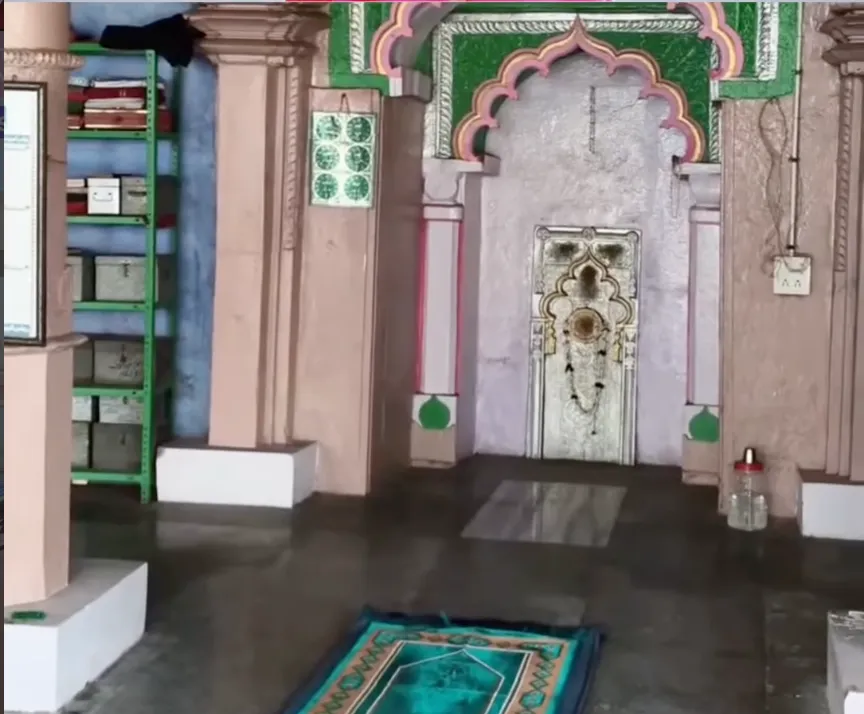
NEW DELHI / VARANASI — A sharp diplomatic crossfire has broken out between New Delhi and Islamabad following public remarks by Pakistani President Asif Ali Zardari regarding the Ganj Shaheeda Mosque in Varanasi.
The controversy stems from an eviction notice served to the historic mosque by Indian railway authorities, who have identified the site as an encroachment blocking a major station redevelopment project. What began as a local administrative and legal dispute has quickly escalated into a high-stakes bilateral issue.
The Spark: Zardari Warns of 'Perennial Chaos'
The diplomatic friction intensified after Pakistan President Asif Ali Zardari posted a statement on social media platform X expressing "deep concern" over what he described as targeted threats to historic Muslim religious sites in India.
Specifically highlighting the "1,000-year-old Masjid Ganj Shaheeda in Varanasi," Zardari urged Indian authorities to halt any demolition plans, protect minority rights, and preserve shared cultural heritage. He went on to warn that actions affecting such religious landmarks risk leading to the "disintegration and perennial chaos of India".
The Fireback: MEA Slams 'Absurd' Interference
India’s Ministry of External Affairs (MEA) delivered a swift and fierce counter-response, categorically rejecting the statements as a malicious intervention in its sovereign domestic matters.
MEA Official Spokesperson Randhir Jaiswal stated bluntly that the Pakistani President has absolutely "no locus standi" (legal or diplomatic standing) to comment on internal Indian affairs.
"These comments are particularly absurd given Pakistan's own abysmal record on human rights, which is a matter of global commentary," Jaiswal said. "Pakistan's long history of systematically targeting and victimizing minorities across various faiths is notorious. Given this reality, the President's remarks can only be read as a deliberate political attack, driven by Pakistan's national policies of bigotry and hatred."
The Root Cause: The Kashi Station Infrastructure Drive
At the heart of the standoff is a localized legal battle surrounding the Kashi Railway Station Redevelopment Project. The multi-million dollar infrastructure initiative aims to transform the local transit hub into an integrated modern facility.
As part of this initiative, the Northern Railway administration issued a notice giving occupants until June 20 to vacate the premises near Gate 1, asserting that the structure is an illegal construction sitting on railway-owned land.
However, local caretakers and regional Islamic groups have fiercely disputed the railways' land registry claims:
Historical Precedence: The Anjuman Intizamia Masajid Committee (the body managing the mosque) claims the structure dates as far back as 1034 AD, predating the establishment of the railway lines by centuries.
Documentary Proof: The committee argues the mosque is fully registered with the Varanasi Municipal Corporation and appears on local settlement maps from as early as 1880.
Procedural Flaws: Representatives also pointed out that the physical notice pasted on the wall lacked an official signature, date of issue, or seal, rendering it legally invalid in their view.
Current Status
A delegation of prominent Muslim leaders recently met with Varanasi District Magistrate Satyendra Kumar to present historical maps and government registry records. Local administrative officials have assured the community that the grievances are being closely reviewed and that no immediate, unilateral demolition will take place without proper legal verification and cross-departmental dialogue.
While the legal ownership of the plot remains a matter for Indian courts and municipal authorities, the swift and sharp words exchanged between New Delhi and Islamabad underscore how easily local urban development projects can get caught up in the volatile paradigm of India-Pakistan relations.
Related Stories
Maratha Mandali Immerses Lalbaug Raja Replica at Lakshmikund After Five-Hour March
Mayor Orders CCTV Watch on ₹2,161-Crore Sewer and Water Pipeline Works

RPF Holds 20 Women Accused of Posing as Kinnars to Extort Train Passengers
Kashi Zone Shifts In-Charges of Mahmoorganj, Lahurabir, Assi, Nagwa and Sonia Posts
Rangeelo Kashi Dairy Festival Opens at BHU Helipad Ground