DNA Study of 2,800-Year-Old Rajghat Skeleton May Reframe Ancient Kashi
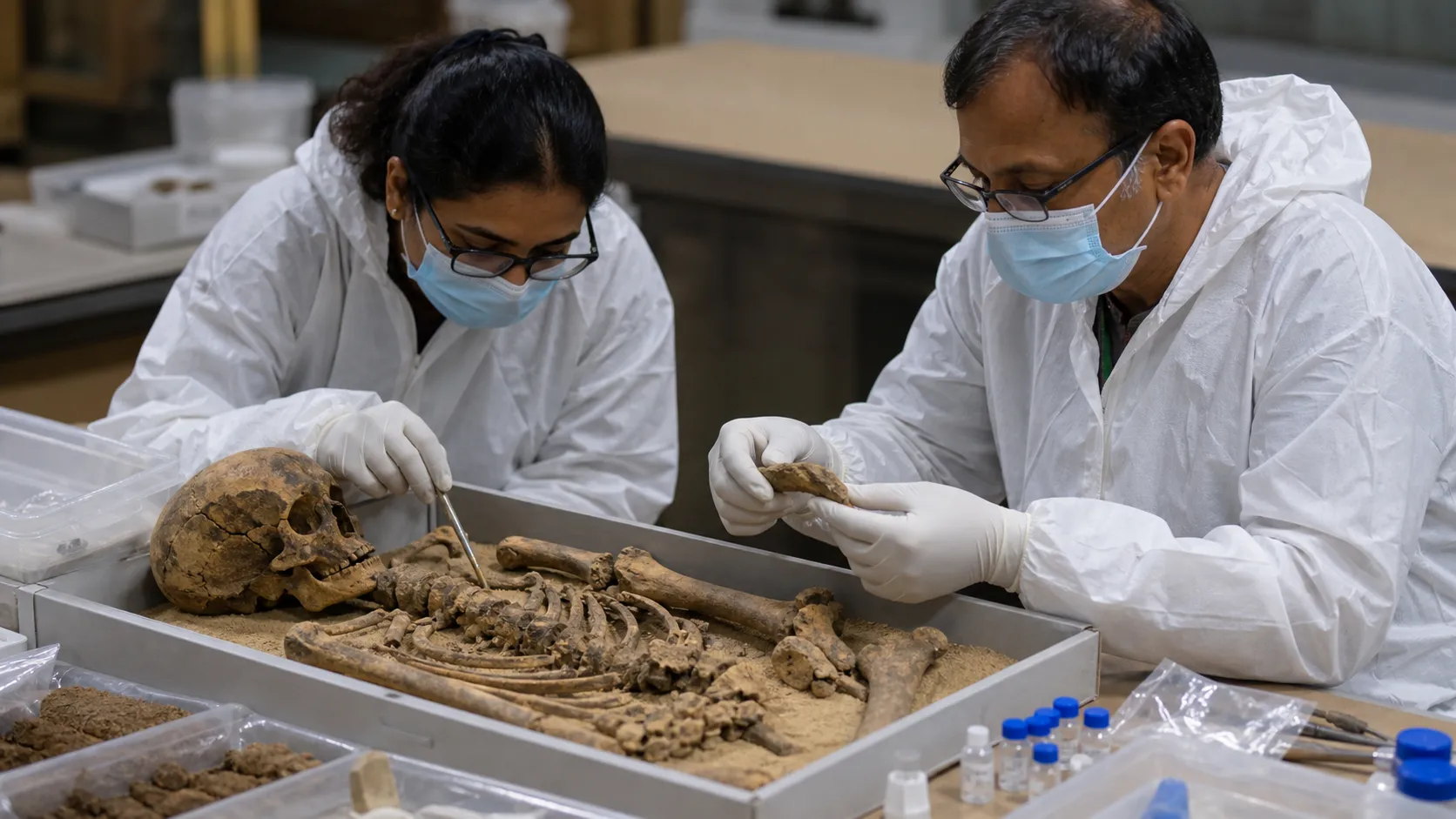
Human remains recovered from Rajghat nearly seven decades ago are now at the centre of a scientific effort to understand life in ancient Kashi. Researchers from Banaras Hindu University and the Centre for DNA Fingerprinting and Diagnostics in Hyderabad have begun advanced study of a skeleton described as roughly 2,800 years old.
The remains were discovered during the 1957 excavation at Rajghat, one of the key archaeological locations associated with early settlement in Varanasi. The new work brings techniques unavailable to the original excavation team: ancient-DNA analysis, radiocarbon dating and isotope testing. Used together, they can turn a skeleton from a museum record into a more detailed account of an individual and the environment in which that person lived.
DNA may offer clues about ancestry and biological relationships, although preservation is never guaranteed in old human remains. Heat, moisture, soil chemistry and handling over the decades can damage genetic material or introduce modern contamination. A clean laboratory process, control samples and cautious interpretation will therefore matter as much as the sequencing itself.
Radiocarbon dating can help test the proposed age rather than simply repeat an estimate. Isotope signatures preserved in teeth and bone may point toward diet, childhood geography and mobility. They can indicate whether the person relied more heavily on particular plant or animal food sources and whether the individual spent early life in the same region where the remains were found.
The research also aims to examine health, lifestyle and environmental conditions. Scientists may look for evidence of nutritional stress, disease, injury or habitual physical activity. Such findings describe one life, not an entire population, so the strongest conclusions will come from comparing the results with other securely dated remains and archaeological material.
One reported line of inquiry is how ancient Kashi relates to the broader story of the Harappan civilisation and later urban development in northern India. That comparison must be handled carefully. Similar ancestry or material patterns would not automatically prove direct migration or cultural continuity. Archaeology, chronology and genetic evidence have to be read together.
There is an ethical dimension as well. Human remains are not ordinary laboratory objects. Their study should follow conservation protocols, minimise destructive sampling and document where every sample goes. Findings should be published in a way that separates evidence from speculation, especially when ancestry can be pulled into modern identity debates.
The Rajghat skeleton has already survived excavation, storage and changing generations of scholarship. Modern science now has a chance to ask better questions of it. The most valuable result will not be a dramatic claim about who the individual “was,” but a transparent reconstruction of when that person lived, what they ate, where they may have grown up and how their life fits into the long urban history beneath today’s Varanasi.
Sources and reporting
Based on the verified Dalimss News Banaras post published on 5 August 2026 about research by Banaras Hindu University and the Centre for DNA Fingerprinting and Diagnostics on human remains recovered at Rajghat in 1957.
Related Stories
Bike With 113 Challans Impounded at MDI Chowk
Cops Override Smart Signals in Rush Hours
BHU Opens Bharat Innovation Conclave 2.0 at Swatantrata Bhawan
Audit Flags 525 Unsafe Rooms in Govt Schools

GRP Cantt Arrests Woman With 72 Quarters of Alleged Illegal Liquor