BHU–Taiwan Breath Sensor Shows Promise for Needle-Free Diabetes Screening
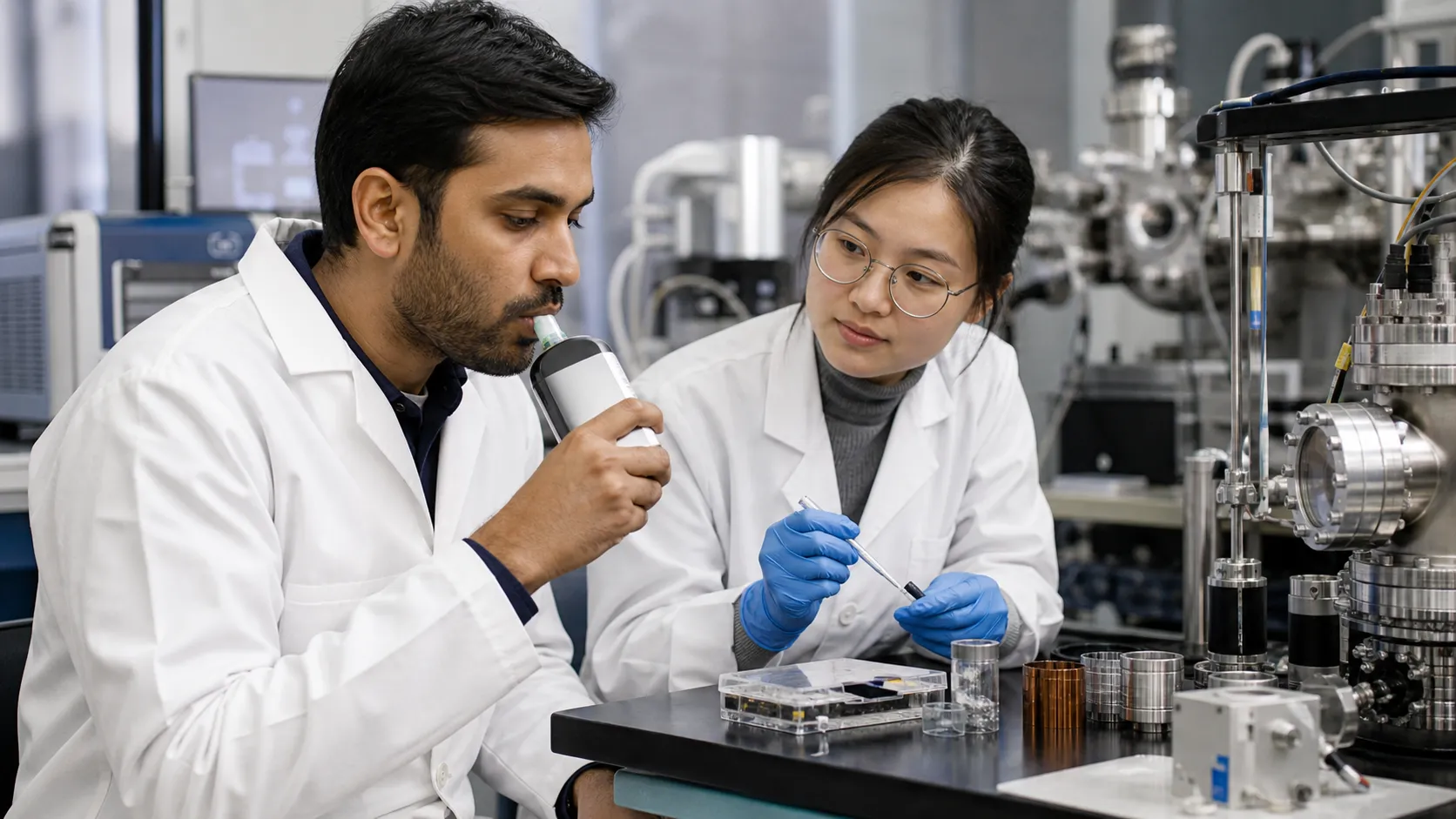
Researchers from Banaras Hindu University and Taiwan have developed an experimental nano-sensor capable of detecting very small concentrations of acetone in a person’s breath, a signal that may support future needle-free diabetes screening. The work involves BHU’s Physics Department and uses advanced sensing materials including selenium, graphene and carbon nanotubes.
Breath acetone is produced when the body breaks down fat. Its concentration can be higher in people with diabetes, which makes it a useful biomarker to study. The new device is designed to respond quickly to low acetone levels without drawing blood. That could eventually make preliminary screening more comfortable and portable.
The word “detect” needs context. The sensor detects a gas; it does not yet replace a clinical diagnosis. Breath acetone can vary with fasting, diet, exercise, medication and other metabolic conditions. A doctor diagnosing diabetes relies on validated blood-based measurements and clinical guidelines. Until large human studies establish reliable thresholds, the device should be described as a research platform rather than a consumer glucose meter.
The material combination is central to the design. Nanostructured surfaces provide a large active area where gas molecules can interact, while graphene and carbon nanotubes can translate those interactions into measurable electrical changes. The challenge is selectivity: real breath contains moisture and hundreds of volatile compounds. A practical sensor must distinguish acetone from that complex background and remain stable across temperature and humidity changes.
Researchers say the technology is moving through the patent process. Clinical trials, stability testing, calibration and regulatory approval would still be required before wider use. The team has indicated a possible path to the public within five years, but that is a development estimate, not a guaranteed launch date.
India’s large diabetes burden makes painless screening attractive, particularly in places where laboratory access is limited. A compact breath device could help identify people who need confirmatory testing, monitor trends under medical supervision or support community health camps. Affordability will depend not only on the sensor material but also on calibration, replaceable mouthpieces, software and quality control.
Privacy should be designed in early if results are stored digitally. A breath reading is health data. Users must know who can access it, how long it is retained and whether an app sends it to another organisation. Ease of testing should not create casual sharing of medical information.
The BHU–Taiwan collaboration is promising because it aims at a familiar problem from a different angle. Its next milestone is not a dramatic claim that finger-prick testing is over. It is careful validation: testing enough diverse participants, measuring false positives and negatives, and proving that the sensor works outside a controlled physics laboratory. If it clears those steps, a breath may one day become a useful first signal—followed, when needed, by the established clinical tests that protect patients from guesswork.
Sources and reporting
Based on the verified Dalimss News Banaras research post published on 5 August 2026 about a BHU Physics Department collaboration with researchers in Taiwan. The device remains experimental and is undergoing patent-related development.
Related Stories

Karan Madhok's MONKEY! opens for preorder with Aleph Book Company
Bike With 113 Challans Impounded at MDI Chowk

Cops Override Smart Signals in Rush Hours

BHU Opens Bharat Innovation Conclave 2.0 at Swatantrata Bhawan

Audit Flags 525 Unsafe Rooms in Govt Schools