Varanasi to Give Two Colour-Coded Bins Each to Two Lakh Homes
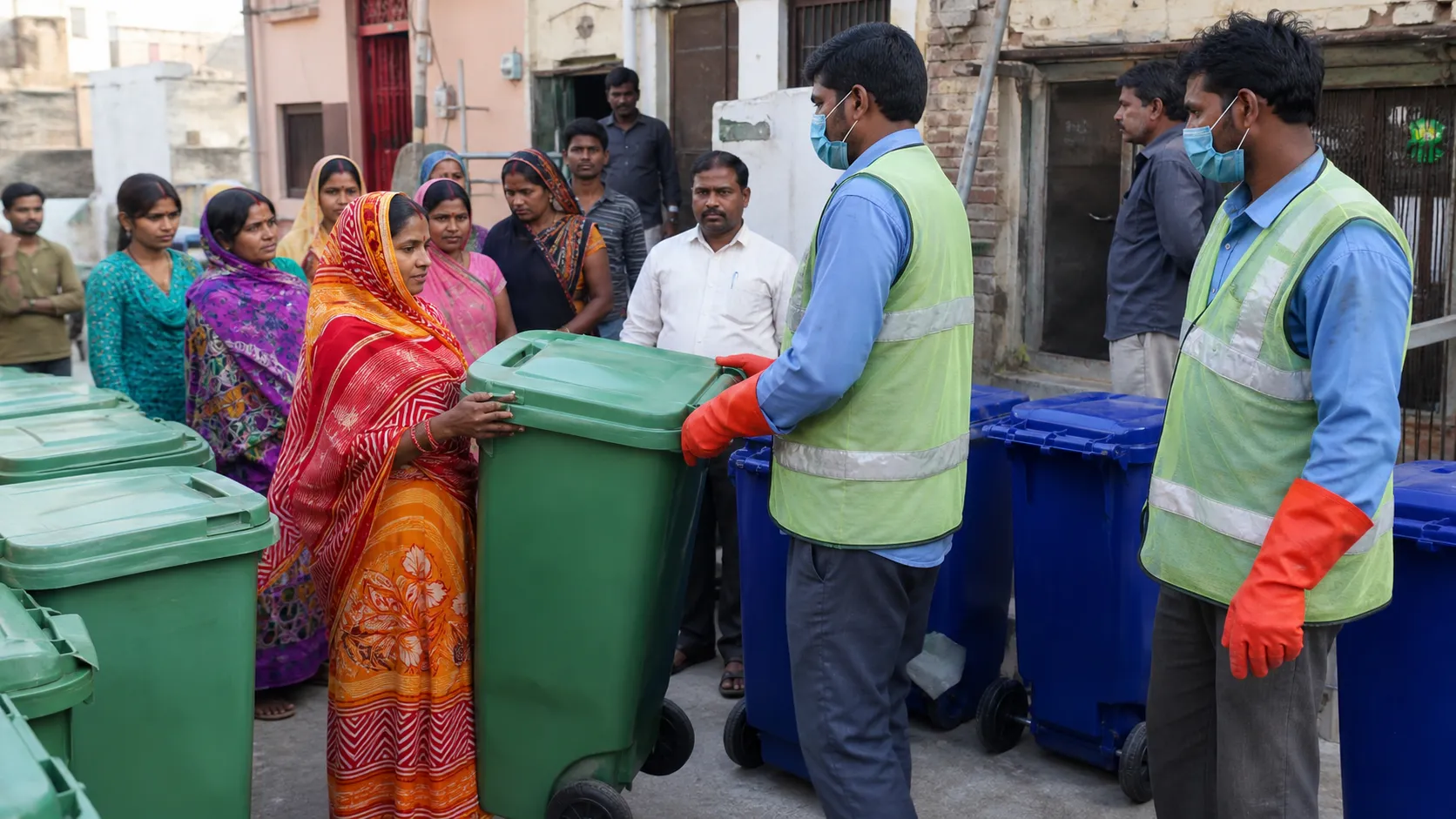
Varanasi Municipal Corporation is preparing to place source segregation inside two lakh homes by distributing four lakh colour-coded dustbins across the city. The campaign is scheduled to begin on September 17, with every selected household receiving one green bin for wet waste and one blue bin for dry waste.
The scale is simple to understand: two bins for each home. The operational challenge is harder. A green container is meant for fruit and vegetable peels, leftover food, leaves and other biodegradable material. The blue one is for plastic bottles, wrappers, paper, glass and other dry recyclables. If the two streams are mixed again in a collection vehicle, the household effort becomes cosmetic. The corporation will therefore need separate handling from doorstep pickup to processing.
The initiative is part of Varanasi’s push to improve its Swachh Survekshan performance and compete for a place among the country’s top-ranked clean cities. Rankings can create administrative urgency, but residents will judge the drive by a more immediate test: whether waste is collected predictably, streets remain clean and separated material reaches the correct facility.
Distribution should be accompanied by a short, practical demonstration. Many households understand “wet” and “dry” broadly but get stuck on used tissues, sanitary waste, broken glass, diapers, medicine packaging and food-stained containers. Printed guidance or a ward-level helpline can prevent confusion. Sanitary and hazardous household waste should not be casually mixed with recyclable dry material.
The bins must also be mapped to genuine users. A transparent ward-wise allocation can reduce duplicate distribution and ensure that dense settlements, rented homes and lower-income neighbourhoods are not left out. Residents should not be asked for unofficial fees, and damaged bins should have a clear replacement procedure.
Sanitation workers are central to the plan. They need gloves, safe vehicles, route instructions and training to reject or flag repeatedly mixed waste without creating confrontations at the doorstep. The corporation should also explain whether collection timings will change after September 17 and how bulk generators such as apartments, hotels and markets fit into the system.
Four lakh bins are a visible investment, but they are only the front end of the waste chain. The city must disclose how much segregated waste is collected, what proportion remains uncontaminated and where compostable and recyclable material goes. Monthly ward-level data would make the campaign measurable after the launch photographs disappear.
For households, the habit begins in the kitchen: two containers, used consistently, before a collection worker arrives. For the corporation, success begins when those two streams remain separate all the way to their destination. If both sides hold that line, the September campaign can improve more than Varanasi’s ranking; it can change how the city handles waste every morning.
Sources and reporting
Based on the verified Dalimss News Banaras field post published on 5 August 2026 about Varanasi Municipal Corporation's planned source-segregation campaign. Distribution is scheduled to begin on 17 September.
Related Stories
Bike With 113 Challans Impounded at MDI Chowk
Cops Override Smart Signals in Rush Hours
BHU Opens Bharat Innovation Conclave 2.0 at Swatantrata Bhawan

Audit Flags 525 Unsafe Rooms in Govt Schools
GRP Cantt Arrests Woman With 72 Quarters of Alleged Illegal Liquor