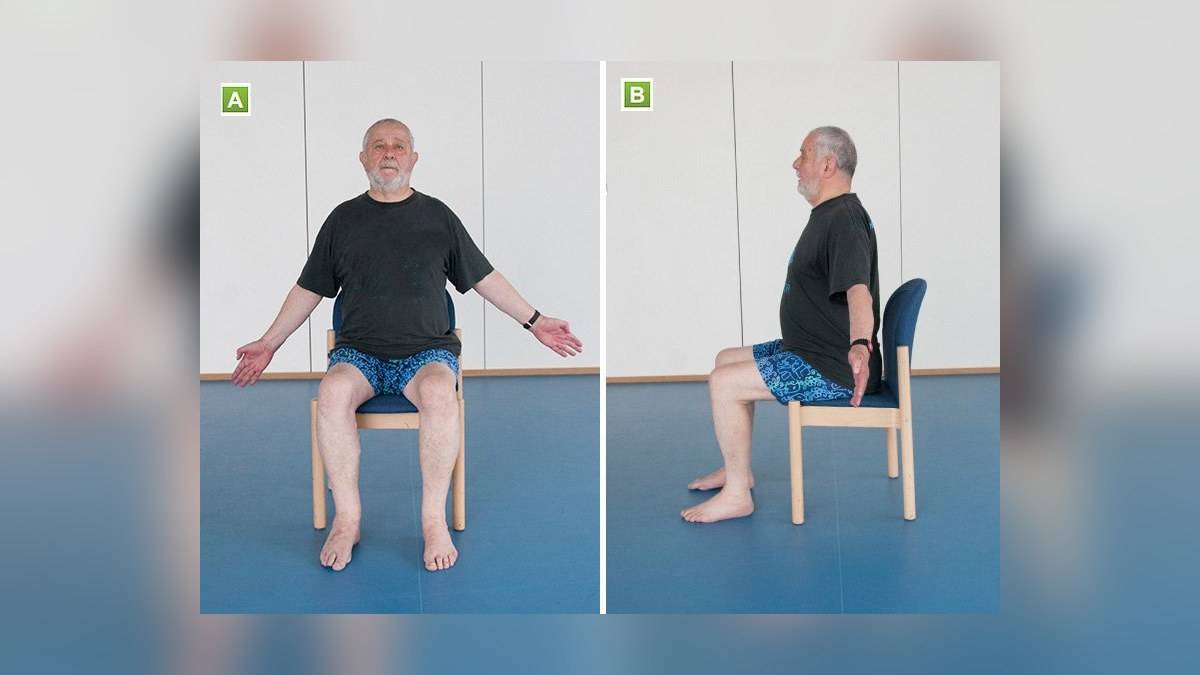
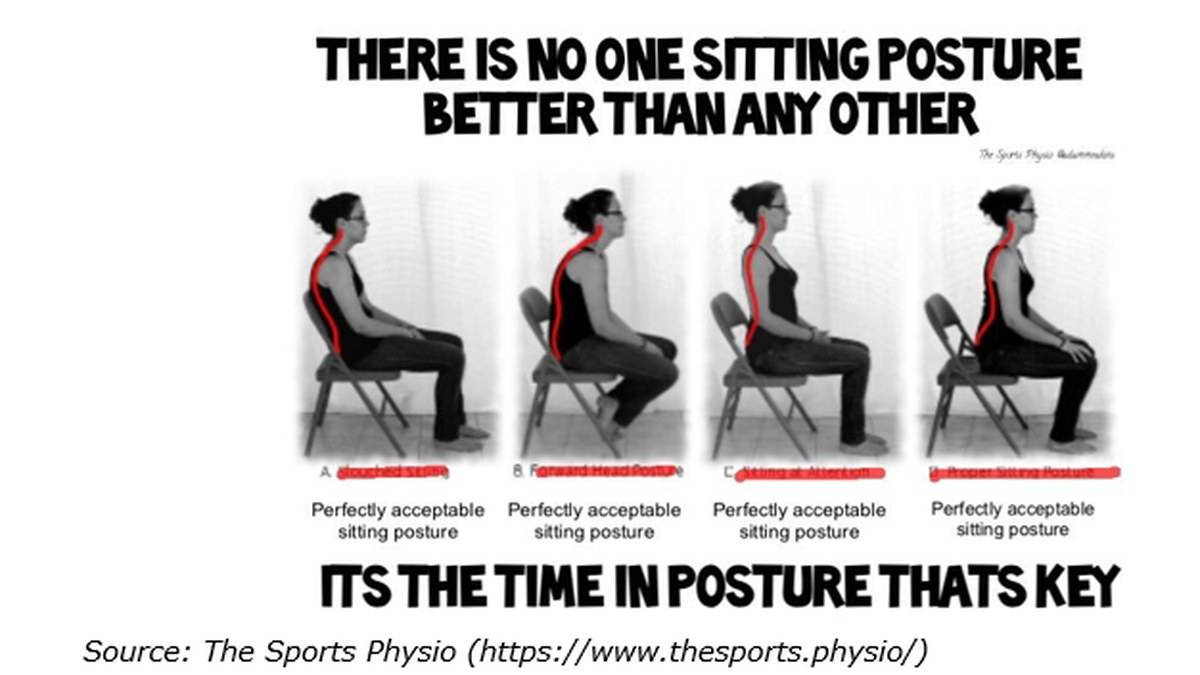
Correct sitting posture at a desk starts with a comfortable, supported position and regular changes of position. There is no single pose that everyone must hold to protect their back. Cambridge University Hospitals advises trying different relaxed postures, supporting the feet and using the chair back rather than keeping the trunk tense.
That matters if you spend an afternoon studying, filling in paperwork or working at a desk. A photograph of someone sitting straight cannot tell you how comfortable they are, how long they have stayed there or whether they need individual medical advice. The useful question is how your working position fits your body and task.
| Check | Practical starting point |
|---|---|
| Feet | Keep them supported flat rather than dangling. |
| Back | Use the backrest so you can relax. |
| Shoulders | Avoid keeping them shrugged during desk work. |
| Position | Change it regularly instead of holding one rigid pose. |
Is there one correct sitting posture?
The Leeds Community Healthcare facts on posture says there is no strong evidence for one optimal posture, or that avoiding supposedly incorrect postures prevents low back pain. People have natural differences in spinal curves. A difference in appearance should not automatically be treated as evidence of a problem.
Leeds also explains that posture can reflect mood, beliefs and protective responses. Someone may adopt a position because it feels reassuring or comfortable. That helps explain why copying another person's seated outline is a poor substitute for understanding your own needs. The advice is to explore comfortable positions and vary habitual ones.
This does not mean you should ignore discomfort. The Cambridge University Hospitals leaflet, written for people living with chronic pain, distinguishes between posture causing pain and a position affecting existing pain. It cautions against assuming that discomfort while sitting proves the spine is being damaged. These are general explanations, rather than a diagnosis of any reader's symptoms.
How should you sit on a chair at a desk?
Cambridge suggests sitting back in the chair, supporting the feet flat on the floor and allowing the backrest to support the back. Trying to stay very upright, tense and unsupported can itself be uncomfortable. Think of the chair as a support you can use, rather than something you must hover away from.
Check whether you can settle into the seat without continually holding yourself stiff. The hospital recommends small, frequent changes when exploring a more relaxed posture. It also suggests a reminder if an absorbing task makes you forget to move. A reminder is an aid to changing position, rather than proof that one exact sitting interval is safe for everyone.
How can you adjust your desk position?
The Health and Safety Executive workstation guide offers practical setup checks. Seat height should support the front and back of the thighs equally. The backrest should give lower back support, and there should be a gap of 2-3 cm between the front edge of the seat and the back of the knee.
The same guide advises relaxing the shoulders and arranging the work area so that you do not have to shrug them. Keep the work directly in front of you rather than repeatedly twisting your back to one side. If you type, the keyboard should sit just below elbow height. These checks concern the position of the body during a task.
A cushion is one option in that guidance for adjusting seated height or adding back support. It does not establish that everyone needs a particular chair or accessory. Start by checking the relationship between your seat, body and working surface. A setup is useful when it supports the task and lets you sit comfortably.
How often should you change sitting position?
The HSE's work routine and breaks guidance favours shorter, more frequent breaks over longer, infrequent ones. Its example is 5 to 10 minutes each hour rather than 20 minutes every two hours. This is an illustration of work organisation, not a medical threshold after which a seated person is automatically harmed.
A change of activity can create an opportunity to get up, move around or change posture. Reading a different document while remaining in the same fixed position may change the task without changing how you sit. Plan opportunities for movement around natural pauses in your work, rather than treating the posture check as something completed once each morning.
If you have a medical condition, an injury or persistent pain, consult a qualified doctor before changing activity or following general posture advice. Avoid forcing a position that causes pain. For related guidance, read our explainers on breaking up prolonged sitting, gentle stretching and taking an eye break.