Schools Need More Preparation for Class 6 Third Language, Panel Says
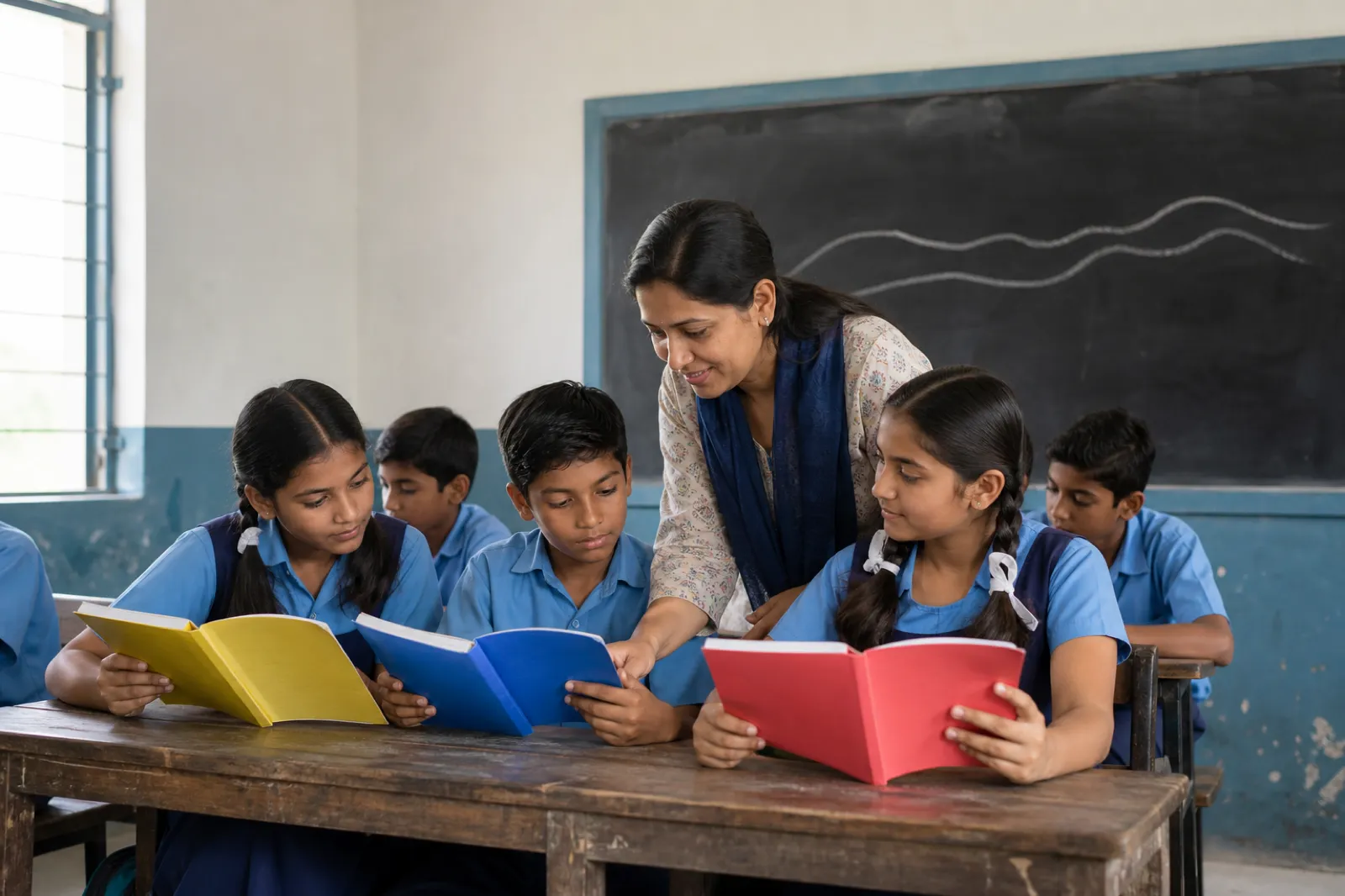
A parliamentary committee has found that schools were not given enough time to prepare for the introduction of a third language from Class 6, leaving teachers, parents and pupils to manage uncertainty over staffing, study material and language choice. The observation appears in the Committee on Estimates’ Tenth Report for 2026-27, presented to the Lok Sabha on August 12.
The report does not reject multilingual education. It recognises work already completed under the National Education Policy, including the flexible three-language formula and the R1, R2 and R3 framework. It also notes translation of mathematics, science and social-science material into the 22 scheduled languages, 121 mother-tongue primers, the Bhasha Sangam exposure programme and Jaadui Pitara learning kits.
Its criticism is about sequencing. A curriculum requirement becomes a timetable, staffing and supply-chain problem the moment it reaches a school. Administrators must know which languages pupils will choose, find qualified teachers, assign rooms and periods, obtain textbooks and explain whether a choice can continue into later classes. If that work starts after enrolment, the flexibility promised on paper can narrow to whichever teacher happens to be available.
The committee said requirements for language staff, training and materials had not been adequately anticipated. It recommended faster development and translation of textbooks and handbooks, support to states and Union territories for recruiting teachers who can teach in local languages, and a state-wise distribution plan that gets multilingual resources to rural and government schools before each session.
That recommendation is important because India’s language map does not fit a single staffing model. A large city school may have enough demand to run several options; a small rural school may struggle to recruit even one additional language teacher. Some schools can share a teacher across a cluster or use carefully designed remote support, but children still need regular interaction, feedback and assessment. A video library is a resource, not a complete language faculty.
Clarity for families is just as necessary. Schools should publish the available options, the number of years for which each will be offered and what happens if enrolment in a language is small. They should also explain how prior exposure will be handled when a child transfers from another board or state. Sudden changes can turn an educational choice into an avoidable assessment disadvantage.
The policy has also generated political argument over the place of Hindi, regional languages and foreign languages. Implementation should remain anchored in the NEP principle that no language is to be imposed. That promise is easiest to trust when parents see genuine choice and the school can show that each offered language has a teacher and learning material.
There is a broader lesson in the committee’s warning. Textbook translation and national frameworks are visible achievements, but the last mile is a staffed classroom on the first day of term. The ministry and school boards now have time to build a more orderly next cycle: survey demand early, recruit against it, deliver material before classes and provide a clear route for pupils whose school cannot offer their first preference.
Multilingualism can widen cultural understanding and cognitive range. It should not be introduced through hurried forms and uncertain timetables. Preparation is not resistance to the policy; it is what allows the policy to work.
Sources and reporting
Based on the Tenth Report of the Lok Sabha Committee on Estimates (2026-27), presented on 12 August 2026, and the committee’s recommendations on multilingual resources and staffing.
Related Stories
HC Flags Gurugram Water Crisis, Sets Oct 1 Hearing

Haryana Notifies Tolls on Three GF Road Sections

HSVP Clears Eatery and Warehouses in Sector 18

DTCP Notices 80 Homes in BPTP Astaire Garden

Three Held With Pistol and Revolver in City