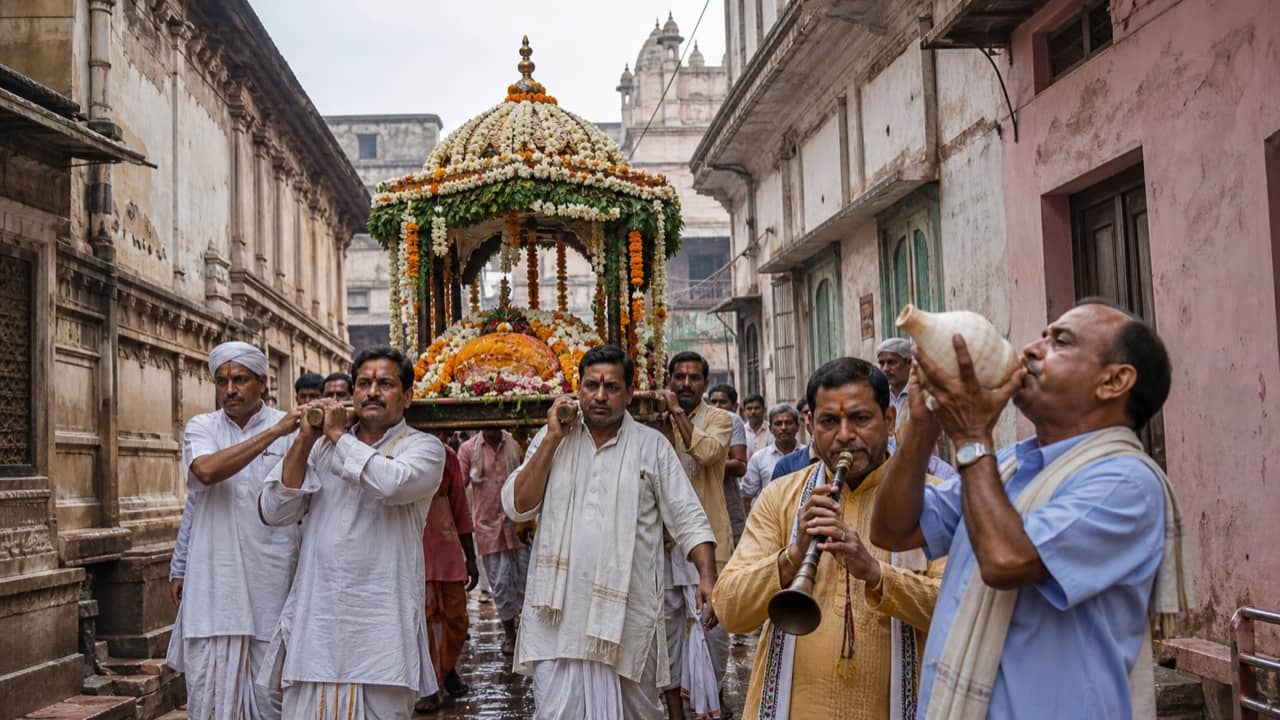
VARANASI: A ceremonial journey carrying Baba Vishwanath in the Chandramoulishwar form reached the deity's symbolic in-laws' home on Tuesday, drawing together music, ritual and the family imagery through which Kashi often makes theology feel like neighbourhood life. The palanquin procession included representations of Shiva's family and concluded with collective worship and Mahabhishek.
Conch shells, shehnai and chants of Har Har Mahadev accompanied the procession, according to the report. Devotees described the occasion as a meeting of several cultural strands rather than a single temple ritual. The divine family motif—Shiva, Parvati and associated forms travelling together—gave participants a familiar social language for an event rooted in worship.
Old-city processions are experienced at walking pace. A palanquin pauses at a doorway, musicians adjust to the width of a lane and residents encounter the event from balconies as much as from the road. That closeness is part of the tradition's appeal, but it leaves little margin for crowd surges, trailing electrical cables or blocked emergency access. Volunteer discipline is therefore a form of ritual care.
Kashi's religious calendar repeatedly brings deities into civic space through yatras, seasonal swings, wedding symbolism and visits to associated shrines. These observances do more than reproduce inherited stories. They connect temples with neighbourhood guilds, musicians, flower sellers and families that have served the route for generations. A short procession can carry a surprisingly large network of local memory.
For younger participants, the journey offers a live explanation of traditions that may otherwise appear as disconnected images online. Organisers can deepen that value with a concise bilingual note explaining the route, the Chandramoulishwar form and the meaning of the ceremonial visit. Interpretation should distinguish established local tradition from later embellishment and should credit musicians and service groups.
A useful record would include the scheduled stops, approximate timings and any temporary traffic changes. That helps residents plan and gives future organisers a safety baseline. Photographs and video should focus on the public ritual, not intrude into private homes or obstruct the palanquin. If donations are collected, the organising body and purpose should be stated clearly.
Visitors joining a procession in narrow lanes should walk with the flow, keep exits clear and avoid leaning over barricades for a closer image. Children and older relatives need an agreed meeting point. The ceremony's strongest image is not the size of the crowd but the ease with which sacred and everyday Varanasi meet—a relationship sustained only when participants respect the neighbourhood carrying the route.
This report is based on a Live Hindustan account published on 26 August 2026. Dalimss News independently rewrote, checked and contextualised the available information. Where a claim, allegation or opinion is attributed to a person or institution, it remains their statement; no on-scene reporting or independent interview is claimed.