
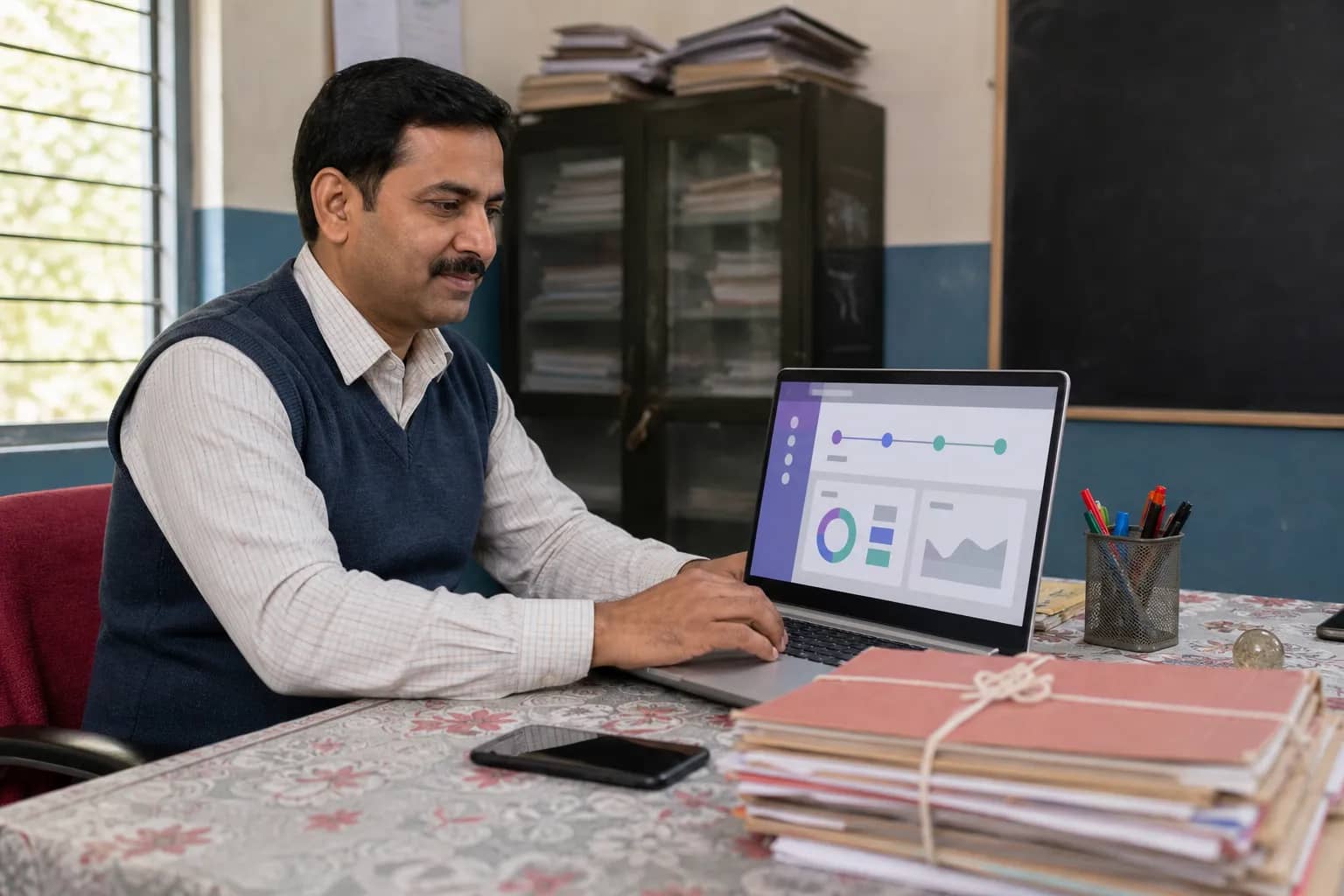
The Bihar government will launch a dedicated Shikshak Samadhan Portal in Patna on 5 September, with a stated target of resolving teachers' grievances within 30 days.
Education Minister Mithilesh Tiwari announced the plan as part of what he called a reform-led approach in the department. The launch is scheduled for Teachers' Day, when educators from the state's districts are also expected to receive honours.
The central promise is not merely that a complaint can be submitted online. The department says a matter should be resolved within 30 days, and officials may be called to account when it is not. That service standard will be the measure of the portal, because Bihar teachers already interact with digital systems for several administrative tasks.
What needs to be clear at launch
The department has not yet published a full category-wise manual in the material reviewed for this report. Teachers should wait for the official launch note before assuming that every issue—from salary and leave to transfer or service records—will be available on day one.
A useful portal should identify the types of grievances it accepts, the documents needed for each, the officer to whom a case is routed and the date on which the 30-day clock starts. It should issue a receipt number immediately and allow a teacher to see every status change.
There also needs to be an appeal or escalation route. A case marked “disposed” is not necessarily solved; it may have been closed with a generic remark or sent back for a document the applicant had already uploaded. The teacher should be able to challenge an incorrect closure without filing the entire complaint again.
Why teacher administration affects classrooms
The minister argued that a teacher dealing with unresolved personal or service problems cannot focus fully on teaching. That link is plausible and often visible: a salary error, missing service entry or long-pending leave decision can require repeated journeys to block and district offices during working hours.
Digitisation can reduce that burden if the department redesigns the process rather than simply placing an old paper form on a screen. An online complaint that still needs several physical visits is only partially digital.
The portal can also reveal patterns that individual files conceal. If hundreds of teachers in one district report the same payroll deduction or promotion-record error, the department should fix the underlying batch process instead of issuing hundreds of separate replies.
Accountability needs public measures
The government has said officials may face scrutiny when grievances are not resolved in time. For that to be credible, the dashboard should distinguish cases that are pending with the department from those awaiting information from the applicant. Otherwise, an office can stop the clock by asking for another document.
Monthly, privacy-safe statistics would help: grievances received, resolved within 30 days, overdue, reopened and pending by category and district. The department should also report median resolution time rather than only a disposal percentage.
Teachers need an offline support option for schools with weak connectivity or for users who cannot complete an upload. A helpdesk can assist with submission, but it should not become a new gatekeeper that decides informally whether a complaint is worthy of registration.
Data protection is equally important. Service records can contain bank details, health documents, family information and identity numbers. The portal should collect only what a case requires, restrict staff access and avoid displaying sensitive attachments in a general dashboard.
From announcement to functioning service
The 5 September launch will be the first test, not the result. The department should publish the official web address through its own channels so teachers do not enter credentials on lookalike sites. Users should avoid links forwarded by unknown accounts and should never pay an unofficial agent to register a grievance.
Once the portal opens, teachers would be wise to prepare a concise statement, attach only relevant orders or records, save the acknowledgement and note the deadline generated by the system. If a grievance concerns an urgent salary or safety issue, the new portal should not prevent use of an existing statutory or emergency channel.
Bihar's 30-day promise gives the initiative a concrete standard. Its value will depend on whether departments accept ownership of cases, whether teachers can challenge poor disposal and whether overdue files lead to administrative correction. A working grievance system will be quieter than a launch ceremony: fewer office visits, fewer duplicate applications and a clear written answer within the promised month.