BHU Scientists Conduct Ayurvedic N-of-1 Clinical Trial on Mild Cognitive Impairment

Varanasi, June 29, 2026: Researchers linked to Banaras Hindu University have published an Ayurvedic N-of-1 clinical trial studying the classical formulation Kalyanaka Ghrita in a patient with mild cognitive impairment.
The study, published online in the Journal of Ethnopharmacology on June 23, 2026, is titled "Role of an Ayurvedic formulation 'Kalyanaka Ghrita' in mild cognitive impairment: A single-patient, quasi-randomized, controlled, open-label N-of-1 trial."
According to PubMed, the authors are Swati Sharma, Arun Kaushik, Sankha Shubhra Chakrabarti and Kishor Patwardhan, with affiliations from BHU's Faculty of Ayurveda, Institute of Science and Department of Geriatric Medicine, IMS-BHU.
Personalised Trial Design Used
An N-of-1 trial is a personalised research design in which one patient is studied across alternating treatment and no-treatment periods. The design can be useful where individual response is important, though results from one patient cannot be generalised like a large clinical trial.
The PubMed abstract says the study was quasi-randomized, controlled and open-label. It included six alternating treatment and no-treatment periods of two months each, spanning around 14 months.
Study Focused on Mild Cognitive Impairment
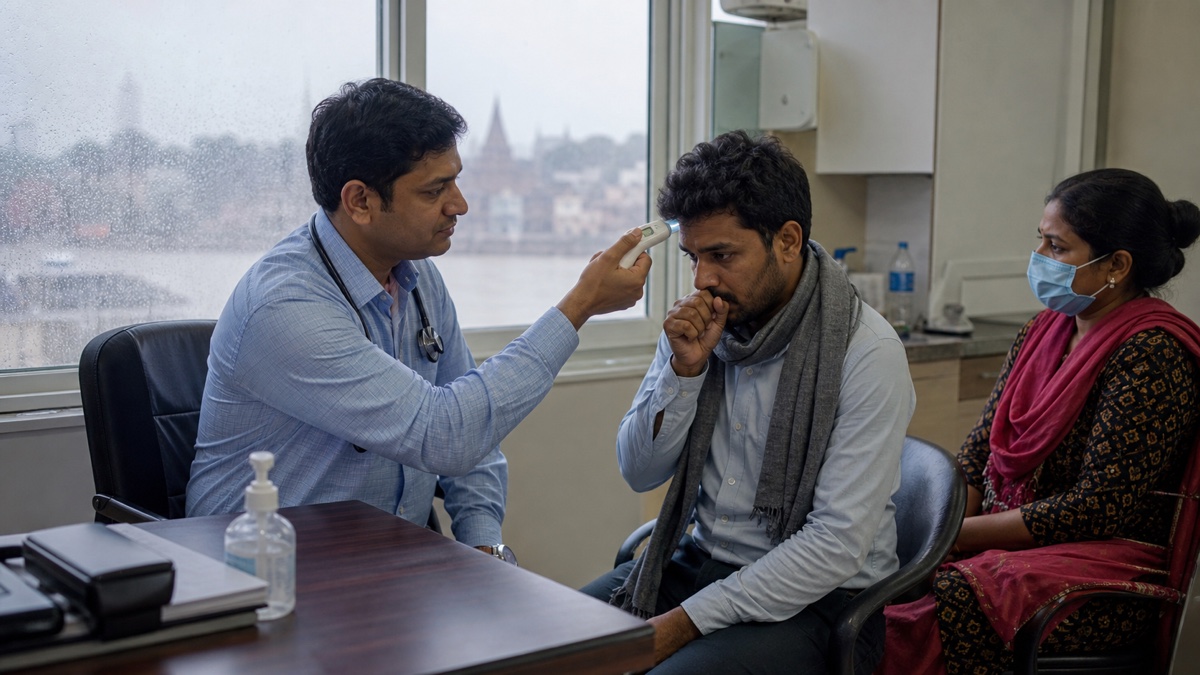
The patient in the study had mild cognitive impairment. Researchers assessed cognitive outcomes using the Hindi Mental State Examination and Clinical Dementia Rating scales. Functional abilities were measured using the Instrumental Activities of Daily Living scale, and affective status was evaluated using the Geriatric Depression Scale short form.
The abstract reported signs of improvement in cognitive, functional and affective domains, with Bayesian modelling used to estimate probabilities and uncertainty intervals. The researchers also noted limitations, including the single-patient design, open-label format and absence of biomarker testing.
Researchers Urge Medical Supervision
Local reports on the study said the researchers clarified that Ayurvedic medicines should be taken only under consultation and supervision of a trained Ayurveda physician. Dalimss News repeats that caution clearly: this report is not medical advice.
The study does not prove that Kalyanaka Ghrita cures dementia, Alzheimer's disease, memory loss or depression. It offers preliminary evidence from one patient and points toward the need for more studies.
Why It Matters for Ayurveda Research
Ayurveda often emphasises individualised treatment decisions. N-of-1 trials may offer one way to study such personalised approaches using structured scientific methods, though larger evidence synthesis would be needed before clinical conclusions can be drawn.
For BHU research, the study shows collaboration across Ayurveda, medicine and statistics. It also places Varanasi-linked researchers in an international scientific discussion on how traditional formulations can be evaluated with careful methodology.
Related Stories

BHU Eye Institute Revises OPD Roster; Friday Clinics Will Rotate

BHU Trauma Centre ICU Completes Five-Day Infection-Control Cleaning Drive
Bob's Run Club Organises ‘Kachori Run’ in Varanasi to Promote Balanced Living
Sigra Police Receive CPR and Snakebite First-Aid Training Ahead of Flood Risks

Dr NP Singh Appointed Varanasi CMO; New Heads Named for Two District Hospitals