IMS-BHU Team Rebuilds Patient’s Jaw Using Fibula Bone in Complex Surgery
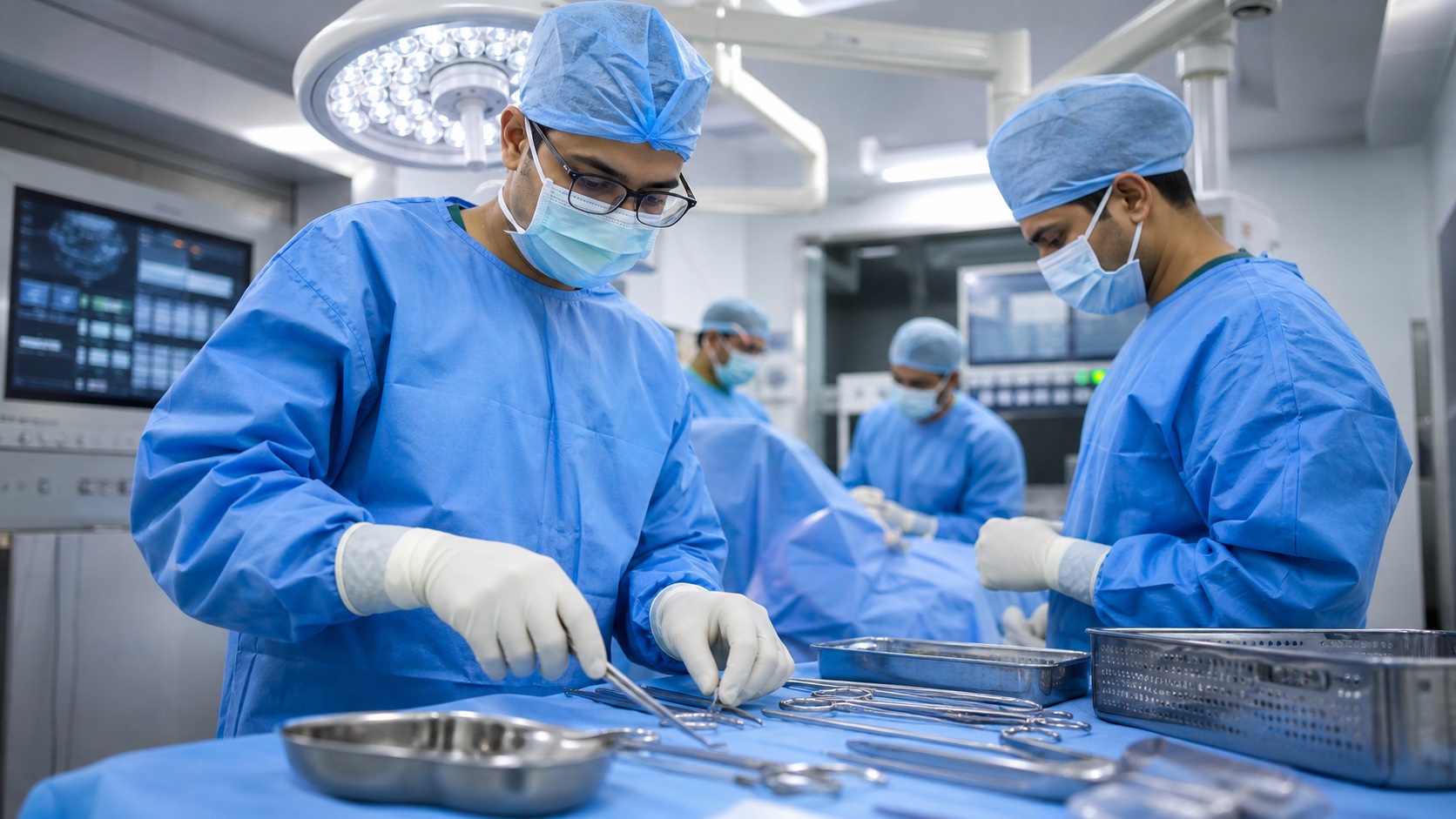
A surgical team at the Faculty of Dental Sciences, Institute of Medical Sciences, Banaras Hindu University, has carried out a complex operation in which part of a patient’s lower jaw affected by a tumour was removed and reconstructed using bone from his leg. The 35-year-old man underwent the procedure in the Oral and Maxillofacial Surgery unit, where doctors used a segment of the fibula to fashion a new section of mandible. The university has described the surgery as successful.
Jaw tumours can create two problems at once: the diseased tissue must be removed with an adequate safety margin, and the resulting gap can affect speech, chewing, facial balance and the patient’s ability to return to ordinary life. Reconstruction therefore is not a cosmetic add-on. It is a central part of treatment. The fibula, the slimmer of the two long bones in the lower leg, is frequently chosen in advanced reconstructive practice because a suitable length can be harvested while preserving the main weight-bearing function of the limb.
In such operations, teams typically plan the shape of the replacement bone to match the missing jaw segment and secure it with plates. The work demands coordination between maxillofacial surgeons, anaesthesia specialists, nursing staff and clinicians responsible for post-operative monitoring. The report from IMS-BHU confirms the broad procedure but does not place the patient’s private medical details in the public domain, and those boundaries should be respected.
The case also underlines why a tertiary centre in Varanasi matters to patients across eastern Uttar Pradesh and neighbouring states. Highly specialised reconstruction can otherwise require repeated travel to distant metropolitan hospitals, adding cost and delay to an already difficult diagnosis. A locally available team does not remove every barrier, but it can make follow-up, wound care, nutrition support and rehabilitation more practical for families.
A successful operation is only one milestone. Recovery after mandibular reconstruction can involve monitoring the donor leg, checking bone and tissue viability, managing infection risk and gradually rebuilding eating and speaking function. Depending on the tumour’s pathology, the patient may also need further evaluation or treatment. Doctors will determine those steps from laboratory findings and the individual’s progress; no general account can substitute for that clinical decision-making.
For IMS-BHU, the procedure is a useful marker of surgical capability, but its real significance sits with the patient: the possibility of disease control alongside restoration of basic function and dignity. The outcome will be judged over follow-up rather than by the operation-day announcement alone. That longer view—healing, mobility, nutrition and a safe return to daily life—is where reconstructive medicine ultimately proves its worth.
Sources and reporting
Based on information released about the procedure by IMS-BHU and locally verified reporting available on August 8, 2026. No patient-identifying information is published.
Related Stories

Festive Special to Gorakhpur Gets Gurugram Halt
Fifth Accused Held in Rs 25 Lakh Sector 47 Robbery

Courier Staffer Booked Over 105 Missing One8 Returns
HC Sets Rs 50 Lakh Costs for Accused's Return to India

Gurugram Swimmer, 20, Crosses English Channel