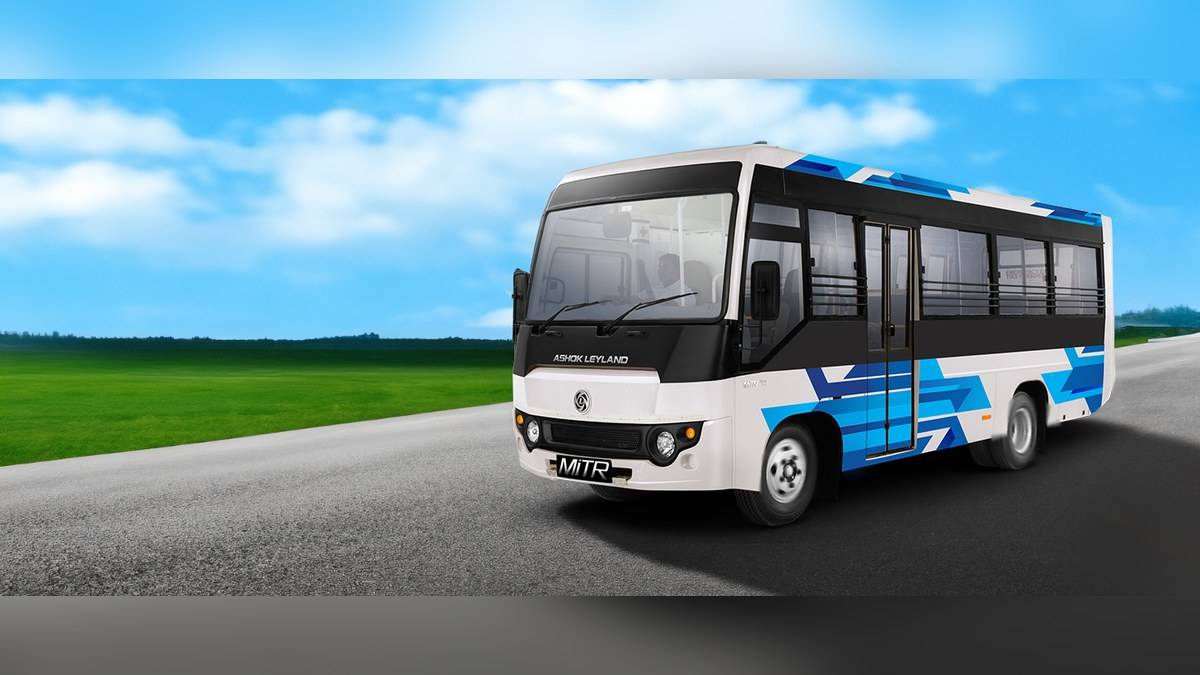
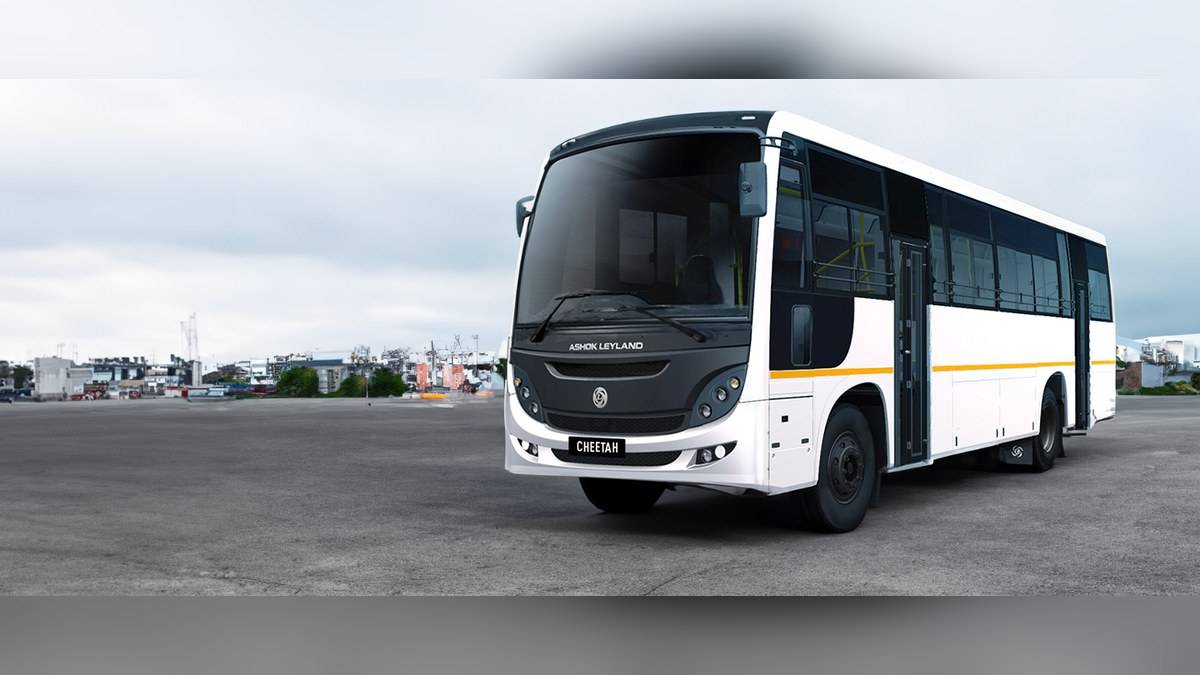
NEW DELHI: The Ashok Leyland Cheetah is listed at Rs 32,60,000 onwards on the company's Indian bus website. Its official specification offers several wheelbases, seating layouts and rear-suspension choices around a six-cylinder diesel engine. For an operator, the useful question is which completed bus matches the route and passenger contract, because the starting price does not identify every configuration.
| Item | Official specification |
|---|---|
| Published price | Rs 32,60,000 onwards |
| Engine | 5.76-litre H series six-cylinder diesel |
| Power and torque | 147 kW; 700 Nm |
| Gearbox | Six-speed overdrive |
| Wheelbases | 4,200 mm, 5,156 mm, 5,334 mm |
| Maximum GVW | 16,200 kg |
Price as of 15 November 2026, 23:43 IST. The official category gives a single onwards amount for Cheetah. It does not publish a separate readable price for every seating, door or suspension choice, so this is a configuration guide rather than an invented variant tariff.
Start with the seating plan
Ashok Leyland calls its seating capacities indicative. The specification lists 3x2 layouts with 35+D, 47+D and 50+D seating, alongside double-door layouts with 43+D or 46+D. A separate 2x2 layout has 24+D push-back seating and a single door. Those are materially different passenger arrangements within the same model family.
The 2x2 push-back arrangement deserves a different evaluation from a denser 3x2 body. A contract that prioritises passenger space may lead to one choice; a service moving a larger fixed group may lead to another. The seat count should be matched to the signed transport requirement rather than treated as a universal measure of value.
Door placement also needs attention. During a demonstration, walk the boarding path with the proposed seating plan in hand. Check where passengers wait, how they reach the aisle and whether the chosen door arrangement suits the pickup side of the road. The correct body for a planned service depends on those daily movements.
Match the chassis to the route
The specification lists overall lengths of 8,400 mm, 9,890 mm and 10,174 mm, as well as the wheelbase choices in the table. It also gives an overall width of 2,600 mm. These figures help frame a depot survey, but the supplier should confirm the exact completed dimensions of the selected version before a parking plan is finalised.
The product page highlights a 19-degree approach angle. That is relevant to a steep entrance, but it does not prove that every ramp or road crest can be cleared. Ask for a route demonstration with the body being considered, paying particular attention to the depot gate, roadside pickup areas and changes in gradient.
For hill operation, engine output alone is an incomplete selection tool. Include the route's bends, stopping places and restart conditions in the evaluation. Cheetah's official page positions it around narrow-road manoeuvrability and hilly terrain, but those manufacturer descriptions still need to be tested against the operator's actual service.
Diesel hardware and body equipment
The H series engine is turbocharged and aftercooled, with cable-operated gear shifting and a single-plate diaphragm clutch using air-assisted hydraulic actuation. These are conventional mechanical details that a fleet workshop can discuss with its drivers and technicians. They do not establish a specific fuel-consumption result for a particular route.
Front suspension uses shackle-ended semi-elliptical leaf springs. At the rear, the official specification offers leaf springs or air suspension. Obtain the selected arrangement in writing, then assess ride quality on the surfaces the bus will encounter. A demonstrator with a different suspension specification is an imperfect basis for approving a purchase.
Fuel-tank choices are listed as 185 litres or 239 litres, with a 24-litre DEF tank. Ask which tank is included in the chosen vehicle. The larger capacity should not be turned into a distance claim without a verified consumption figure, and a fleet's refuelling plan should retain room for operational delays.
Who it is for and what to compare
Cheetah is a model to examine when a fleet needs a bus whose body layout and chassis length can be specified around a particular passenger service. Its distinctive procurement issue is the breadth of seating arrangements, from the push-back layout to higher-capacity bodies. A useful comparison therefore starts with a matching passenger brief.
Ashok Leyland's official bus range also includes Viking and Oyster. Treat them as shortlist alternatives and compare complete specifications rather than headline amounts alone. Related reading includes our Car price guide, Ashok Leyland Sunshine seating: 32+D to 49+D school layouts and Matching Lynx Strong equipment to its 12 V and 24 V systems.
Before placing an order, reconcile the body drawing, seating approval, suspension and final dimensions with the quotation. The Rs 32,60,000 starting figure is a reference point. The route, passengers and supplied configuration determine whether the particular Cheetah offered is suitable.
Official sources: bus price listings, Cheetah overview and Cheetah specifications.