The All India Council for Technical Education has asked government technical universities and institutions to provide verified details of their computer systems, network, power backup, surveillance facilities and unused space by 15 September, as the National Testing Agency assesses sites for a wider network of Standard Testing Centres.
The request covers government engineering colleges, polytechnics, university departments and other eligible AICTE-approved management institutions. It is an information-gathering exercise, not an announcement that every responding campus will become an examination centre.
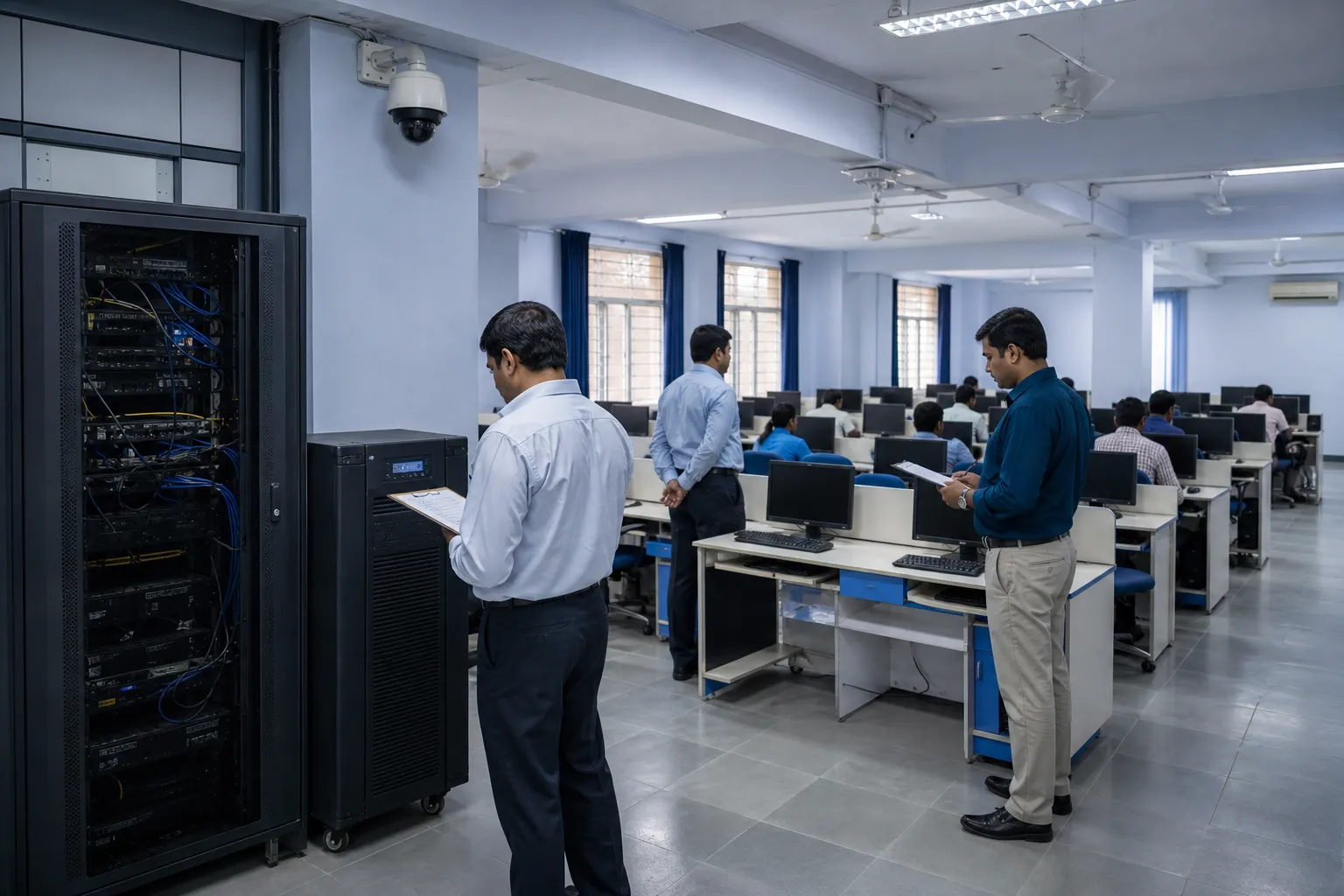
According to the communication described in the public report, institutions are being asked about functional computers, existing IT systems, networking and internet connectivity, power backup, CCTV and allied facilities, and vacant or underused space that could support dedicated computer-based testing infrastructure. The information must be accurate, complete and verified by the institution’s competent authority.
Why the location of a test centre matters
National examinations are often discussed through question papers, answer keys and results. For candidates, however, the centre is part of the examination itself. A distant allocation increases travel and accommodation costs. An unreliable venue can expose candidates to power failures, poor terminals, network interruption, inadequate accessibility or delayed entry.
A geographically distributed network on public campuses could reduce dependence on hastily contracted commercial centres in some regions. Government institutions already have classrooms, laboratories and local administrative structures. Those advantages are real, but they do not automatically make a college laboratory ready for a high-stakes national test.
The inventory should therefore distinguish between the total number of machines and the number that can run simultaneously under examination conditions. It should record the age and specification of terminals, spare capacity, secure local networking, bandwidth under full load, isolation from ordinary campus traffic, generator or UPS duration, fire safety, candidate waiting space and accessible routes.
CCTV deserves a similarly careful approach. Surveillance can help investigate incidents, but it needs rules on coverage, retention, access and privacy. A camera count without usable footage, secure storage and an audit trail is a weak safeguard.
From inventory to accreditation
The 15 September submission should be treated as the first filter. NTA will need physical inspection, test runs and common operating standards before approving a site. A credible process would include load testing, mock examinations, accessibility checks and a documented failure protocol for power, connectivity and individual terminals.
Responsibility must also remain clear. If an examination is conducted at a college using an external technology provider, candidates should know which authority records an incident and who decides the remedy. Fragmented responsibility is one reason centre failures become prolonged disputes: the venue points to the vendor, the vendor points to local electricity, and the examining body waits for reports.
Standard Testing Centres will deserve their name only if the standard is public and measurable. Useful indicators include terminal failure rates, backup restoration time, number of accessible workstations, candidate travel distance, complaint resolution time and the frequency of unannounced audits.
What institutions should do now
Institutions responding to AICTE should avoid inflating capacity to secure selection. A conservative, verified figure is more valuable than a large number that collapses during a full shift. They should identify spaces that can be dedicated without displacing regular teaching and calculate the staff and maintenance cost after any initial installation.
Colleges should also consider the academic calendar. A national test centre that repeatedly closes laboratories during semester practicals can create a different educational problem. Separate infrastructure or a transparent schedule may be necessary.
For candidates, no application action follows from the AICTE request. It does not change an examination city already allotted, and it does not authorise institutions to collect candidate details. Any future centre allocation will come through the relevant examination portal and admit card.
The exercise is nevertheless important because it moves a recurring exam-quality problem into infrastructure planning. India’s computer-based testing system needs more than additional machines; it needs dependable, accessible venues with a single chain of accountability. The present survey can support that goal if the verification is exact and the eventual approval process is stricter than a spreadsheet count.