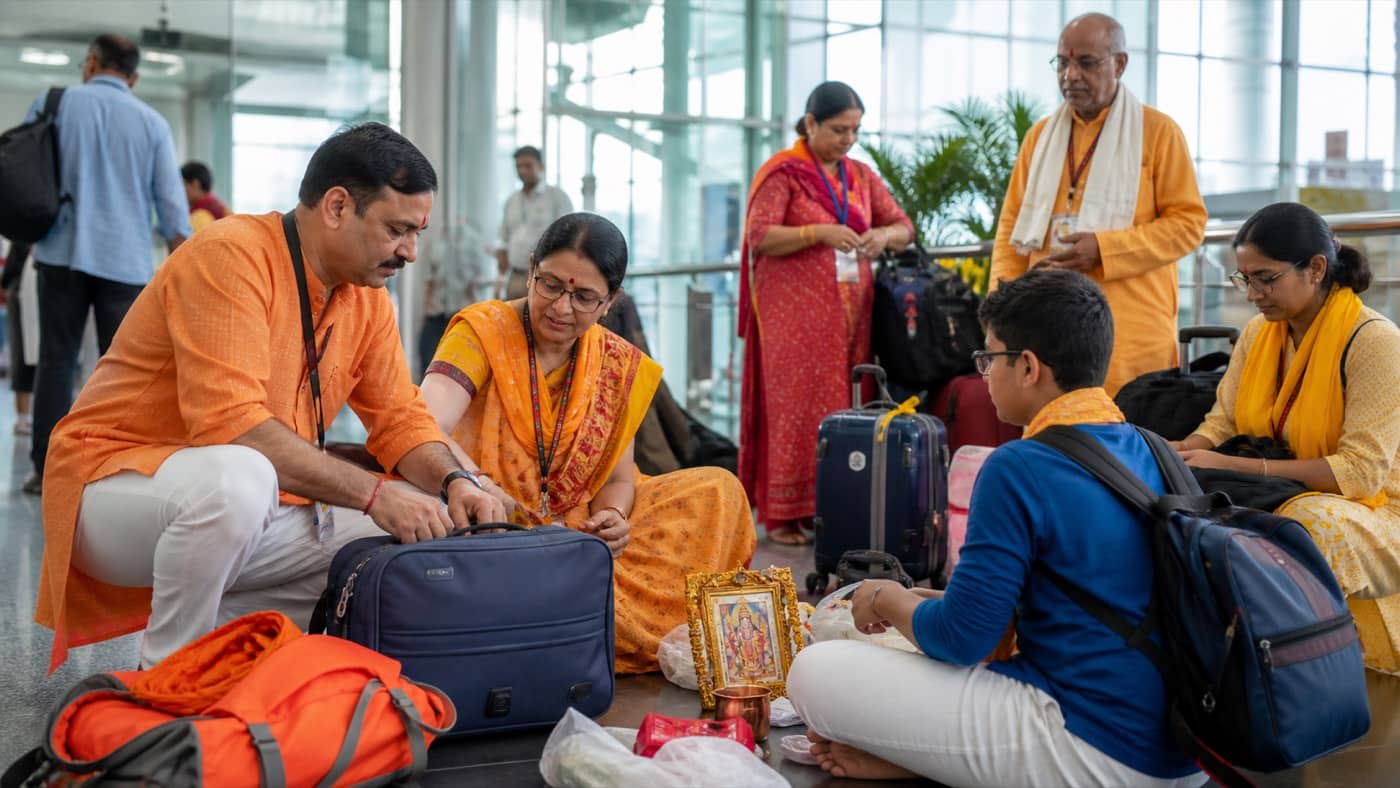
VARANASI: A group of 230 devotees from Kashi is preparing to travel to Jhunjhunu in Rajasthan for a Rani Sati Dadi festival that will feature dry fruits sourced from 56 countries and sweets from 70 Indian cities as ceremonial offerings. The journey is being organised by Jai Dadi Naam Bank Kashi Trust for September 20.
The group plans to fly from Lal Bahadur Shastri International Airport to New Delhi and continue to Jhunjhunu by bus. Organisers said participants will perform Mangal Path during the journey. After attending the festival, they are scheduled to visit Khatu Shyam and Salasar Hanuman on September 21.
The plan was discussed at a meeting at trust president Pradeep Tulsyan’s Bhelupur residence. Tulsyan and patron R.K. Chaudhary outlined the travel sequence and the programme at the temple. On September 22, a Mangal Path and a “mayra” ceremony connected with Dadi’s wedding tradition are expected to be held in the temple complex.
Large devotional journeys are also logistical exercises. A group of 230 includes older travellers, people with different mobility needs and luggage that must move between an airport and multiple buses. Organisers need a clear rooming list, emergency contacts, medical information, head counts at every transfer and contingency plans if flights or roads are delayed.
The global offering is intended as a sign of the community’s reach. Its scale will attract attention, but food handling and transparent coordination are important when items arrive from many places. Packaging, storage, customs rules where applicable and the eventual distribution of prasad should be managed as carefully as the ceremonial presentation.
For Varanasi participants, the journey connects one pilgrimage city with Rajasthan’s well-established devotional circuit. The travelling Mangal Path turns transit time into part of the observance rather than a gap between rituals. It also reflects how religious associations organise community networks that cross state and national borders.
The festival is still three weeks away, so travellers should rely on final instructions from the organisers for reporting time, baggage limits and health arrangements. The meeting has established the broad shape: flight, road journey, festival and temple visits. The success of an event this size will be measured not only by the spectacle of offerings, but by whether every devotee is moved safely, informed clearly and brought home on schedule.
Participants should also receive a single printed or digital itinerary naming group leaders for each bus, nearby medical facilities and the procedure if someone is separated. In a large pilgrimage, calm communication is a safety tool. The devotional character of the journey does not reduce the need for professional planning; it makes care for every traveller part of the observance.