
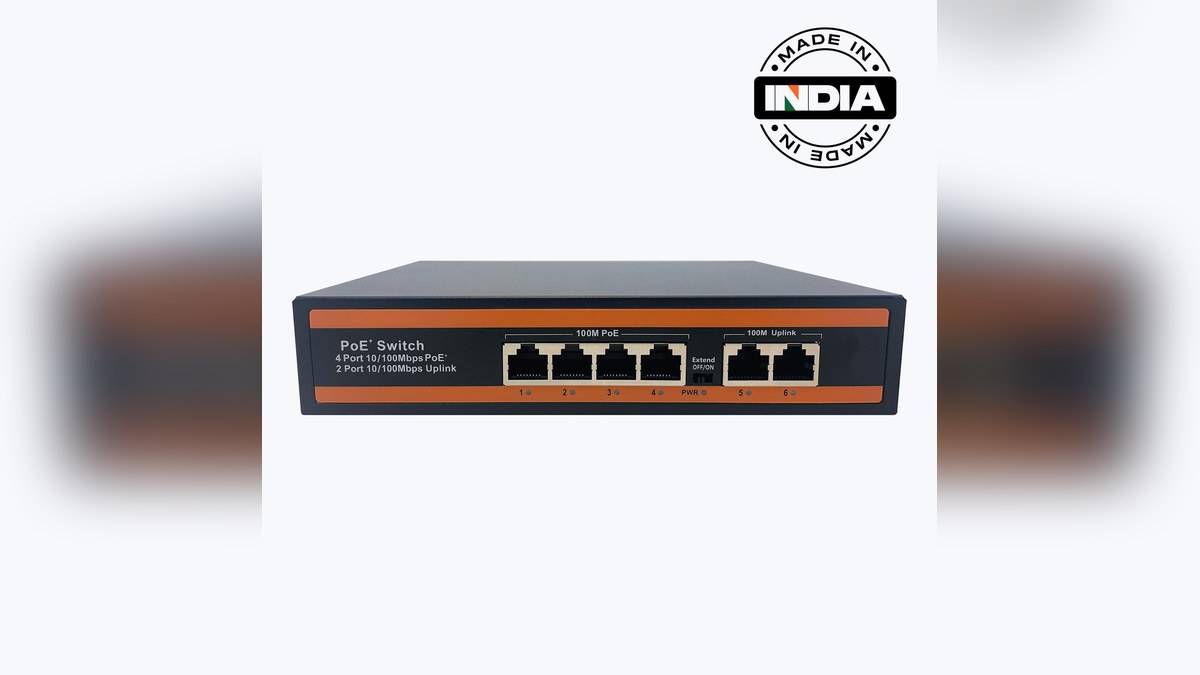
NEW DELHI: Zebronics lists the Zeb 4PPM2UM at Rs 3,299 including tax. This small PoE switch is relevant to a compact wired CCTV plan, provided its shared power budget and uplink speeds match the cameras and recorder. Price as of 24 November 2026, 00:18 IST.
| Listed configuration | 4PPM2UM: Rs 3,299, tax included |
|---|---|
| Camera-side ports | 4 x 10/100M PoE |
| Uplink ports | 2 x 10/100M Ethernet |
| Shared power budget | 75W |
| Individual port limit | Up to 30W |
| PoE support | IEEE 802.3af/at |
A smaller installation still needs a complete plan
According to the official Zebronics product page, the unit is an unmanaged switch measuring 20.2 x 14 x 4.5cm. The page lists a power cord and QR code guide with the switch. It offers a single priced configuration for this exact model.
In a small home, the tempting approach is to choose cameras first and buy whatever networking box has enough sockets. A better starting point is a coverage sketch. Decide what must be visible at the entrance, where a parked vehicle obscures a view and whether an internal corridor actually needs recording. That can prevent an unnecessary camera from dictating the whole equipment budget.
The layout here suits a deliberately limited set of wired endpoints. It deserves particular attention when the household wants to centralise power and network connections in an accessible cupboard. Ask the installer to show how each cable reaches that cupboard and how the recorder connects. Keep the wiring understandable to somebody who did not carry out the installation.
Treat the power allowance as shared
A camera count cannot replace a power calculation. Have the installer identify the maximum demand of every selected camera, including its night functions, and document the combined requirement. Check that the proposal leaves sensible operating headroom. If the quoted camera is later substituted, repeat that check rather than assuming that all cameras with similar picture resolution use the same power.
This matters when a household gradually improves its CCTV system. A camera facing a poorly lit gate may be replaced by a more capable unit, while the switch stays hidden in the cupboard. Keep the original load calculation with the invoice so the next installer can see why the switch was selected. A simple equipment record can make a future upgrade less speculative.
How to think about the uplinks
The table shows the connection speeds that should anchor the network design. Ask where the recorder sits and which camera streams must travel over an uplink. The installer should be able to relate the configured video bitrates to that path. Avoid approving a design based solely on an assurance that the switch is intended for cameras.
The practical demonstration should involve recording and playback using the settings the household expects to keep. Opening a live view on a phone proves only part of the job. Ask to retrieve an earlier event, check that all expected views are present, and then repeat remote viewing separately. Keep any internet problem distinct from local recording performance when judging the handover.
Who it is for
The most natural fit is a home owner with a small, settled wired camera plan and no immediate need to expand the powered endpoint count. It is less persuasive if the household already expects more camera positions, or if the actual requirement is a standalone room camera. Work from the coverage need rather than allowing an inexpensive networking component to determine camera placement.
For alternatives, compare an equally small Gigabit switch when faster local links are part of the requirement, or a larger PoE model when expansion is genuinely planned. Check the exact port map and power allowance of each candidate. Similar port counts can conceal different uplinks, while similar power labels can accompany different physical connection layouts.
An installation quotation should be itemised
Keep the switch price separate from cameras, recorder, storage, cable work and commissioning. Request a precise model name on the invoice and retain the approved specification alongside it. If an installer proposes a substitute, ask for an updated diagram and load calculation before accepting the change. A verbal claim of equivalent performance is hard to check after installation.
Zebronics lists two-year warranty cover for the PoE-switch category. Its policy requires purchase evidence and intact identifying labels. Store those records where the household can retrieve them without dismantling the installation.
Finally, agree who will support the system after handover. Label the camera cables by location and preserve the final equipment list. If a view disappears later, that record lets the household describe the fault clearly and lets a technician trace the correct connection. It is a useful part of making a small installation serviceable over time.
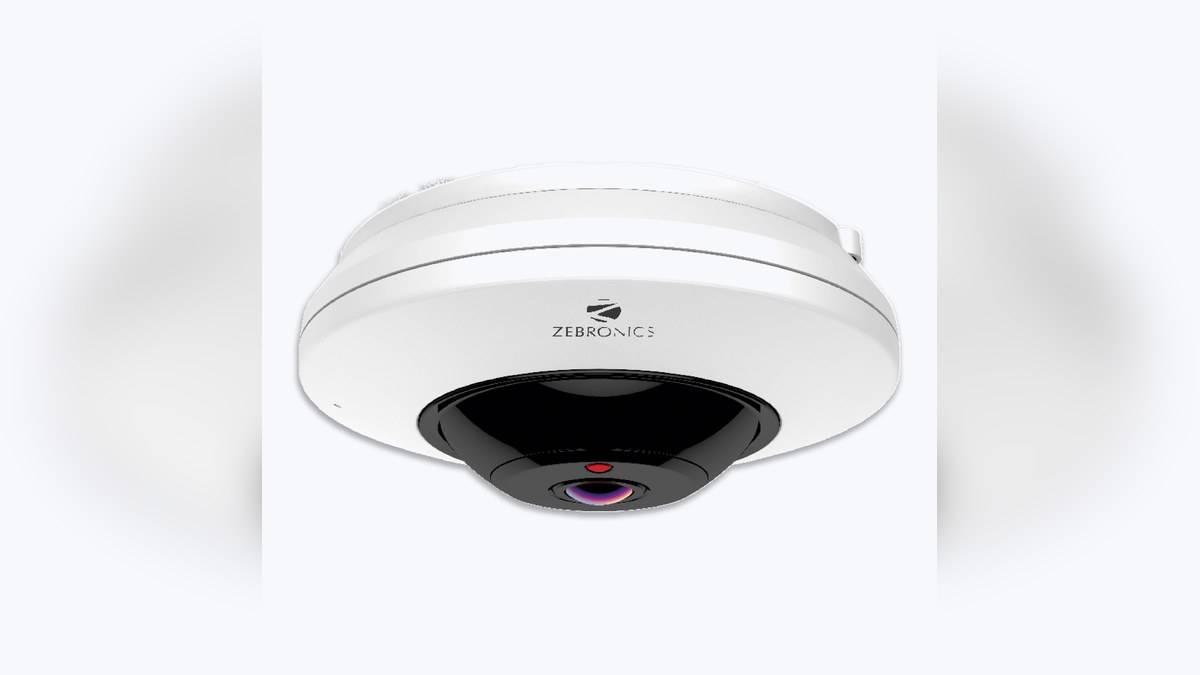
Related reading: our guides to the Zeb 4PG2UG1UF 65, Zeb 10CHVS6TA8M recorder and Zeb Smart Cam 100 explain other parts of a home surveillance setup.
Official sources: Zebronics product page and Zebronics warranty policy.