
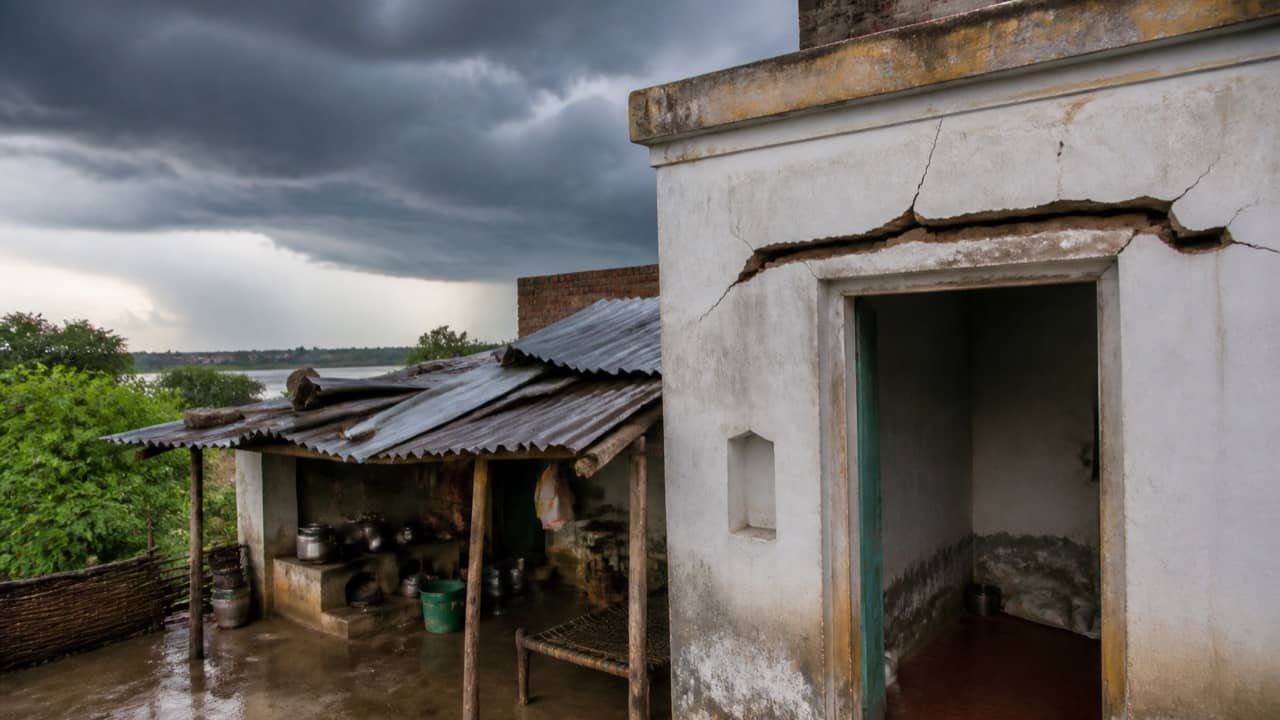
VARANASI: A 55-year-old woman died after lightning struck a house in Gosaipur on Tuesday morning, damaging the lintel and affecting the tin-roofed area where she was cooking. The victim was identified as Kiran Mishra. Family members took her to hospital, where doctors declared her dead, according to a report compiling rain-related fatalities in the district.
This incident is distinct from the lightning death reported in Rupchandpur, Cholapur, and from the city's separate electrocution cases. The available account says the house structure was damaged and Mishra was in the cooking area when the strike occurred. It does not provide an engineering assessment of the path followed by the current, so claims about the precise mechanism should wait for official inspection.
Tin roofing and exposed metal can create dangerous paths during a lightning event, particularly when a person is touching utensils, wiring, taps or a damp floor. A substantial enclosed building is generally safer than an open shelter, but no structure is automatically protected. Lightning current can enter through electrical lines, plumbing, antennas or a direct strike and then travel across connected surfaces.
Varanasi's recent storm produced several different hazards in the same 24-hour period: direct lightning, electrical leakage and rain-weakened structures. Grouping every death under 'rain' can hide the prevention required for each. Lightning safety depends on shelter and conductors; electrocution prevention depends on isolation, earthing and wiring; collapse prevention depends on drainage and structural integrity.
Mishra's family may need assistance through the district disaster-relief process. Officials should help with the death certificate, site report and any documents required for ex-gratia support. The damaged house should be checked before relatives resume cooking or sleeping near the affected section. Temporary covering must not be fixed to an unstable wall or energised cable.
Village-level warnings should reach residents before a storm, not only after casualties. Public-address systems, mobile alerts and local volunteers can repeat one actionable message: stop field work, leave open or tin-only shelters and enter a substantial building when thunder is heard. Schools and self-help groups can reinforce the same rule before the monsoon peak.
During a thunderstorm, people indoors should avoid wired appliances, plumbing, windows and contact with concrete walls or floors where possible. Cooking under an open tin shed should stop until the storm passes. Someone struck by lightning does not retain an electrical charge and can be assisted, but emergency medical help is urgent even when there are no obvious external burns.
This report is based on a Live Hindustan account published on 26 August 2026. Dalimss News independently rewrote, checked and contextualised the available information. Where a claim, allegation or opinion is attributed to a person or institution, it remains their statement; no on-scene reporting or independent interview is claimed.