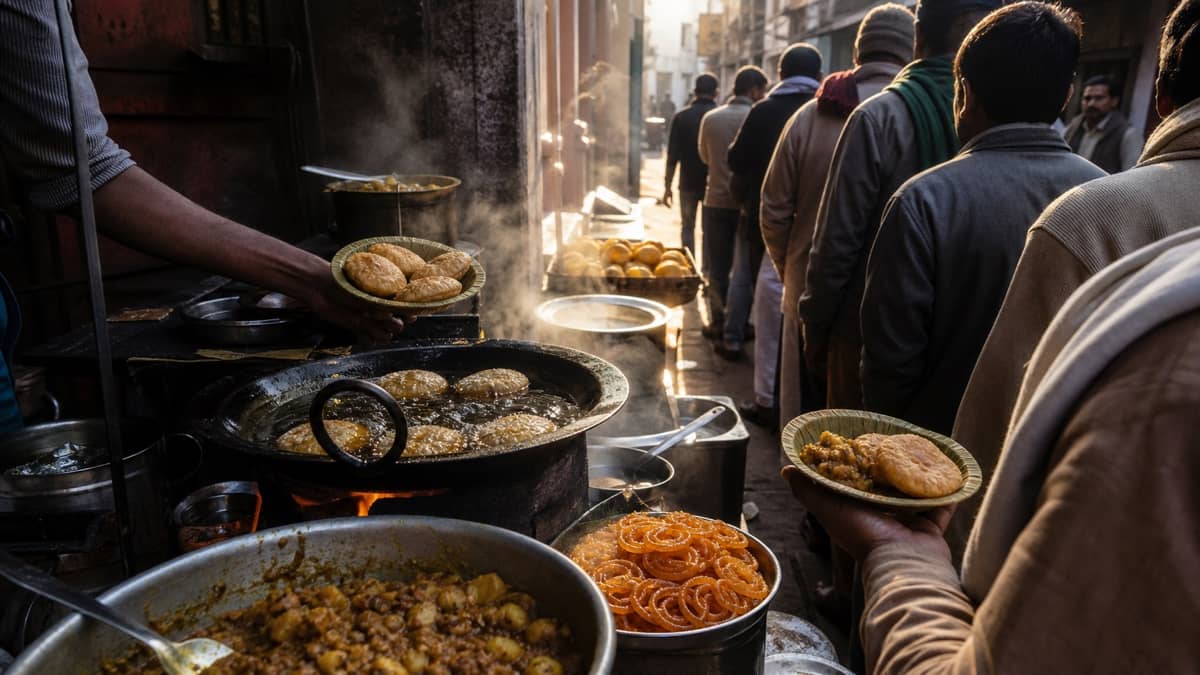
VARANASI: Long before the old city reaches its daytime volume, one queue is already forming. A halwai lifts the first batch of kachoris from hot oil, ladles potato-and-chickpea sabzi into leaf bowls and resets the morning rhythm that Banaras has repeated for generations.
The city’s kachori is not a single standard recipe. Shops guard their proportions and families argue about the correct texture, yet several features recur. The filling, or pitthi, is often made from soaked urad or moong dal ground to a coarse paste. Roasted cumin, coriander and other spices give it depth, but hing provides the sharp aroma many customers identify immediately as Banarasi.
The filled dough—made with wheat flour, refined flour or a house blend—is fried patiently until the shell turns crisp and golden while the centre cooks through. Too-hot oil can colour the outside before the filling is ready. Too-low heat makes the kachori heavy. Experienced cooks judge the batch by sound, swelling and the resistance of the surface rather than a timer.
The accompaniment completes the breakfast. Varanasi vendors commonly serve a thin, spicy potato-and-chickpea preparation without onion or garlic, though seasoning changes from lane to lane. The kachori is broken directly into the sabzi so the crisp shell takes on gravy without disappearing. A hot jalebi at the end balances heat with sweetness, which is why the two stalls are often neighbours—or the same counter.
Morning queues say something beyond taste. Kachori is fast, filling and social. Regulars exchange neighbourhood news while standing, pilgrims eat before joining a temple line, and workers can finish breakfast without a formal table. The leaf plate or bowl is part of the experience, though responsible disposal matters in lanes where food waste can block a drain by noon.
Food safety is as important as nostalgia. Oil quality, clean water, covered ingredients and hand hygiene determine whether a celebrated breakfast remains a good one. Customers can look for a busy stall with rapid turnover, freshly cooked food and utensils protected from roadside dust. People managing salt, oil or blood-sugar intake should treat the meal as an occasional indulgence rather than a health claim.
Tourists often ask for the city’s “best” kachori, but Banaras resists that tidy ranking. One shop is known for hing, another for a darker sabzi, a third for the jalebi that follows. The pleasure is partly in finding the version that fits your morning.
Ghats and temples dominate Varanasi’s photographs. Kachori belongs to the city’s clock. Its steam signals that shutters are opening, milk is arriving and the lane is awake. That is why people wait: not only for a fried bread, but for a breakfast that tastes like Banaras beginning its day.