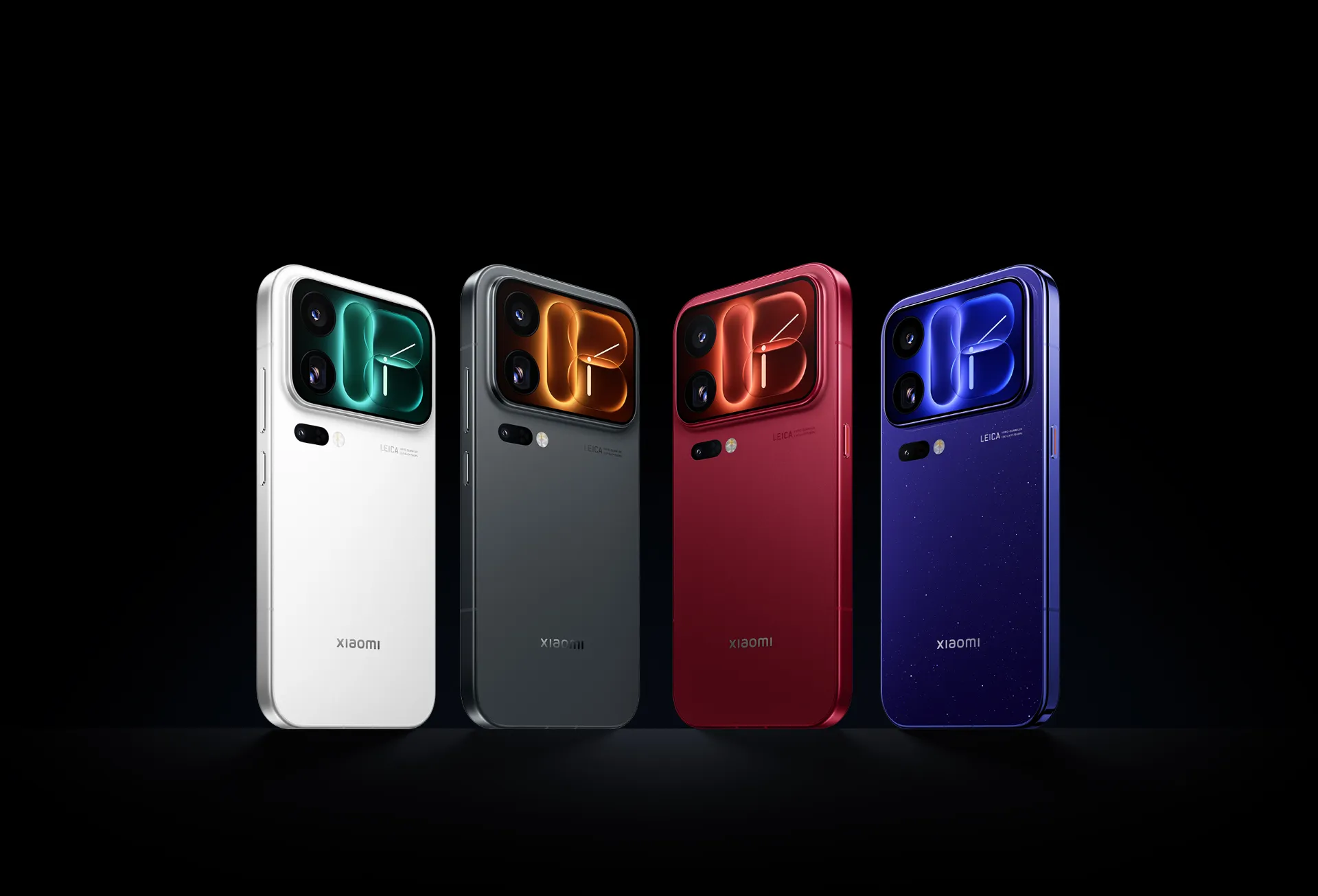
Xiaomi and Leica introduced the Xiaomi 18 Pro and Xiaomi 18 Pro Max internationally on November 17, with the two phones combining rear displays and dual 200-megapixel camera systems. Leica's announcement, issued from Wetzlar and Paris, identifies the Max's larger display, different main image sensor and more powerful processor as key distinctions between the models.
The release moves the story beyond the scheduled presentation covered in our earlier Xiaomi and OPPO launch-status report. Official regional sales terms now provide prices, while the global product pages identify the hardware fitted to each model. These are overseas-market details, not an announcement of Indian pricing or an Indian sale date.
UK prices are separate from launch discounts
Xiaomi's UK launch terms list the Xiaomi 18 Pro at an original price of £1,199 for 12GB RAM and 256GB storage, rising to £1,399 for 12GB and 512GB. The Pro Max is listed at £1,399 and £1,599 for the corresponding configurations. That makes the Max £200 more expensive at either storage capacity, before promotions.
Prices checked as of 18 November 2026, 11:47 am IST. These are the original prices printed in Xiaomi’s UK terms, not a checkout quote after discounts. The document separately describes conditional vouchers, gifts and trade-in benefits. Its promotion period runs from November 17 to December 31, subject to stock. A reader comparing offers should therefore check the applicable conditions rather than subtract every advertised benefit from the handset price.
Prices also depend on the market. Xiaomi's Spanish promotion terms list the 12GB/256GB Pro at €1,399.99 and the equivalent Max at €1,599.99 in the product-price column. The document says purchases under that promotion include VAT. Neither a sterling figure nor a euro figure establishes what an Indian buyer will pay, and converting those amounts into rupees would not create an official India price.
Different displays, processors and batteries
The global Xiaomi 18 Pro page specifies a 6.4-inch Privacy Display, Snapdragon 8 Elite Gen 6 processor and a 6,000mAh typical-capacity silicon-carbon battery. The rear screen can show notifications and activity updates, and can act as a preview when taking pictures with the rear cameras. That gives it a practical role beyond displaying a decorative clock or wallpaper.
Xiaomi also describes a customisable AI button, with shortcuts for translation and voice notes. Its privacy-screen qualification matters more than the branding: the feature reduces visibility from side angles, but content can remain visible in some conditions, and setup is required. It should not be described as a guarantee that other people cannot see the screen.
The global Pro Max page instead lists a 6.9-inch Privacy Display, Snapdragon 8 Elite Extreme Gen 6 and a 7,050mAh typical battery. The larger capacity is a specification, not proof of a particular real-world endurance advantage. Battery life still depends on use, settings and conditions; this report is not a hands-on test.
For charging, the Max page specifies 100W wired HyperCharge and 50W Wireless HyperCharge. Its footnotes say no power adapter is included in the box and the wireless charger is sold separately. The separate UK launch-gift offer therefore needs to be checked rather than treated as the standard contents of every regional retail package.
Camera differences and the India question
Leica's launch announcement describes 200-megapixel main and telephoto cameras on both phones, alongside a 50-megapixel ultrawide. The main camera pairs a 1/1.28-inch sensor with an f/1.67 Summilux lens. The Max uses the Light Fusion 960L sensor with LOFIC HDR technology, which Leica describes as helping capture scenes with large brightness differences.
The telephoto's optical focal length is 75mm, with close focusing at 12cm. Leica distinguishes that optical focal length from the additional 150mm and 300mm framing options, so those longer figures should not be presented as separate optical lenses. Its digital simulations of classic Leica lenses are software treatments, not interchangeable physical optics.
The global and regional materials reviewed here do not provide an India launch date or India price. Keep that distinction in mind when comparing this overseas release with dated Indian launches and undated teasers: a product announcement, a local launch and the start of sales are different events.