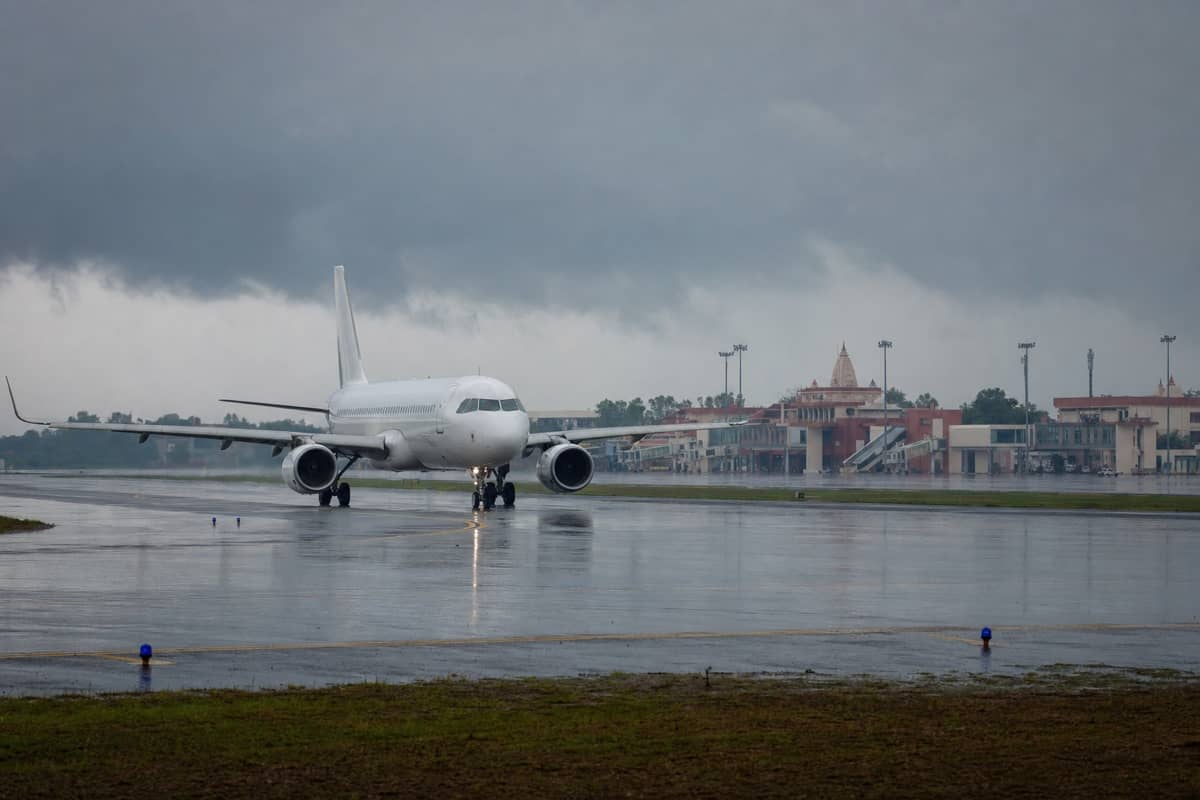
Varanasi: Monsoon weather disrupted air travel at Lal Bahadur Shastri International Airport on 18 July as one Bengaluru service was cancelled and a Mumbai rotation ran more than an hour late, while forecasts pointed to a heightened risk of heavy rain, thunderstorms and lightning.
Akasa Air’s Bengaluru–Varanasi–Bengaluru service, QP-1423, was cancelled after passengers were notified. The airline’s Mumbai–Varanasi–Mumbai service, QP-1427, arrived and departed about one hour and 21 minutes behind schedule.
Flight operations can be affected by weather at the departure airport, destination or along the route, so a local rain forecast does not by itself explain every cancellation or delay. Travellers should rely on their airline’s live status and airport messages rather than assuming that a scheduled service will operate normally.
Heavy rain and lightning risk
The local forecast for 19 July called for a generally cloudy sky with spells of rain or thundershowers, along with the possibility of heavy rainfall and thunderstorms accompanied by lightning. A further heavy-rain risk was indicated for 20 July.
These conditions can reduce visibility, slow ground handling and create lightning-related pauses for ramp staff. Even when aircraft are able to land, baggage loading, refuelling and departures may be held until conditions are safe.
Road journeys to Babatpur can also take longer during intense downpours. Passengers should leave additional time, complete web check-in where available and keep phone and email alerts enabled. Those with onward connections should contact the airline promptly if the first sector is delayed or cancelled.
What passengers can do
A cancelled flight normally triggers rebooking or refund options under the airline’s applicable rules, but the practical choice depends on seat availability and the urgency of travel. Passengers should preserve booking messages and receipts, and confirm alternatives through official airline channels.
The disruption adds a short-term operational concern to the airport’s longer infrastructure story. Varanasi is pursuing a major airport expansion and runway-tunnel project, while airlines have also adjusted routes in recent months. Weather resilience, reliable schedules and clear passenger communication will matter alongside construction.
Conditions can change quickly during the monsoon. Residents should avoid exposed rooftops, open fields and isolated trees during lightning, while travellers should check both flight and road conditions before starting for the airport. The safest approach is to treat forecast warnings as planning information and verify the latest operational status directly before departure.