
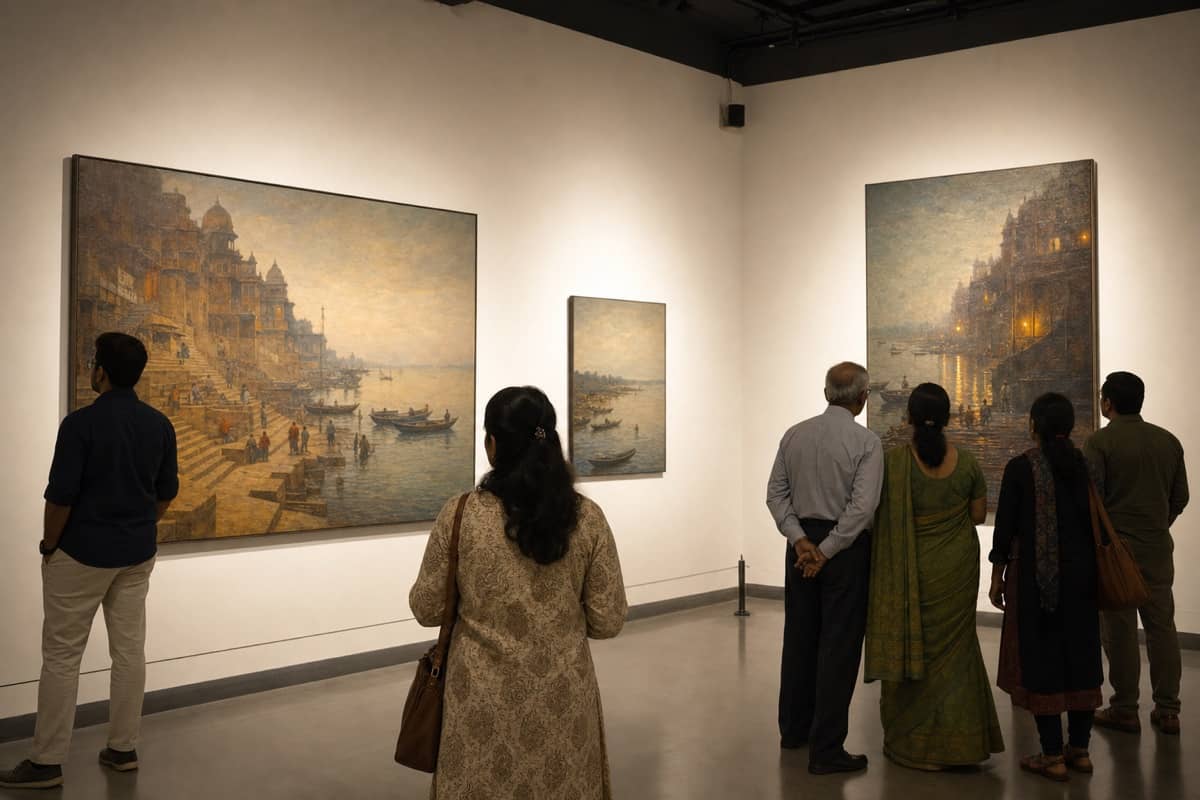
Varanasi: A three-day solo exhibition at Bharat Kala Bhawan, Banaras Hindu University, brought together 16 works examining life, death and the idea of liberation on the ghats of Banaras.
Titled “Life Death Liberation in Banaras Ghat”, the exhibition by artist Subhash Chandra opened on 14 July 2026. It was inaugurated in the presence of BHU Vice-Chancellor Professor Ajit Kumar Chaturvedi and Bharat Kala Bhawan Director Professor Sreerup Raychaudhuri.
The works moved between everyday activity, ritual, cremation and spiritual reflection. Paintings including “Ghat”, “Life Beyond Life”, “Shiv and Nandi”, “Moksh”, “Salvation Boat”, “Banaras Sadhu” and “Pind Daan” used oil, acrylic and mixed media.
A triptych titled “Mrityu” addressed death directly, while other works placed it within the continuing movement of people, boats, worship and labour along the riverfront. The exhibition avoided treating the ghats as a single scenic image and instead explored the coexistence of ordinary life and ritual belief.
The selection ranged from recognisable ghat imagery to more symbolic treatments of passage and release. Boats, ascetics, temple forms and riverside rituals became recurring visual elements rather than illustrations of a single ceremony.
The show was curated by Suresh Chandra Jangid, an assistant professor in BHU’s Faculty of Visual Arts. Its location at Bharat Kala Bhawan connected a contemporary interpretation of Banaras with the university museum’s wider collection of Indian art and cultural history.
For students of visual arts, the exhibition offered a compact study in how one subject can be approached through different materials and scales. It also invited viewers to consider where observation of public ritual ends and an artist’s personal interpretation begins.
The theme carries particular weight in Varanasi, where cremation, pilgrimage, commerce and daily domestic activity share the same riverfront. The works treated that proximity as a continuing condition of the city rather than an exotic spectacle.
The exhibition concluded on 16 July. Its compact run nevertheless offered students and visitors a focused look at how artists continue to interpret the city’s most familiar landscape without separating its visual beauty from questions of mortality and faith.
BHU Exhibition Explores Life, Death and Liberation on Banaras Ghats
By Harsh Mehra2 min read
About the author
Harsh Mehra
Harsh Mehra reports for Dalimss News. 1208 stories on Dalimss News, most often in India.
Related Stories

India
Gurugram art dates: canvas early-bird price ends tonight
India
TMC Varanasi jobs: walk-ins and October application deadlines
India
Gurugram reports 28,394 tonnes of bajra purchases
India
IIVR Varanasi courses: October deadlines and who can apply

India
MG Windsor Indulge at Rs 17,99,800: check the Pro alternative

India