Varanasi: A government review of Shri Shiv Prasad Gupta Divisional Hospital at Kabirchaura has set immediate priorities for intensive care, diagnostics and emergency staffing while the institution prepares for a ₹315.48 crore redevelopment.
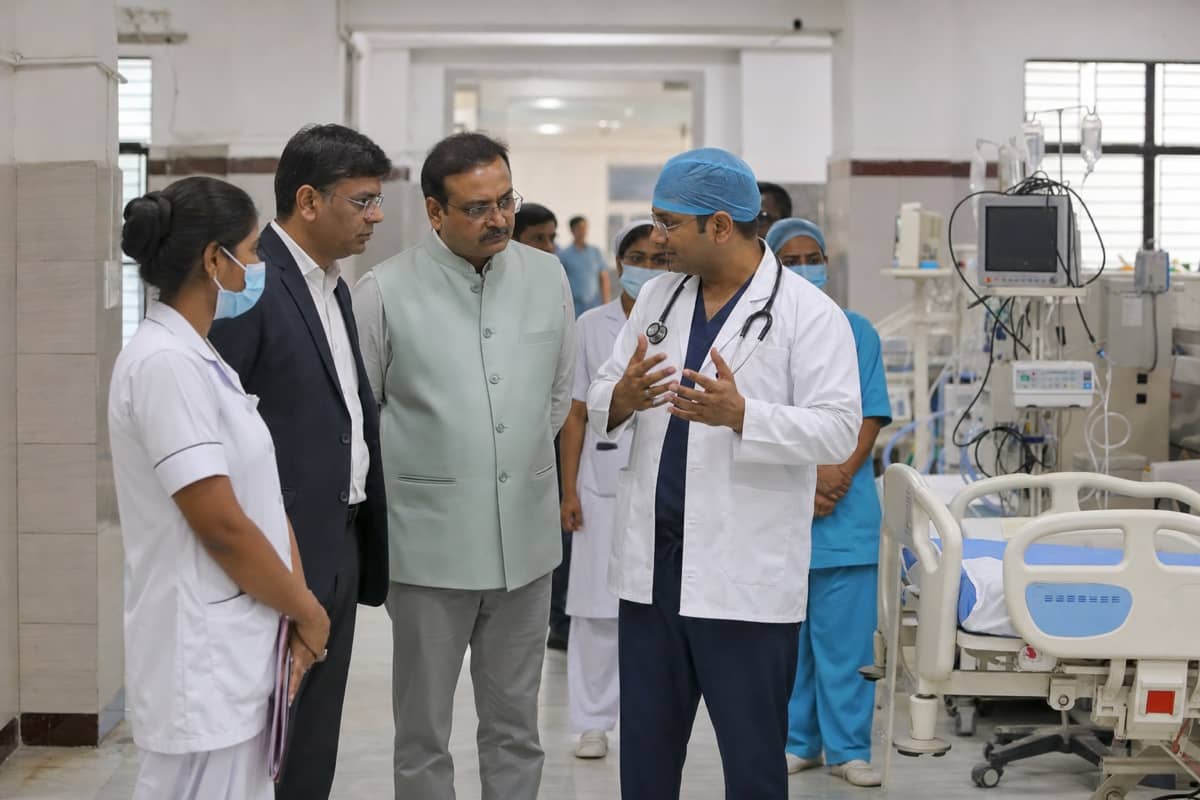
Uttar Pradesh Deputy Chief Minister and Health Minister Brajesh Pathak inspected the hospital on 18 July and directed officials to hold progress reviews every 15 days. The larger project is intended to convert the campus into a 500-bed super-speciality hospital, with services expected to shift in phases while construction proceeds.
During the inspection, officials were asked to expand ICU capacity, plan an MRI service and advance a 50-bed critical-care block. The review also covered night-time X-ray availability, vacant posts and the preparation of Ayushman Bharat cards for eligible patients.
Services during construction
The hospital’s functions are expected to move to the maternal and child health wing as redevelopment affects existing buildings. That transition will need careful sequencing: emergency care, surgery, diagnostics and inpatient services cannot simply pause while a major civil project is under way.
Pathak asked the administration to track work frequently and report progress, signalling that the upgrade will be judged both on construction and continuity of care. The proposed 500-bed facility is a major addition to the city’s public-health capacity, but patients will feel the benefit only if staffing, equipment and maintenance advance alongside the buildings.
The inspection also identified day-to-day shortcomings. A dirty bedsheet was ordered to be replaced and officials were told to act on the lapse. The status of an integrated public-health laboratory also came under scrutiny when the Chief Medical Officer could not provide a satisfactory update; a senior health official was asked to inspect and report.
Why the details matter
SSPG Hospital serves patients from Varanasi and nearby districts, many of whom rely on low-cost government treatment. More ICU beds, round-the-clock diagnostics and a functioning critical-care block can reduce referrals and delays in time-sensitive cases. An MRI service would also close a significant diagnostic gap if it is staffed and maintained reliably.
The project complements other large hospital investments in the city, including the continuing redevelopment planned at BHU’s Sir Sunderlal Hospital. Together, these projects could strengthen Varanasi’s role as a regional care centre.
For now, the key public benchmarks are clear: a published phasing plan, uninterrupted essential services, filled clinical vacancies and regular progress disclosure. The promised 15-day reviews offer a mechanism for accountability, but their value will depend on whether delays and service gaps are recorded and corrected openly.