
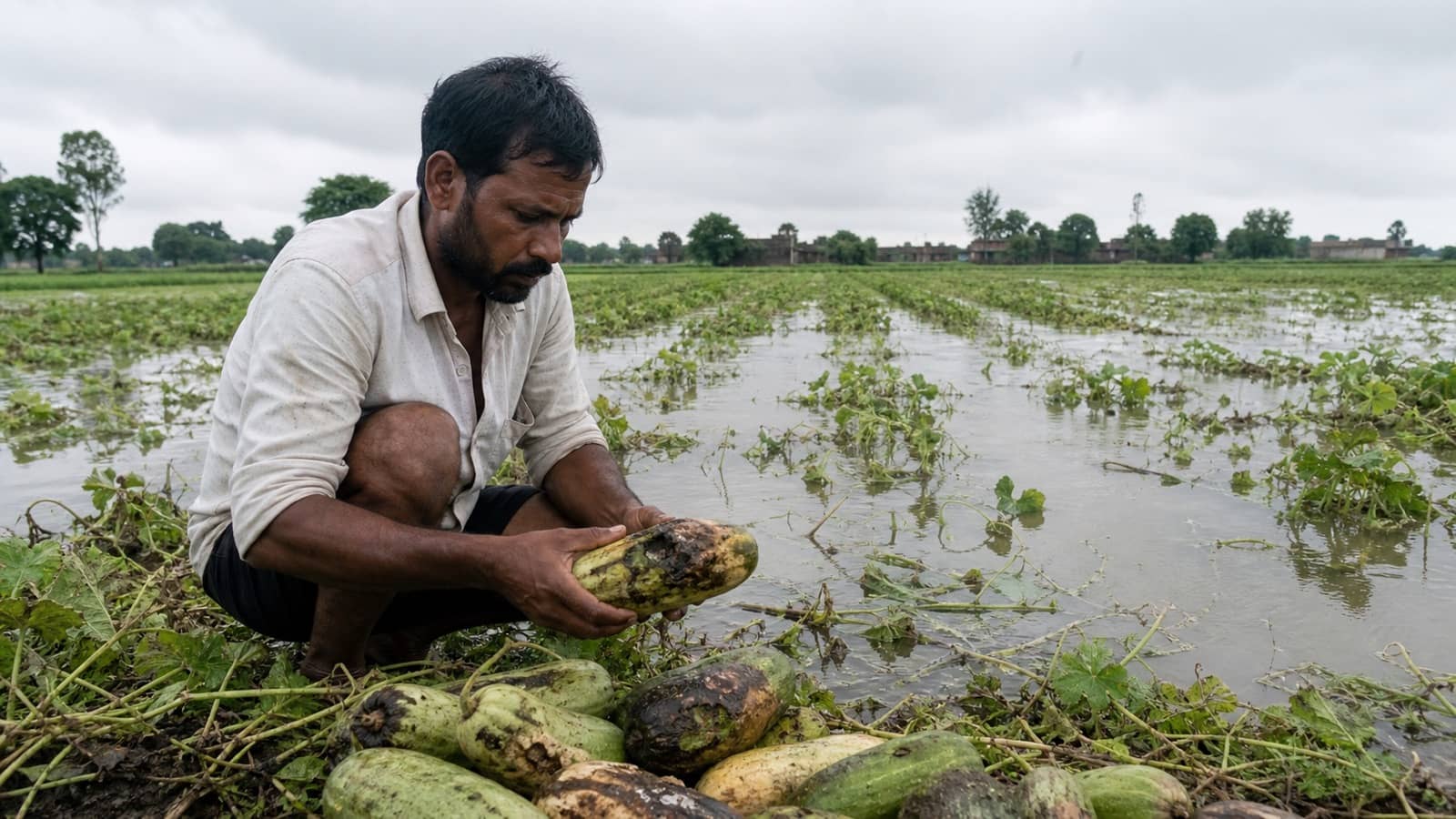
VARANASI: Vegetable growers in several parts of Varanasi district are reporting the first visible signs of crop damage after repeated heavy rain and floodwater left fields saturated.
Cauliflower and amaranth plants have begun to soften and rot, while ridge gourd, cucumber, pumpkin and pointed gourd fruits are deteriorating where they remain in contact with mud, according to farmers quoted in a local report. Water has collected in cultivated stretches across Arazi Line, Chiraigaon and the Lohta belt, placing both newly planted and fruiting crops at risk.
Villages named in the field report include Belwa, Shahanshahpur, Singhorwa South, Jakhini, Bahadurpur, Ramaipur, Jamunipur, Marui, Itahi and Head Ke Pura in and around Arazi Line; Ramchandipur, Gobarahan, Mustafabad and Mokalpur in Chiraigaon; and villages in the Lohta area. Farmers in these pockets grow chilli, tomato, brinjal, sponge gourd, pointed gourd, banana and other cucurbits on sizeable plots.
The timing is particularly difficult for chilli growers. Farmers said roughly 60 to 70 per cent of the season's chilli transplantation had been completed. Young plants need moisture, but roots deprived of air in standing water can fail quickly. Once rot begins, the loss is not limited to the crop already in the field: growers may need fresh seedlings, labour and another planting window.
The Indian Institute of Vegetable Research has advised farmers to focus on drainage and crop management. The immediate priority is to move standing water out wherever an outlet is available without sending it into a neighbour's plot. Damaged fruits and visibly infected plant material should be separated rather than left to spread disease. Any chemical treatment should follow an expert recommendation for the specific crop and condition; mixing products by guesswork after rain can waste money and leave unsafe residues.
The damage will eventually reach urban consumers if supply falls. Varanasi's vegetable prices are shaped by daily arrivals, and short-lived crops cannot be stored like grain. A flooded growing cluster can therefore produce a quick gap between farmgate availability and city demand.
Not every field is affected equally, and the final loss cannot yet be calculated. Higher plots may drain, while low strips near the Ganga and Varuna remain vulnerable to another rise. Farmers are now watching both the sky and the river, a difficult combination because even a break in rainfall may not remove backwater from the fields.
The present warning from the countryside is visible in the crop itself: soft stems, stained fruits and roots sitting too long under water. What growers need next is accessible technical advice, a rapid damage assessment and a clear record of losses before the mud dries and the evidence disappears.