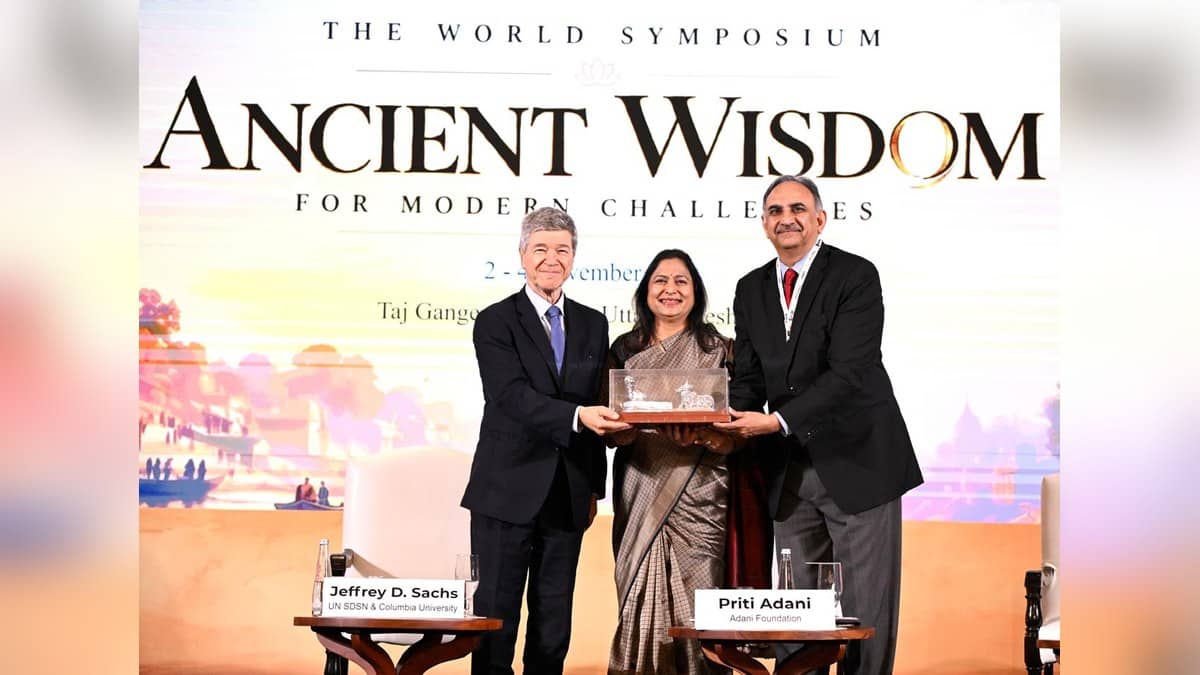
VARANASI: A draft statement published by the Sustainable Development Solutions Network on Tuesday, November 3, 2026, sets out proposals from the city's World Symposium on Ancient Wisdom for Modern Challenges and says its results will be shared with United Nations leadership and member states.
The gathering runs from November 2 to 4 in Varanasi, with Sarnath among the heritage destinations included in the announced programme. For local students, teachers and cultural groups interested in its discussions, the published statement offers a document to read without needing admission to a conference session.
Residents planning to attend should first confirm access with the organisers. The sources reviewed do not establish public walk in entry, a ticket price or an open invitation for the November 4 visits. The announced programme reserves that day for cultural immersion and site visits, after the main conference discussions on November 2 and 3.
What the draft proposes
The organiser's draft statement identifies common ethical ground across traditions, including compassion, truthfulness, restraint and justice. It argues that differences in belief can coexist with cooperation, and connects individual well being with responsibilities towards other people, future generations and the natural world.
It also places character alongside institutions in public life, questions the use of wealth alone as a measure of progress and calls for restraint in the exercise of power. These are the organisers' conclusions from the dialogue, rather than decisions binding on public authorities.
The network says it intends to take the work into discussions about the international development agenda after 2030. It acknowledges the Ministry of Culture as a co partner, the Adani Foundation's support and The Energy and Resources Institute's organisational role.
How the opening session framed the discussion
A separate official account dated November 2 confirms that Adani Foundation chairperson Priti Adani addressed the inaugural session on Monday. She called for inherited knowledge to be judged by its usefulness in dealing with present problems, including suffering, inequality and conflict.
Her address drew on Aristotle's ideas about human flourishing, the Buddha's concern with suffering and Confucius's emphasis on ethical conduct and responsibility. She connected these examples with the Indian idea of the world as one family, and described service as listening to communities and enabling them to influence their own futures.
Nirupam Bajpai, a senior research scholar at Columbia University's Center for Sustainable Development, opened the inaugural session. Ministry of Culture secretary Vivek Aggarwal also addressed it. Jeffrey Sachs spoke on changes in the balance of global economic power. His own website separately lists a recorded foundational address from Varanasi, dated November 2, for people who want to follow the proceedings.
The Varanasi meeting continues a series that previously convened in Athens in 2022, Stagira in 2023, and Qufu and Beijing in 2024. The Indian gathering brings Hindu, Buddhist and Jain traditions into a dialogue that had earlier centred on Greek and Chinese philosophical thought.
What residents should do
The announced discussion themes include peace and dialogue between civilisations, sustainable development, ethics and governance, and human well being. The programme brings together scholars, philosophers and policy specialists, with visits intended to connect those conversations to the city's living heritage and the historical sites of Sarnath.
Readers should distinguish the draft's publication date from the full event dates. Although the statement uses concluding language, its page is dated November 3 and the programme extends through November 4. It should therefore be read as the published draft, without assuming that every scheduled visit or closing activity has already happened.
People following other cultural activities can also consult the city's earlier reports on the BHU Dikshitar commemoration, the New Asi Ghat performance programme and the Bharat Kala Bhavan visitor closure notice. Those reports concern separate events and arrangements, not admission to this symposium.
The draft records seven panels covering subjects that include the architecture of a good life, artificial intelligence, governance and the ecological crisis. Its account also names African, Daoist, Zen, Cambodian Theravada and Catholic sources among the traditions represented in the dialogue.
For its comparison of ethical systems, SDSN specifically cites the five yamas of the Yoga Sutras, the five great vows of Jainism and the five Buddhist precepts. The document places these alongside the virtues discussed by Aristotle and Confucius.
The future programme names the Pontifical Academy of Social Sciences as a partner in post-2030 deliberations. SDSN also states its hope that later meetings will include Abrahamic traditions and Indigenous traditions from the Americas and the Pacific.
The draft cites Ashoka's renunciation of conquest and the Daodejing in its discussion of restraint in state power.