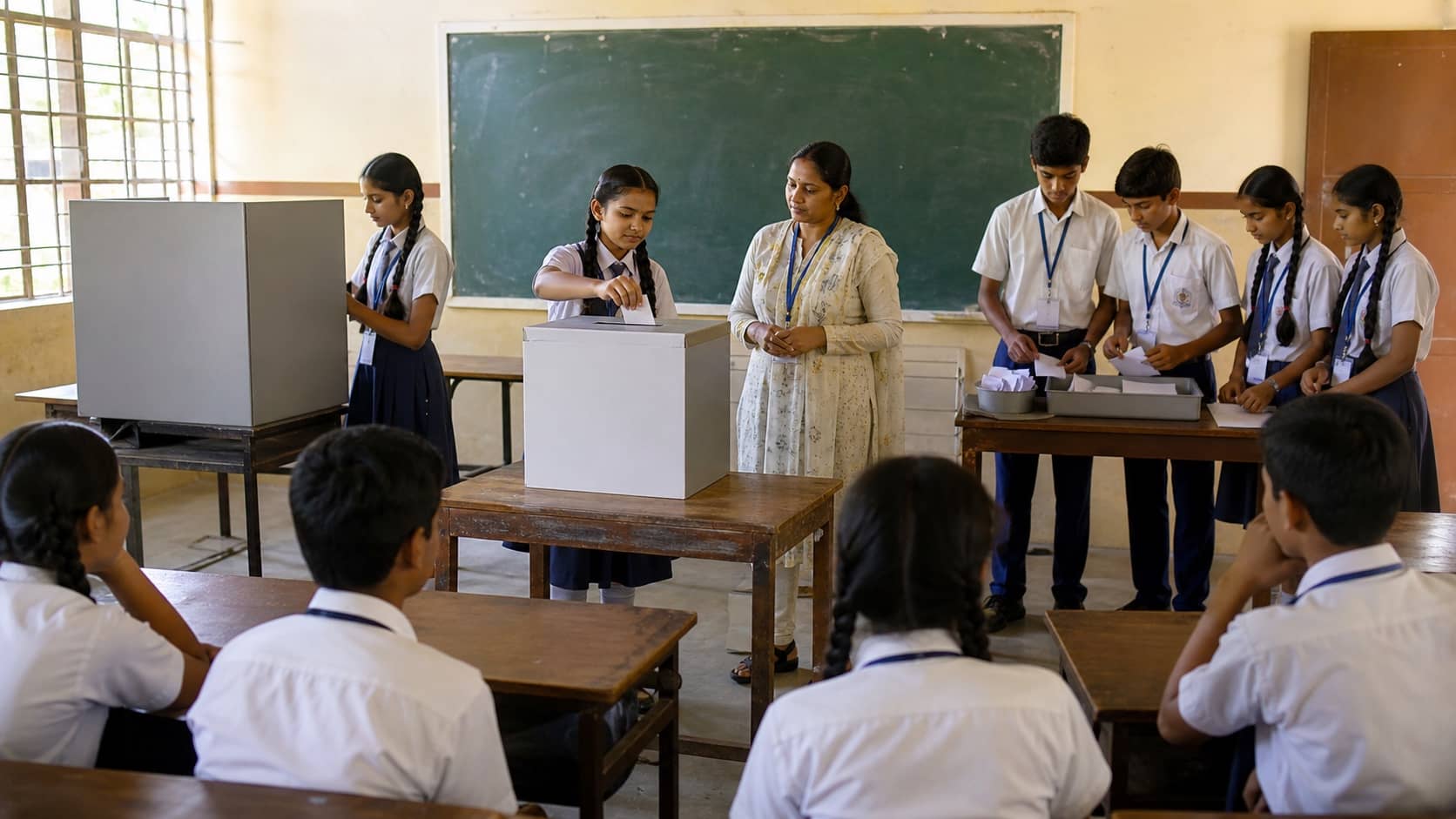
VARANASI: Secondary schools across Varanasi have begun forming Electoral Literacy Clubs designed to introduce students from Classes 9 to 12 to democratic processes, election administration, electronic voting machines and the problem of misinformation.
The initiative follows directions from the Election Commission of India. At least ten schools in each assembly constituency are expected to establish a club, and each school unit will have 25 members. Government and aided schools have started the process, District Inspector of Schools Bholendra Pratap Singh said in the published report.
Membership is meant to include students across classes, sections and science, commerce and arts streams. The club president will be chosen through an internal election. That design gives students a small practical experience of candidature, voting and representation instead of limiting the subject to a civics lecture.
The clubs are also expected to explain how EVMs work and how rumours can distort public understanding of an election. A divisional training programme is planned, followed by practical demonstrations in schools. The students are not yet voters, but many will enter the electoral roll within a few years.
Teaching election literacy to teenagers requires political neutrality. A club should explain institutions, rights, verification and respectful debate without promoting a party or treating disagreement as disloyalty. Clear lesson material and trained facilitators are essential, especially during a polarised news cycle.
Misinformation education should be practical. Students can learn to trace an image, compare a viral claim with an official order and distinguish a result sheet from a social-media graphic. They should also discuss why a false message spreads—emotion, repetition and trust in the sender—not simply be told to 'avoid fake news'.
Schools have run child parliaments and democratic clubs before, but the new ELC structure can add continuity if meetings occur throughout the year. Mock polls, campus issue debates and visits from election staff can make the club relevant outside a single commemorative day.
The strongest outcome would be a student who asks for evidence, knows how to correct a voter record and can disagree without dehumanising another citizen. Varanasi's Gen Alpha cohort may be years away from its first ballot, but democratic habits are built earlier than the voter card.
The clubs should also be accessible to students with disabilities and conducted in language that does not assume internet access at home. Democracy education loses credibility if the club itself excludes quieter students, smaller sections or those who need adapted material. Rotation of roles can widen participation.