VARANASI: Roads cut open for sewer and drinking-water pipelines are to be restored between September 10 and 20 once the rain eases, with the municipal commissioner warning that engineers will be held accountable for delay.
Himanshu Nagpal issued the timeline during a review meeting at the Jal Kal department in Bhelupur on Monday, Amar Ujala reported. A follow-up review is scheduled for September 20. Completed works must also be entered in the measurement book by September 15 so that files do not remain stuck after construction on the ground has ended.
The measurement book, or MB, is not a minor clerical detail. It is the official record of quantities executed at a public work and forms the basis for technical verification and payment. If a junior engineer does not record the completed work promptly, a restoration file can remain unresolved even when the pipeline itself is already functioning.
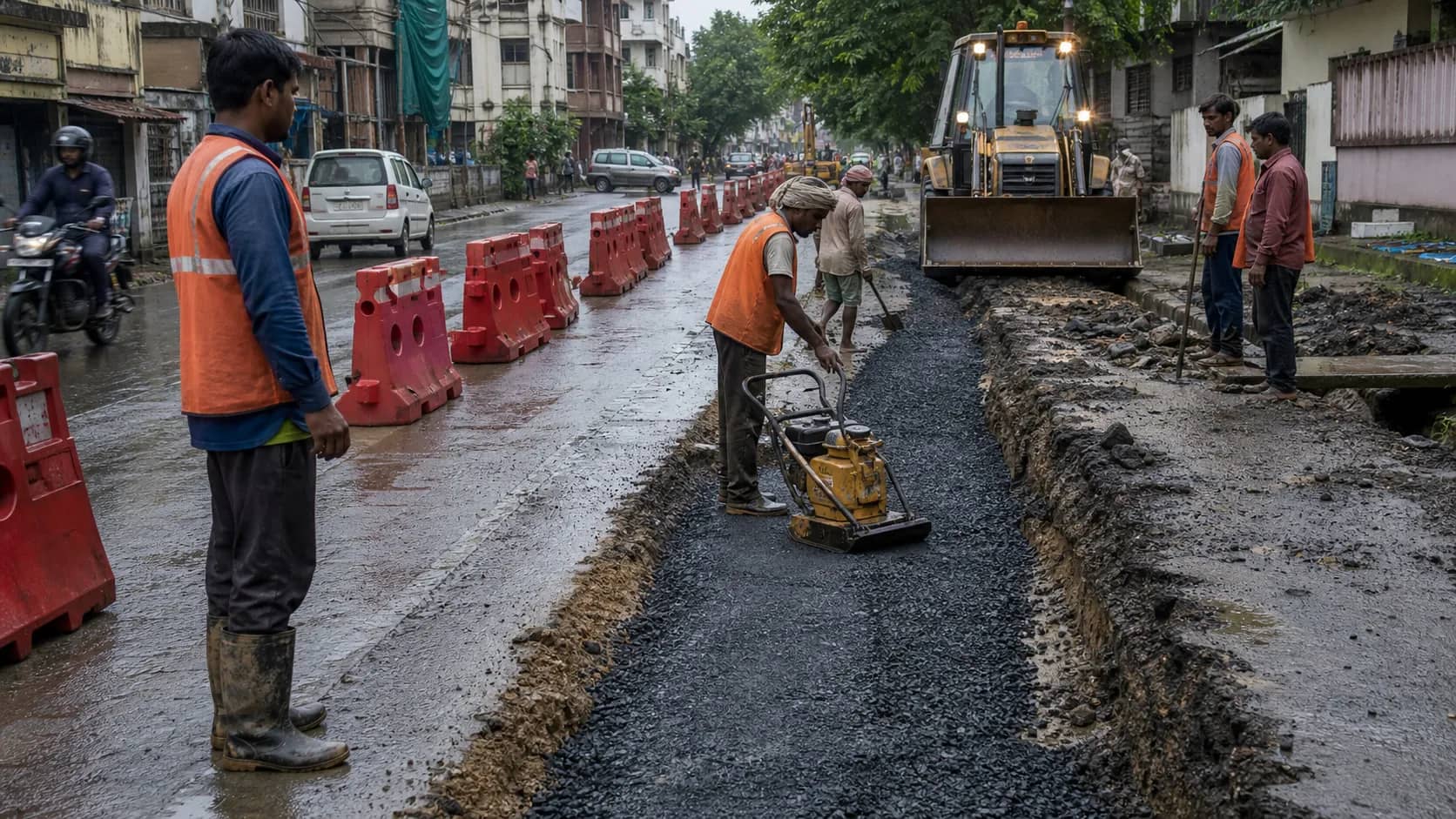
Across Varanasi, utility trenches have left residents negotiating loose soil, sunken patches and broken edges through the monsoon. Rain turns an unfinished cut into mud and can wash out the material placed for a temporary fill. Two-wheelers are especially vulnerable at night when a trench edge is hidden by standing water.
The ten-day restoration window is ambitious. A durable repair requires more than pouring material into a depression. The trench must be compacted in layers, the base allowed to settle where necessary and the road surface matched to the surrounding level so that it does not become a trough or a speed breaker. Manholes and valve chambers must remain accessible without being left dangerously raised.
Nagpal's warning on accountability is important because pipeline agencies, contractors and road-owning departments often pass responsibility between one another. Publishing a ward-wise list of cuts, the executing agency and the restoration date would make the deadline easier for residents to track.
Weather remains the obvious constraint. Hot-mix and other surface work cannot be laid properly during steady rain, but dangerous locations still need barriers, reflective signs and temporary safe access until final restoration is possible. A weather delay should not become a reason to leave an unmarked pit.
By September 20, the meaningful measure will not be how many files are closed. It will be whether the repaired stretch remains level after traffic returns and the next shower arrives. Varanasi has had enough temporary fixes; this deadline should produce roads that survive beyond the review meeting.
Residents can document the repaired location before and after the deadline, but complaints should include a landmark and ward number. A photograph without a precise location may travel widely online while still failing to reach the engineer responsible for that road.