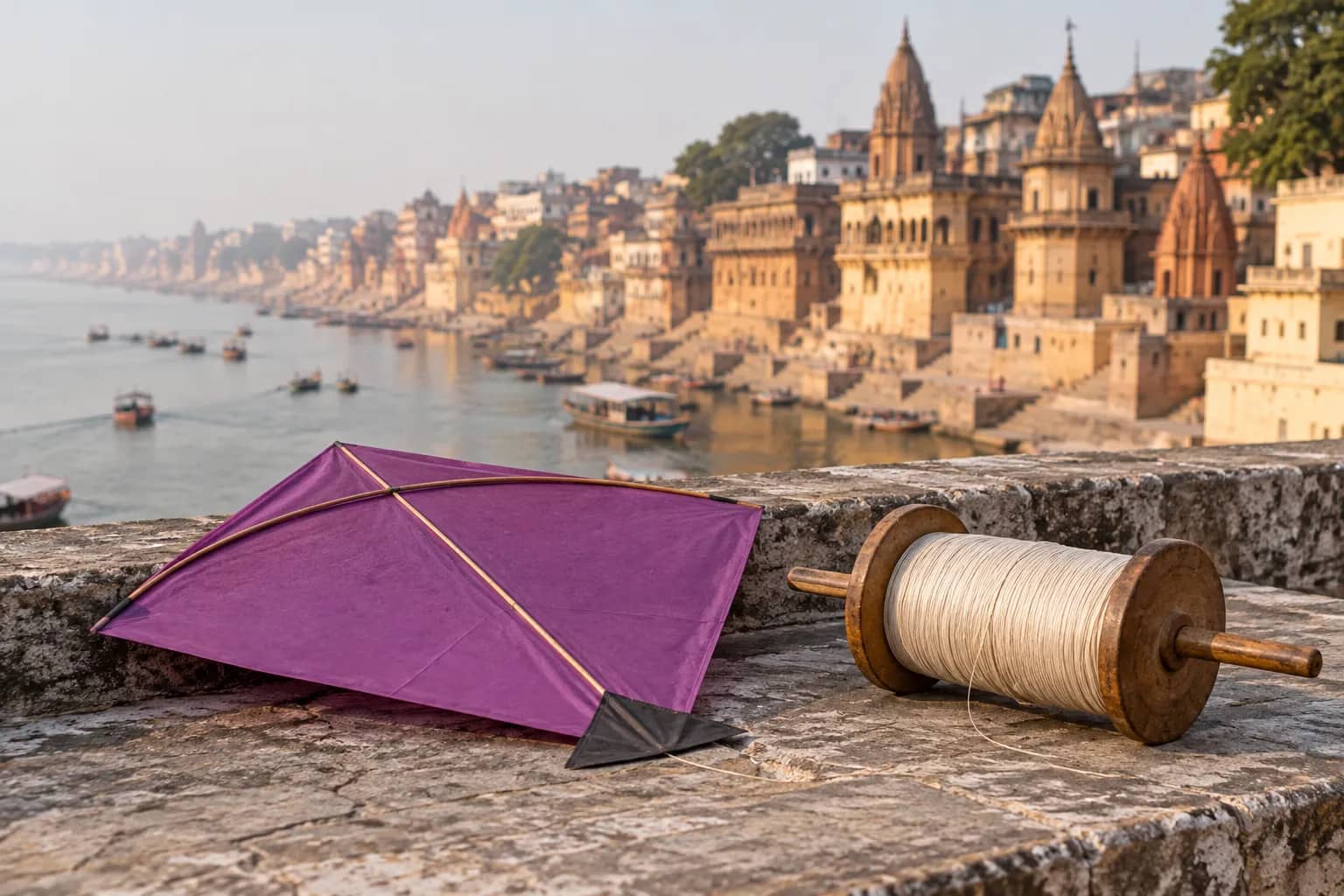
Varanasi Police have reported the seizure of 137.448 kg of prohibited kite string during a special drive against its sale, storage and use. In an update issued on October 12, the police said eight cases had been registered and nine people arrested.
The police announcement attributes the campaign to directions from Police Commissioner Mohit Agarwal and describes the seized material as prohibited Chinese manjha. The current post describes checking operations as the basis of these recoveries. The figures are police-reported enforcement totals. They are not court findings, and the arrests do not establish convictions.
A separate police update on October 11 recorded a review with gazetted officers that included action against prohibited kite string. The following day's aggregate report shows the subject remained an active enforcement priority, without supplying a case-by-case account of the locations or quantities involved.
The restriction concerns the material
The national legal background is the National Green Tribunal's judgment of July 11, 2017. Its final directions address kite-flying thread made of nylon or other synthetic material, and thread coated with synthetic substances that are non-biodegradable. That materials-based description is more precise than treating a commonly used product label as the whole rule.
The tribunal directed states to prohibit manufacture, sale, storage, purchase and use of the covered synthetic thread. It also addressed imports. The restrictions therefore extend beyond the person flying a kite to the supply and possession of the prohibited material described in the order.
The judgment required state and Union Territory administrations to communicate the directions to District Magistrates and senior police officers for enforcement. This supplies the wider administrative context for local action. It does not identify the statutory charges now applied in each of the eight cases reported in Varanasi.
The phrase Chinese manjha appears in the police update and in the judgment's discussion of common usage. It should not be taken as verified evidence of the seized material's country of manufacture. Nor does action against a prohibited type of thread amount to a ban on all kite flying.
Injury and environmental concerns
The 2017 judgment discusses how sharp kite thread can cut people and entangle or injure birds and animals. Its account explains why the issue reaches beyond the immediate participants in kite flying: a strand can affect someone who neither bought it nor chose to take part in the activity.
The tribunal also considered the persistence of non-biodegradable material after use. Discarded string can remain in the environment, while entanglement around infrastructure and accumulation in drains create further problems. The judgment also records the risk of accidents when such thread comes into contact with overhead high-tension electricity lines during kite flying. Those are concerns recorded in the judgment, not a new count of injuries, bird deaths or drainage incidents in Varanasi.
Reading the full order is also preferable to assuming that every product described by a seller as traditional, biodegradable or an alternative has been certified safe. The current police aggregate does not provide laboratory findings for individual products or a list of approved substitutes. No safety guarantee for a particular spool follows from the announcement.
The October figures should remain separate from the 88 kg seizure reported in January and the earlier Makar Sankranti enforcement alert. Those reports concern earlier operations. Adding their quantities to the latest figure would create a cumulative total that the October 12 statement does not announce.
The latest post does not provide current case sections, a penalty schedule or a court outcome. The older judgment's references to laws and provisions should not be recast as the charges in these new cases. Further case details would need a separate official record before being reported.
For an emergency, Varanasi's district website lists 112 for police help. The police account itself warns that X is not monitored round the clock and should not be used to report crime. An urgent danger should therefore go through the emergency channel, rather than wait for a response beneath a social-media post.