
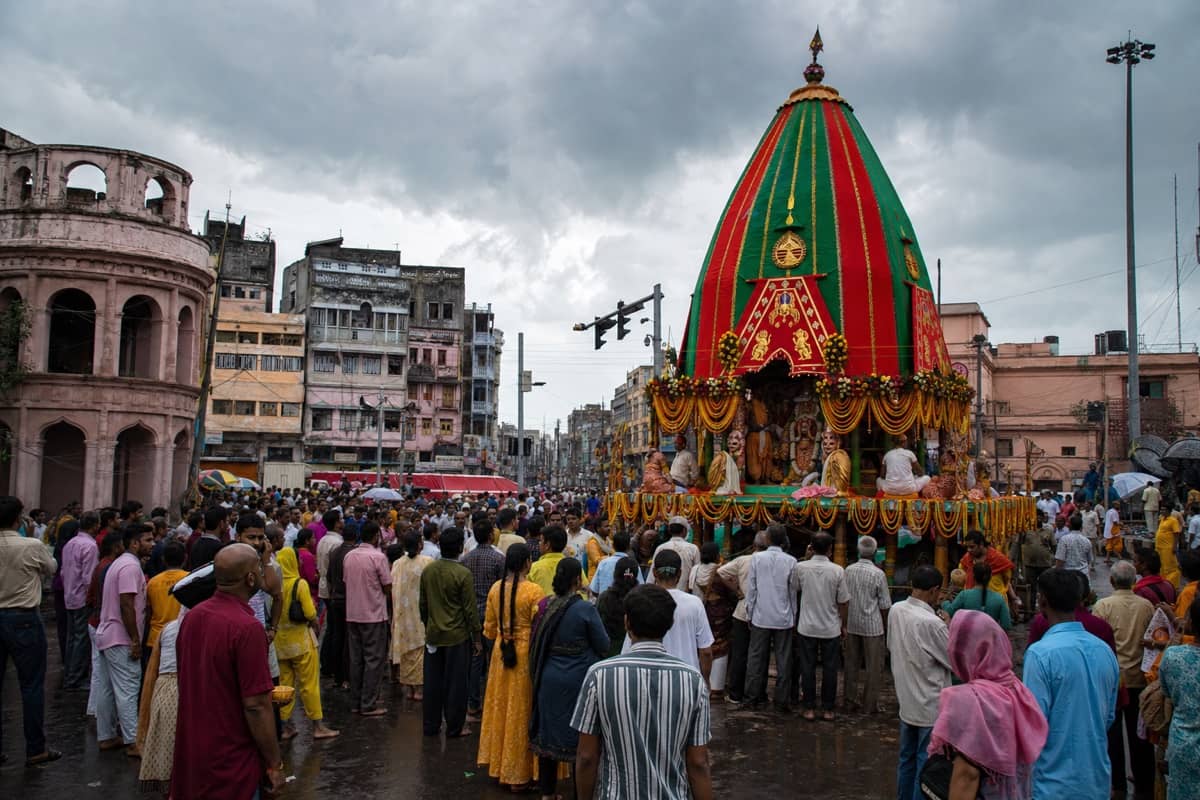
Varanasi: Kashi’s historic three-day Jagannath Rath Yatra Mela began on 16 July 2026, with devotees gathering for the opening rituals and the first ceremonial movement of the chariot at Rath Yatra crossing.
The day began with Mangala Aarti and worship of Lord Jagannath, Balabhadra and Subhadra. The deities, brought from the Assi-area temple for their annual public journey, were placed on the decorated chariot before devotees pulled it forward in keeping with local tradition.
Rain accompanied parts of the opening, but worship and the fair continued. Devotees offered prayers and joined the chariot ritual as the Rath Yatra neighbourhood filled with temporary stalls and festival activity.
Varanasi’s Jagannath tradition is more than two centuries old and has developed a distinct Kashi character. The annual fair brings temple worship out into a busy public space and remains one of the city’s prominent monsoon religious gatherings.
The procession follows the period in which the deities are kept away from public view after the Snan Yatra and later appear in their renewed youthful form. In Varanasi, the ceremonial journey from the Assi temple to the Rath Yatra area gives the festival a route and ritual identity distinct from the better-known Puri celebration.
The fair runs through 18 July. Traffic restrictions and diversions have been introduced around Rath Yatra crossing and adjoining roads to manage the movement of devotees, vehicles and emergency services. Commuters should allow additional travel time and follow police instructions near the fair zone.
The municipal corporation has declared the three-day fair plastic-free. Vendors and visitors have been asked to avoid prohibited single-use plastic, while sanitation teams are responsible for waste collection and cleanliness in the area. The effectiveness of the measure will depend on compliance during the busiest hours of the fair.
Food stalls and seasonal shops are a major part of the mela, increasing the need for waste segregation, safe electrical connections and clear pedestrian lanes. Civic and police teams will need to keep emergency access open while allowing traditional fair activity to continue.
Visitors should use designated routes, keep children and elderly family members close in crowded sections, avoid blocking the chariot path and cooperate with security and civic personnel. The concluding day is expected to draw another large flow of worshippers before the deities return to the temple.
Kashi’s Three-Day Jagannath Rath Yatra Mela Begins in Varanasi
By Harsh Mehra2 min read
About the author
Harsh Mehra
Harsh Mehra reports for Dalimss News. 1208 stories on Dalimss News, most often in India.
Related Stories

India
Gurugram art dates: canvas early-bird price ends tonight

India
TMC Varanasi jobs: walk-ins and October application deadlines
India
Gurugram reports 28,394 tonnes of bajra purchases
India
IIVR Varanasi courses: October deadlines and who can apply
India
MG Windsor Indulge at Rs 17,99,800: check the Pro alternative

India