Varanasi HPV Campaign Puts Cervical Cancer Prevention In Focus
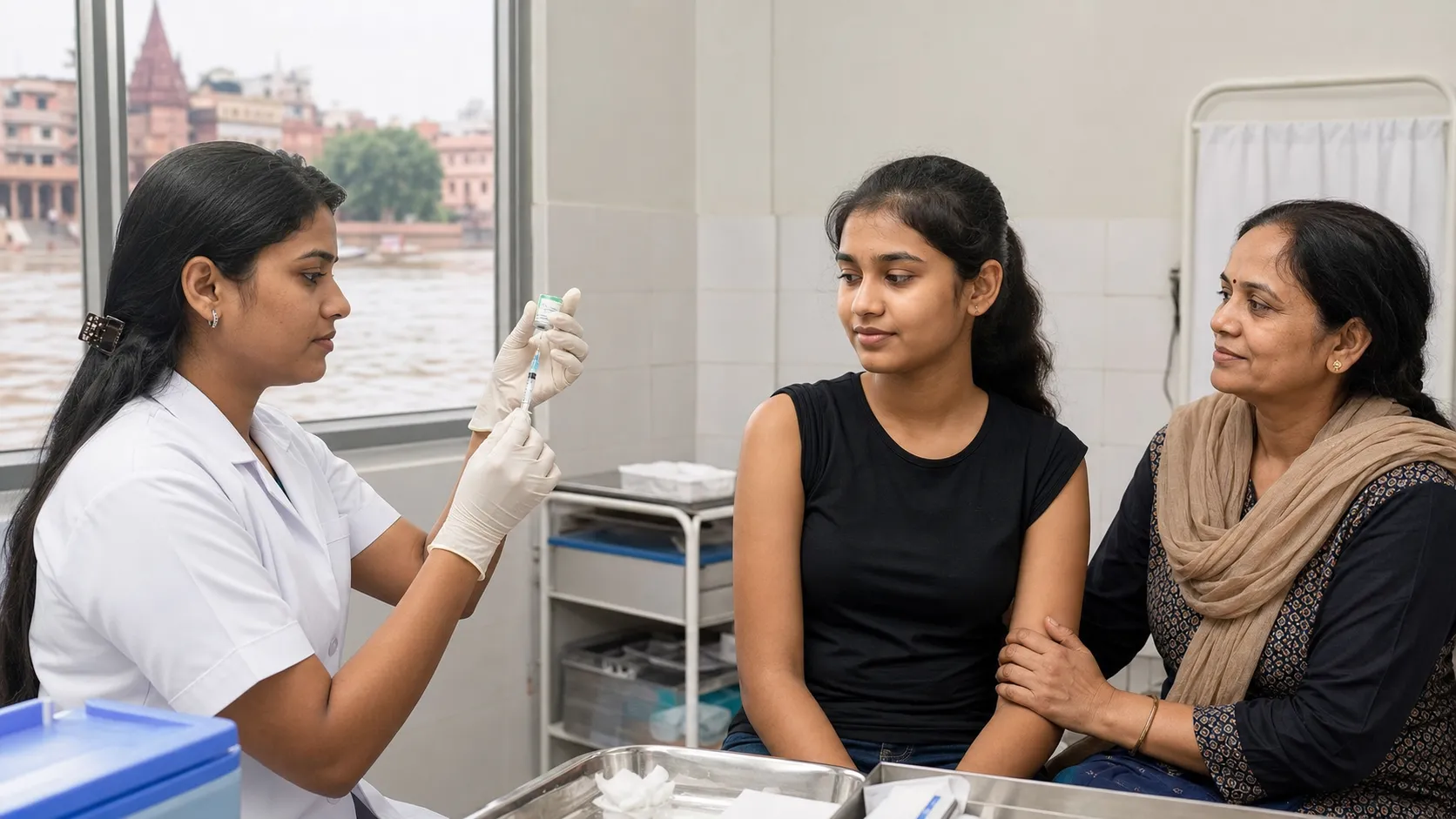
VARANASI: A public appeal to trust medical evidence and reject rumours brought cervical cancer prevention into focus at a Varanasi programme on Tuesday, where eligible adolescent girls received the human papillomavirus vaccine.
Governor Anandiben Patel used the occasion of Mahatma Gandhi Kashi Vidyapith’s convocation at the Rudraksh Convention Centre to speak directly to girls and their parents. She described vaccination as a protective health decision and asked families not to let fear or online misinformation keep eligible children away.
The local campaign is targeting girls who have completed 14 years of age but are still below 15. Health officials say the purpose is to build protection before possible exposure to the virus linked to most cervical cancer cases. Vaccination does not replace future screening or medical advice, but it is an important part of prevention.
During the day, 155 girls were vaccinated at the Commissioner’s Auditorium and another 96 at the Rudraksh Convention Centre. Vaccination certificates were handed to several recipients, turning what is usually a private clinical procedure into a visible public-health message.
That visibility matters. Families can hesitate when a vaccine is associated with a disease they find uncomfortable to discuss. The silence leaves room for forwarded messages, exaggerated side-effect claims and moral stigma. A clear explanation from trained health workers is more useful than either pressure or dismissal.
Parents should be able to ask what the vaccine protects against, who is eligible, what mild reactions may occur and where to seek help if they have concerns. Consent, proper screening and post-vaccination observation remain essential. Anyone with a specific medical condition or a history of serious allergic reaction should discuss it with a qualified clinician rather than relying on social-media advice.
Patel also linked girls’ health with equality inside families. The message is relevant in a district where education and health choices can still be shaped by whether a child is a son or a daughter. Preventive care works best when it is treated as a normal right, not a special favour.
District health officials said the campaign would continue according to the prescribed schedule. The challenge now is to reach eligible girls who are not present at large ceremonies or well-connected schools. Community health workers, government schools and neighbourhood clinics will be crucial in identifying families and explaining the programme in familiar language.
Cervical cancer prevention cannot depend on a single event. It needs accurate records, reliable vaccine supply, trained staff and consistent follow-up. It also needs public communication that is calm and specific, especially when false claims begin circulating.
For Varanasi, Tuesday’s programme created a useful moment of attention. Its long-term value will be measured by what happens next: whether parents receive trustworthy answers, whether eligible girls can access vaccination without confusion, and whether the city sustains a serious conversation about women’s preventive health after the stage has been cleared.
Related Stories

Thieves Hit Two Shops in One Night at Bareka’s Gumti Market

Kotwali Police Arrest Siddharth Sahni Within a Day of a Scooty Theft
Manduadih Police Arrest Raju Rajbhar After Paan-Shop Theft Opposite a Picket

Kashi Vishwanath CEO Vishwa Bhushan Mishra Transferred to UPSSSC as Deputy Secretary

Varanasi Waste Hits About 1,100 Tonnes a Day; Nagpal Orders Karsada Capacity Lift