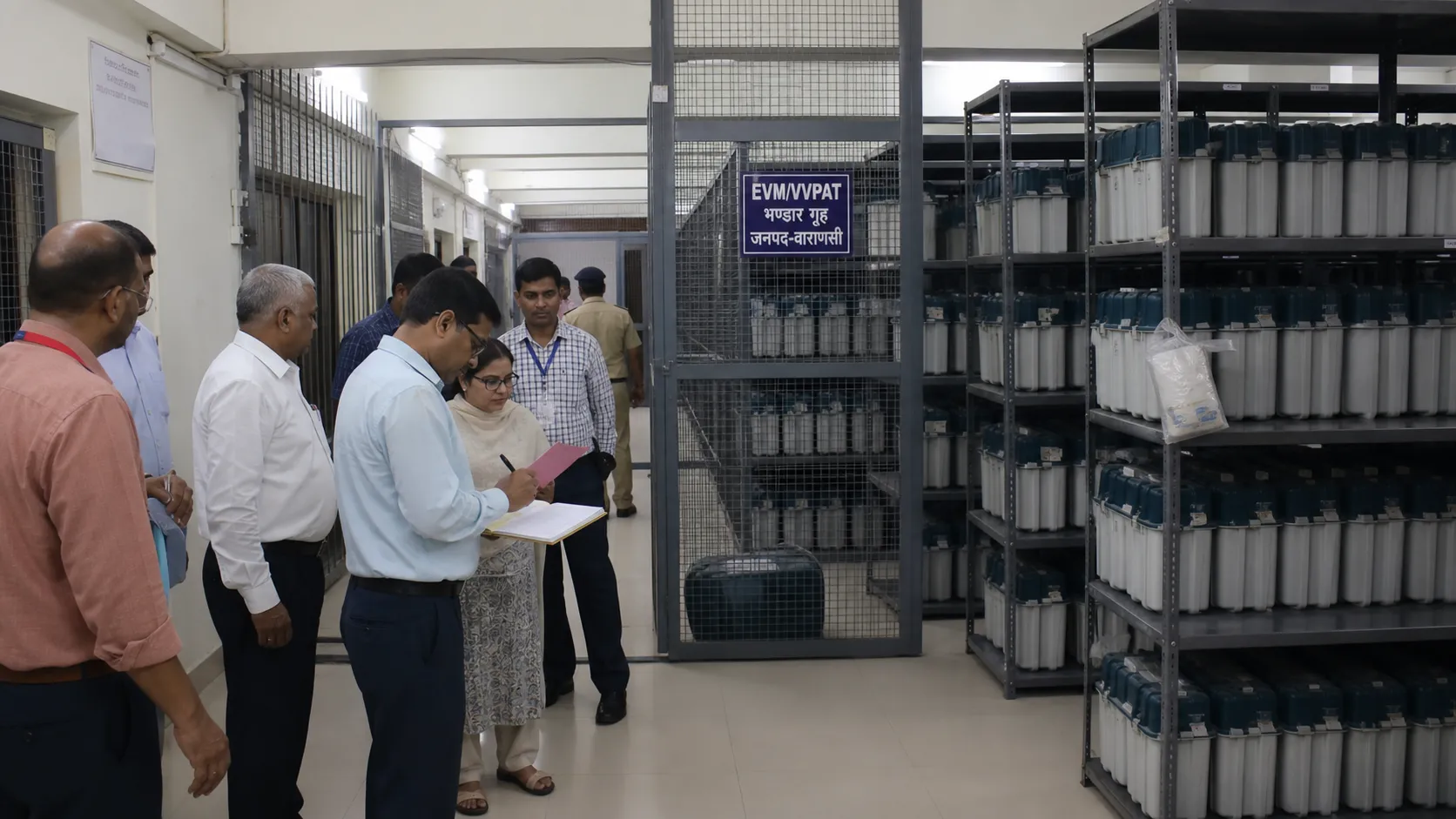
VARANASI: District Magistrate Satyendra Kumar inspected the district's EVM and VVPAT warehouse alongside representatives of political parties, reviewing the security arrangements and the procedures used to protect stored election equipment.
The inspection was reported by Live Hindustan's Varanasi bureau on Tuesday. Kumar checked the deployment of guards and other safeguards and directed officials to maintain the standards prescribed by the Election Commission of India.
Electronic voting machines and voter-verifiable paper audit trail units are kept under a documented chain of custody outside election periods. Access to a warehouse is controlled, visits are recorded and the strong-room environment is expected to remain under surveillance. Periodic inspections are intended to confirm that seals, locks, cameras, fire precautions and entry logs remain in order.
The presence of party representatives is a significant part of the transparency process. It allows political stakeholders to observe the condition of the storage site rather than relying only on an administrative statement. Their participation does not give access to operate the machines; it provides an opportunity to witness the inspection and raise procedural concerns through the authorised channel.
An EVM warehouse check is different from first-level checking, randomisation, commissioning or strong-room monitoring during an active election. Those stages involve separate technical and procedural steps. Monday's visit concerned the security of equipment in storage, according to the report reviewed by Dalimss News.
The source did not identify every party represented or disclose a detailed checklist of observations. It also did not report a breach or damaged equipment. In the absence of such a finding, the visit should be understood as a routine oversight exercise, not evidence of a problem.
Public confidence in elections is built partly through repetitive, unglamorous controls: two locks where rules require them, a camera that records continuously, a register that matches actual entry and a prompt report when equipment is moved. The warehouse is only one link in that chain, but a weak link there can create avoidable doubts later.
Officials can strengthen trust by recording the date of inspection, the names of observers, any deficiencies noticed and the deadline for corrective action. Political parties, in turn, carry a responsibility to distinguish verified procedural concerns from speculation.
For Varanasi, the inspection places the storage system back on the public record. The machines were checked where they spend most of their time—sealed, numbered and waiting for the next formal stage of the election process.
The district election office can further reduce uncertainty by placing a short, non-sensitive inspection note in the public domain. It need not reveal security vulnerabilities; dates, participants and compliance status are enough to show that the prescribed oversight actually occurred.