
Varanasi’s Dastak Campaign Takes Monsoon Disease Checks Door to Door
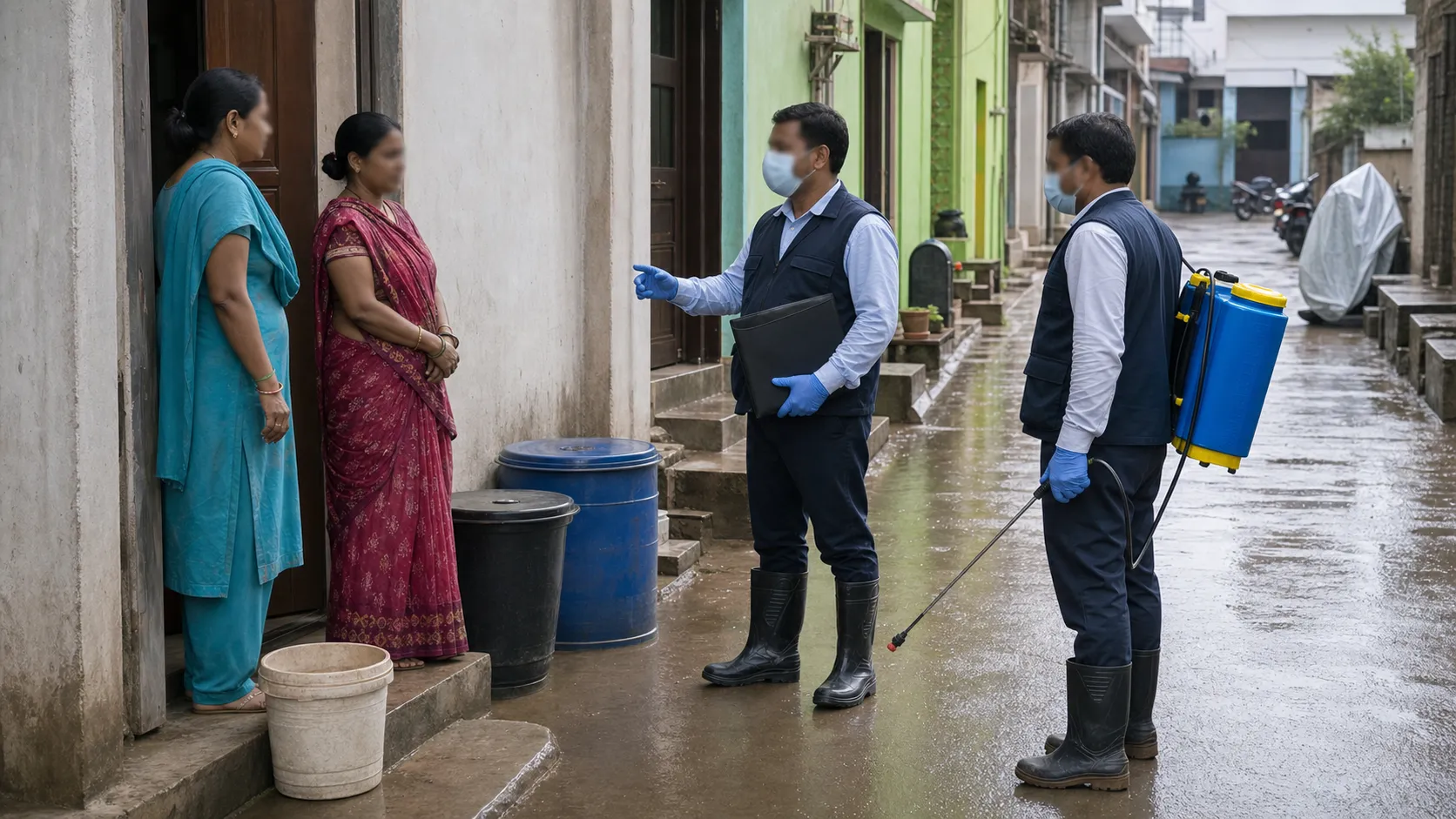
Varanasi: Door-to-door teams are visiting households across Varanasi under the Dastak campaign, the field-outreach phase of Uttar Pradesh’s month-long communicable disease control drive.
The wider campaign is running from 1 to 31 July 2026, while Dastak activities continue from 11 to 31 July. The work focuses on dengue, malaria, filaria and other communicable or vector-borne illnesses that become a greater concern during the monsoon.
ASHA and Anganwadi workers are expected to identify people with fever or symptoms requiring medical attention, record vulnerable households and help connect suspected cases with public-health services. Teams are also checking for stagnant water and other mosquito-breeding risks around homes.
The campaign includes anti-larval treatment, fogging where required, cleaning of drains and ponds, removal of waterlogging and public awareness on preventing mosquito bites. Urban and rural local bodies, health teams and sanitation workers are coordinating activities in high-risk areas.
Residents can reduce risk by emptying or tightly covering water containers, changing water in coolers and flowerpots regularly, keeping rooftops and courtyards free of discarded items that collect rainwater, and using mosquito nets or repellents. Persistent fever, severe weakness, unusual bleeding, breathing difficulty or dehydration should not be self-treated without medical advice.
Households are being asked to cooperate with visiting workers and provide accurate health information. The outreach also supports digital health records, including ABHA-linked registration where applicable, so that suspected cases can be followed up.
Sanitation work is especially important in localities where open drains, discarded containers, construction sites or low-lying plots allow water to remain for several days. Fogging can temporarily reduce adult mosquitoes, but it does not replace removal of breeding water and regular anti-larval treatment.
Families should not rely only on home remedies when dengue is suspected. A medical assessment is important because dehydration and warning signs can develop even when an illness initially appears mild. Residents should follow treatment advice from a qualified health professional.
The district campaign will continue through 31 July, but mosquito-control measures remain necessary throughout the rainy season. Residents should also report prolonged waterlogging, overflowing drains and unattended waste to the relevant civic authority.
Related Stories
VMC Launches Doorstep E-Waste Pickup With On-the-Spot Payment

Family Alleges Youths Chased Car, Assaulted Women and Children Near V-2 Mall in Lanka

Sigra-Trained Shooter Kamaljeet Wins Asian Games Gold in Mixed Air Pistol

Sarnath Police Arrest Three Over Locked-House Burglaries, Claim ₹7 Lakh Recovery

NER Varanasi Division Runs 2,915 Chlorine Tests on Station and Colony Water