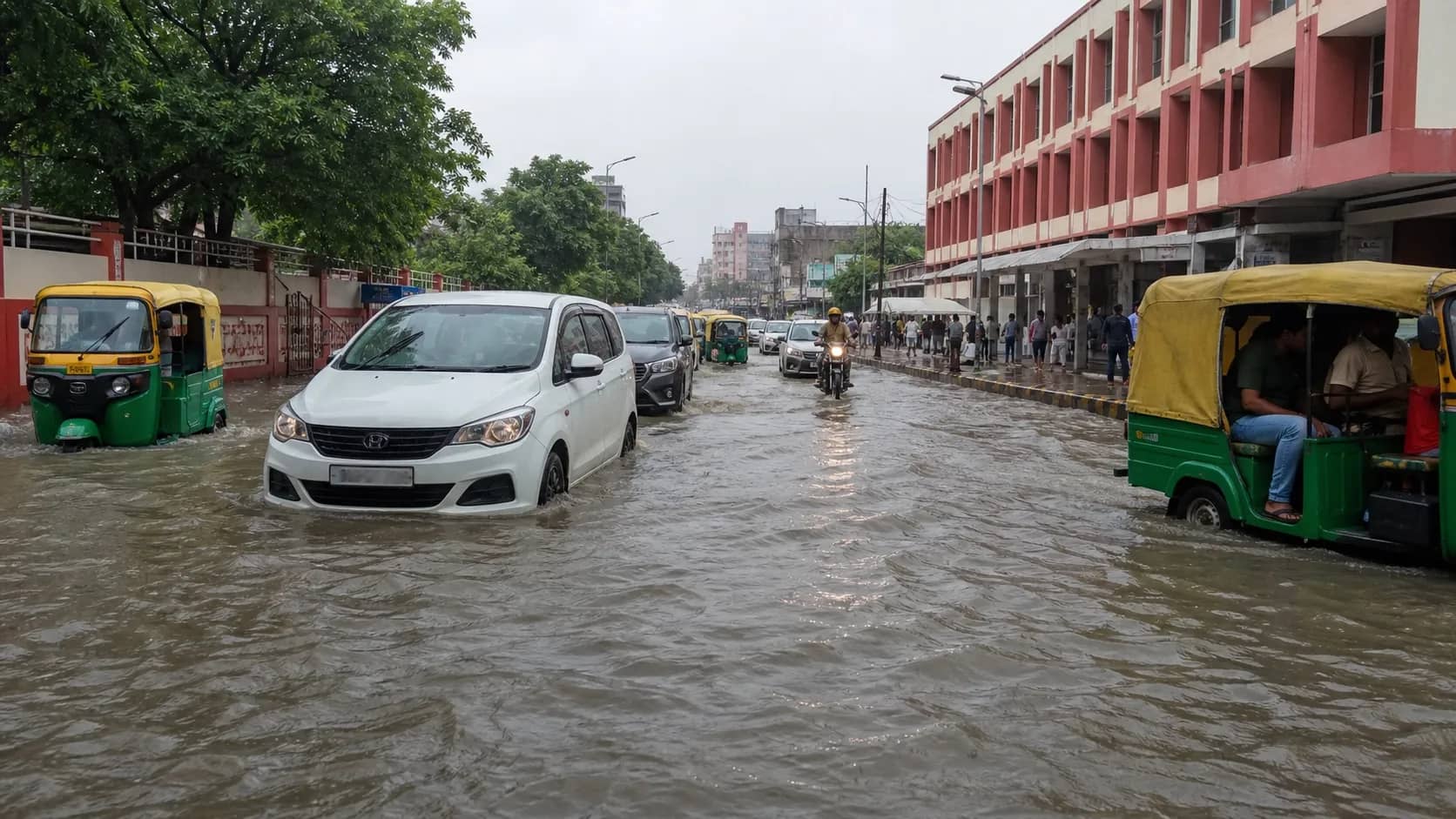
VARANASI: A fierce overnight spell brought 119.8 millimetres of rain to Varanasi in roughly 12 hours, slowing the city to a crawl on Tuesday morning and exposing familiar gaps in drainage around some of its busiest roads. Water accumulated at BHU Hospital, Lanka, Godowlia, Girjaghar and Nai Sadak, while smaller lanes and low-lying neighbourhoods dealt with longer periods of flooding.
Patients and attendants approaching the BHU hospital complex had to negotiate standing water, and traffic moved cautiously where lane markings and potholes disappeared below the surface. The disruption was not confined to the old city. Residents in several residential pockets reported difficult exits from colonies, while two-wheelers were particularly vulnerable to stalling in deeper stretches.
The rain was linked to a cyclonic circulation over eastern Uttar Pradesh that kept moisture concentrated over Purvanchal through the night. Rajghat separately logged 128 mm, underlining how sharply rainfall can vary across stations within the same urban area. The total at Varanasi airport was already enough to overwhelm drains that might cope with a slower, more evenly distributed shower.
A single rainfall number does not tell the full city story. Duration, intensity and the condition of local drains determine whether water leaves a street in minutes or remains for hours. Where silt, plastic and construction debris narrow an outlet, runoff backs up quickly. Encroached natural channels and paved open land also leave less space for rain to soak into the ground.
For commuters, the safest response during intense rain is to avoid a submerged stretch unless its depth is clear. A shallow-looking road can hide an open manhole, damaged surface or sudden drop. Drivers should keep distance from stalled vehicles, and pedestrians should stay away from poles, exposed wiring and waterlogged electrical equipment. Tuesday's fatalities in separate electrocution incidents made that warning especially urgent.
Municipal teams now have two jobs: remove water from critical facilities and record where the system failed. Pumping provides immediate relief, but a post-rain map of choke points is more valuable for the next storm. Hospital gates, school approaches, underpasses and roads used by ambulances should be treated as priority corridors rather than routine complaint locations.
The weather office expected clouds and intermittent rain to continue over eastern Uttar Pradesh, with the possibility of another heavy spell. Residents in ground-floor homes were advised to protect documents and electrical appliances, while shopkeepers in flood-prone markets began raising stock from floor level. Local travel plans may need extra time until drainage and traffic return to normal.
Tuesday's downpour was a stress test delivered in one night. Varanasi's response will be judged not only by how quickly the visible water disappears, but by whether the same intersections flood again after the next concentrated shower. The rainfall was exceptional; the list of vulnerable locations was not.