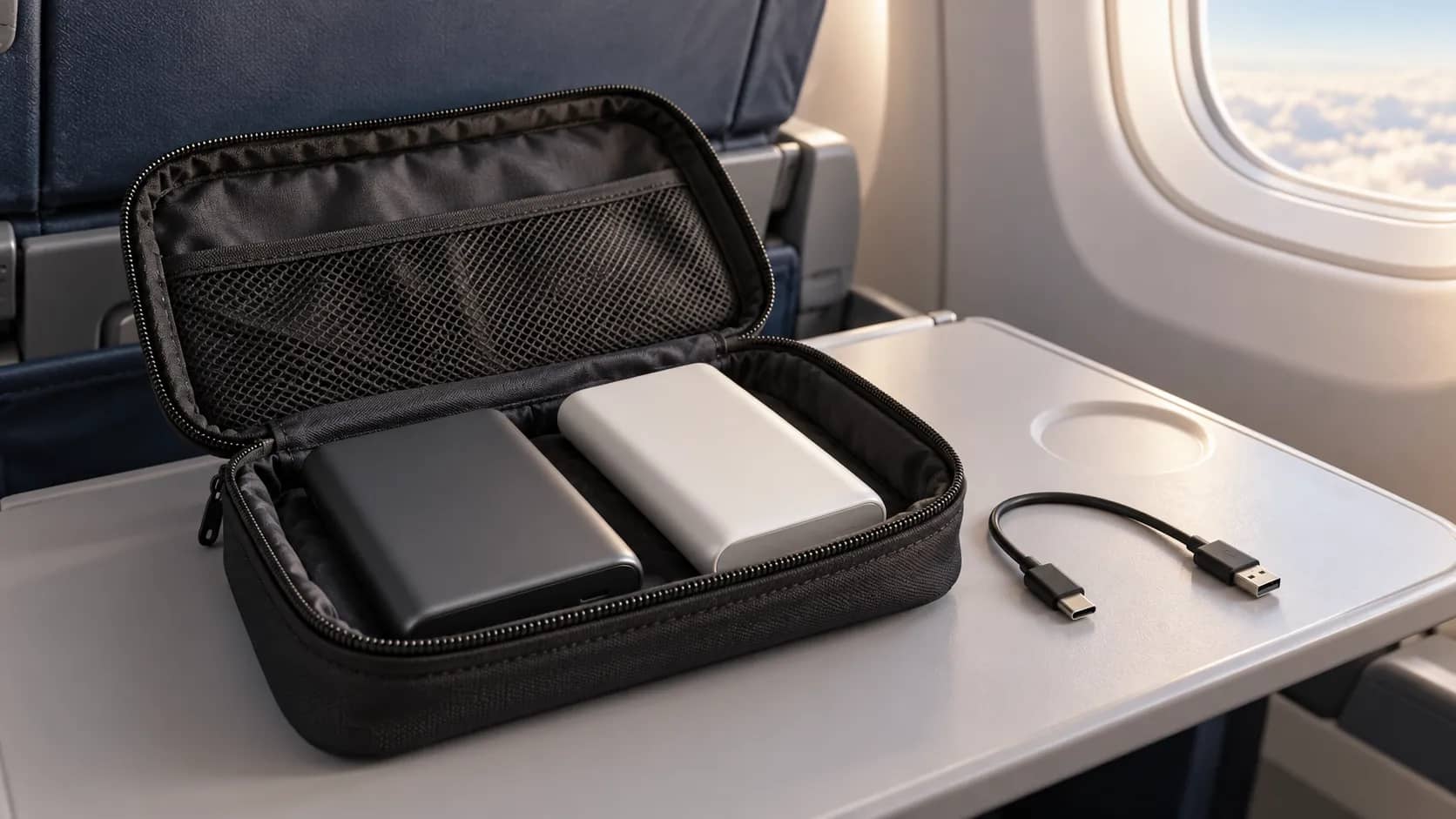
The United States has proposed limiting airline passengers and crew to two power banks each and prohibiting the devices from being recharged aboard an aircraft. The measures appear in a wider hazardous-materials transport proposal published on October 27, with public comments invited until December 28, 2026.
The Pipeline and Hazardous Materials Safety Administration, or PHMSA, is seeking to align US requirements with international standards. Its notice is a proposal, not a final rule bringing these restrictions into force. The distinction matters for passengers planning journeys now: publication of a consultation does not itself establish a new operational deadline.
There is also a distinction between charging a power bank and using one to charge a phone. PHMSA proposes to prohibit recharging the power bank itself while aboard an aircraft. It would recommend, but not require, that travellers avoid using a power bank to recharge another portable electronic device during the flight.
What the proposed passenger changes say
The proposed two-device limit would cover portable power banks used to charge equipment such as phones and laptops. PHMSA says existing provisions treat articles whose main purpose is to supply power to another device as spare batteries. The new language would put a specific numerical limit on power banks within that framework.
The agency links the changes to an addendum to the International Civil Aviation Organization's technical instructions that took effect on March 27, 2026. That earlier international development and the current US rulemaking are separate steps. The October notice proposes changes to the US Hazardous Materials Regulations rather than announcing that the international addendum has only just been issued.
PHMSA also proposes a small wording change for lithium-ion batteries removed from wheelchairs or mobility aids. The revised language would refer to batteries being carried in the cabin rather than as carry-on baggage, aligning the terminology with the international technical instructions. This is presented as an editorial amendment, not a newly announced ban on mobility equipment.
For readers comparing jurisdictions, Dalimss News previously examined power-bank carriage under Air India's published baggage guidance. That India-focused article concerns a different framework and should not be read as the text of this US proposal. The latest notice concerns the US agency's proposed regulatory changes.
Battery cargo would be described more precisely
The proposal extends well beyond cabin baggage. PHMSA wants separate shipping descriptions for cargo transport units containing lithium-ion, lithium-metal and sodium-ion batteries. These are battery systems installed in a transport unit to supply power outside that unit, rather than the small chargers passengers carry in their bags.
The agency proposes retaining the existing UN3536 identification number for lithium-ion systems while adding UN3563 for lithium-metal systems and UN3564 for sodium-ion systems. PHMSA says distinguishing the chemistry would help communicate the risks to those transporting the units and to emergency responders, allowing the transport provisions and response measures to match the battery type.
Hybrid batteries combining lithium-ion and sodium-ion cells would receive their own transport conditions. PHMSA proposes that they be tested and packaged under the lithium-ion battery provisions. The notice explains that their hazard profile is similar to lithium-ion batteries and sets out requirements for the component cells as well as the complete battery.
Another proposed aircraft-related change concerns information supplied to the pilot-in-command when hazardous materials are carried as cargo. PHMSA would add sodium-ion batteries to provisions that already cover lithium-ion and lithium-metal batteries. This is a cargo-notification measure, distinct from the proposed limit on passengers' power banks.
For the hybrid batteries, the proposed special provision would require the lithium-ion and sodium-ion cells to be electrically connected and the completed battery to have been tested as a lithium-ion battery. Each component cell would also have to meet the relevant UN testing criteria. For batteries transported under the small-battery provisions, the proposed limit is 100 watt-hours, with that rating marked on the outer case. These are freight conditions, not an additional passenger-baggage allowance.
Comments remain open before a final decision
The official notice invites comments on the need for the revisions, their costs and benefits, and their effects on safety and the environment. Submissions should identify docket PHMSA-2025-0048 or rulemaking identifier 2137-AF75. The agency says it will consider late submissions where possible while developing a final rule.
The notice warns that comments are posted publicly without changes, including personal information supplied by the commenter. It provides a separate procedure for information claimed as confidential business information. Readers responding to the consultation therefore need to distinguish an ordinary public submission from material for which confidential treatment is requested.
PHMSA says harmonisation is intended to reduce unnecessary differences between domestic and international requirements without lowering safety. Those expected benefits remain the agency's assessment of its proposal, not measured results from an implemented rule. As with the separate US outbound-investment proposal, the comment period is part of rulemaking, not evidence that every proposed provision has already been adopted.