Indian steel and aluminium heading to Britain will carry a new kind of cost from 1 January 2027. That is the day the UK's Carbon Border Adjustment Mechanism, or CBAM, begins. It puts a carbon price on certain imports so that they face roughly the same carbon cost as goods made inside the UK.
Europe already has its own version, which we explained in our guide to the EU carbon border rules for Indian exporters. The UK scheme is separate, with its own law, its own threshold and its own dates. With less than three months to go, here is what the official UK guidance says and where Indian suppliers fit in.
Which goods are covered
UK CBAM covers five sectors: aluminium, cement, fertiliser, hydrogen, and iron and steel. Within those sectors it applies only to specific goods identified by their commodity codes, which HM Revenue and Customs lists in an annex to its policy summary. A few items inside these sectors are left out. Scrap aluminium and scrap iron and steel, for example, are outside the scope from 1 January 2027.
The charge applies across the whole of the UK, including Northern Ireland, to covered goods imported on or after 1 January 2027. Goods that originate in the UK under its non-preferential rules of origin are not charged, and private individuals importing for non-business use are not liable.
Who actually pays
This is the point many Indian exporters miss. The person liable is the importer in the UK, meaning the person in whose name the customs declaration is made. An Indian mill does not register with HMRC or file the return.
But the bill depends on data only the Indian producer has. The UK charge is worked out by multiplying the emissions embodied in the imported goods by the CBAM rate. The importer can use actual emissions data from the producer, or default values that the UK government will publish before the scheme starts. Actual data must be expressed in tonnes of carbon dioxide equivalent per tonne of product and checked by a qualifying verifier.
In other words, British buyers are likely to start asking Indian suppliers for verified emissions figures, and a supplier that cannot provide them may leave its customer using default values. HMRC says the monitoring and verification methods are broadly designed to work alongside the EU's, which should help firms that already report to European buyers.
Where India's carbon market comes in
There is one piece of good news for Indian producers. The UK lets importers reduce the bill through carbon price relief when the goods have already paid a carbon price abroad under a qualifying scheme. In a provisional list published on 27 August 2026, based on information as of 19 June 2026, the UK government named India's Carbon Credit Trading Scheme (CCTS) as one of 16 qualifying carbon pricing schemes.
The others on that list include the EU Emissions Trading System, China's national emissions trading system, Japan's GX-ETS, Korea's K-ETS, Singapore's carbon tax and South Africa's carbon tax. The UK says it will update the list as more schemes are assessed.
Recognition is not the same as a discount, though. The relief depends on the effective carbon price the goods actually paid. Emissions covered by free allowances do not qualify, because no carbon price was paid on them, and any rebate or refund reduces the relief. In some cases, the guidance says, there will be no relief at all. The importer is responsible for working out eligibility, making the claim and keeping the records.
The £50,000 threshold and the key dates
Not every importer has to register. Registration with HMRC is needed when the value of CBAM goods crosses 50,000 pounds under either of two tests. The first looks ahead: on any day from 1 January 2027, if you expect to import 50,000 pounds or more of CBAM goods in the next 30 days, you must register. The second looks back: on the first day of each month, you check whether you imported 50,000 pounds or more in the previous 12 months.
Normally an importer has 30 days to register after becoming liable. In the first calendar year there is extra time: businesses have until 31 January 2028 to register, but must keep all the records of their CBAM imports in the meantime so they can file once the system is open.
The first accounting period runs for the whole of 2027, from 1 January to 31 December, with the return and payment due five months after it ends. From 1 January 2028 the periods become quarterly. HMRC's table shows the return for January to March 2028 due on 31 July 2028, for April to June 2028 due on 29 September 2028, and so on, moving gradually towards a two-month window.
Returns must be filed even when nothing is owed, for example when the goods were already fully covered by a qualifying carbon price. HMRC will use its usual penalties for failing to register, file, pay or keep records.
What Indian suppliers can do now
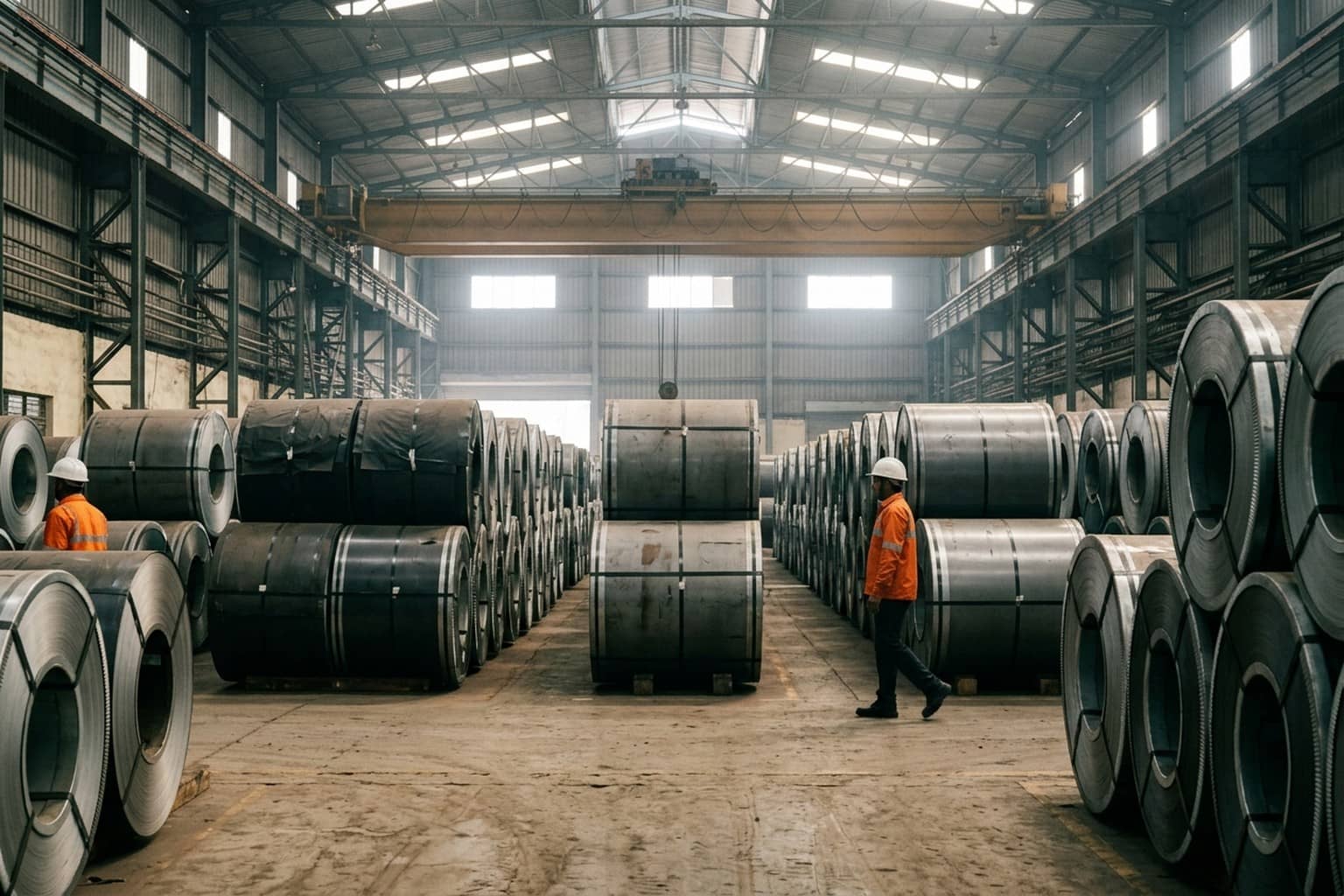
For an exporter of steel coils, aluminium sections or fertiliser to the UK, three steps stand out from the guidance. First, check whether your products fall under the listed commodity codes. Second, find out whether your plant can produce verified emissions intensity data for 2026 and 2027 production, since UK importers may use verified data from earlier monitoring periods. Third, talk to UK buyers early about which method they will use and what carbon price, if any, you have paid under India's scheme.
Hydrogen is also on the list, which is worth noting for Indian firms piloting green hydrogen, such as the 300 kW pilot plant at Manesar. If projects like that ever ship hydrogen to Britain, the CBAM rules will already apply to it.
This is information, not advice. Guidance can be updated as the start date nears, so exporters should check HMRC's CBAM collection on GOV.UK before relying on any figure here.