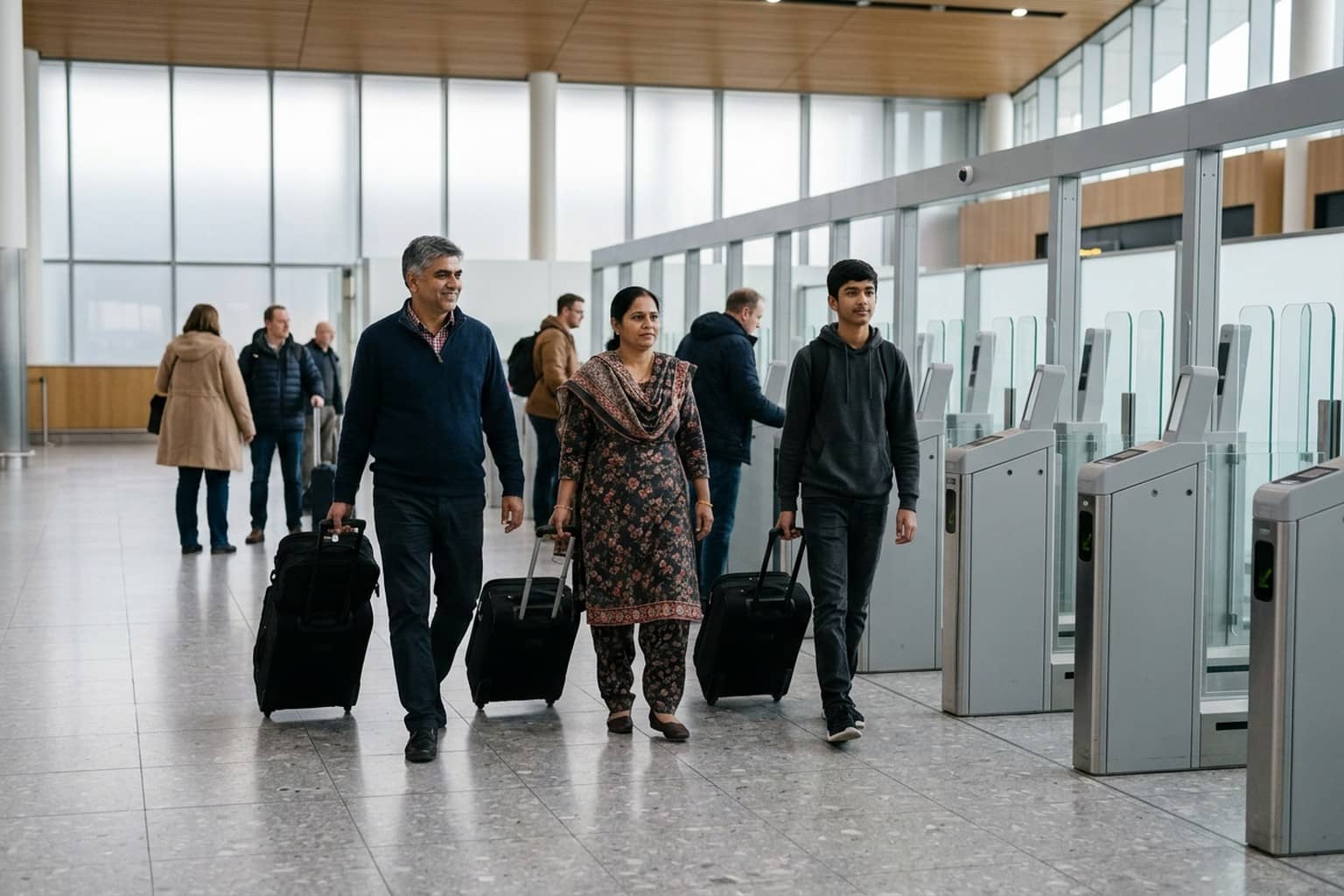
Travellers arriving at UK airports will soon walk through passport gates without placing their passport on the reader. The Home Office said on 6 October 2026 that eGates across the country are being switched to contactless checks, starting that day, with every gate due to be upgraded by early 2027.
The change is a software update to the existing gates, not new hardware. The gate takes a live photo of the traveller, compares it with verified immigration, travel and passport data already held, and opens if everything matches. If more checks are needed, the traveller is asked to use the passport reader as before or is sent to a Border Force officer.
Passengers must still carry their passport. The Home Office says testing showed the contactless process can be up to 25 per cent faster.
Signs will go up at airports to explain the new process, according to the release, and other eGates will keep working as they do today until their software is updated. In other words, what you meet on arrival over the next few months will depend on which airport you land at and when.
Where it starts
East Midlands Airport is first, and only for British citizens at the start. The government says the system will then spread to more airports and, over time, to other nationalities who are already allowed to use eGates. Birmingham is named among the first airports in line. The Home Office lists eGates at Birmingham, Bristol, Cardiff, East Midlands, Edinburgh, Gatwick, Glasgow, Heathrow, London City, Luton, Manchester, Newcastle and Stansted.
Phil Douglas, Director General of Border Force, said in the release that the change would help passengers move through the border faster while keeping it secure.
Can Indian passport holders use the eGates?
Not with an Indian passport, under the rules on GOV.UK today. People who are not British, Irish or EU citizens can use eGates only if they have a biometric passport, a valid digital immigration status or digital exemption, and a passport from one of seven countries: Australia, Canada, Japan, New Zealand, Singapore, South Korea or the United States. Members of the Registered Traveller service can also use them.
India is not on that list. So a student, worker or visitor travelling on an Indian passport will keep going to the staffed desks, and the contactless upgrade does not change that. The Home Office has not said that the list of eligible nationalities will grow, only that contactless checks will extend to groups who can already use the gates.
What it means for British Indian families
For the many families of Indian origin who hold British passports, the new gates will apply in the same way as for any other British citizen. Children can use eGates from age 8, following a change earlier this year, provided they are at least 120 cm tall. Those aged 8 to 17 must go through with an adult.
Dual nationals need to be careful. The Home Office reminds British dual citizens to travel on their British passport or carry a Certificate of Entitlement, rather than entering on another country's passport. Families where children hold British passports and parents hold Indian ones may find themselves split between the gates and the desks, so it helps to plan who goes where before reaching the hall.
The wider picture at the UK border
The contactless gates sit alongside other changes this year, including the Electronic Travel Authorisation (ETA) scheme that most visa-free visitors now need. Indian nationals still need a visa to visit the UK rather than an ETA, and the visa rules themselves are changing on several fronts. We have covered the latest UK visa fee and Graduate visa update and the higher student funds requirement from 30 November.
Some travellers must see an officer whatever their passport. One example on GOV.UK is anyone entering with a Creative Worker certificate of sponsorship for up to three months without a visa, who needs a passport stamp that the gates cannot give. If you are unsure, the GOV.UK page on UK border control lists who can and cannot use the gates.