The Silent Airwaves: HT Media Exits Key FM Radio Markets
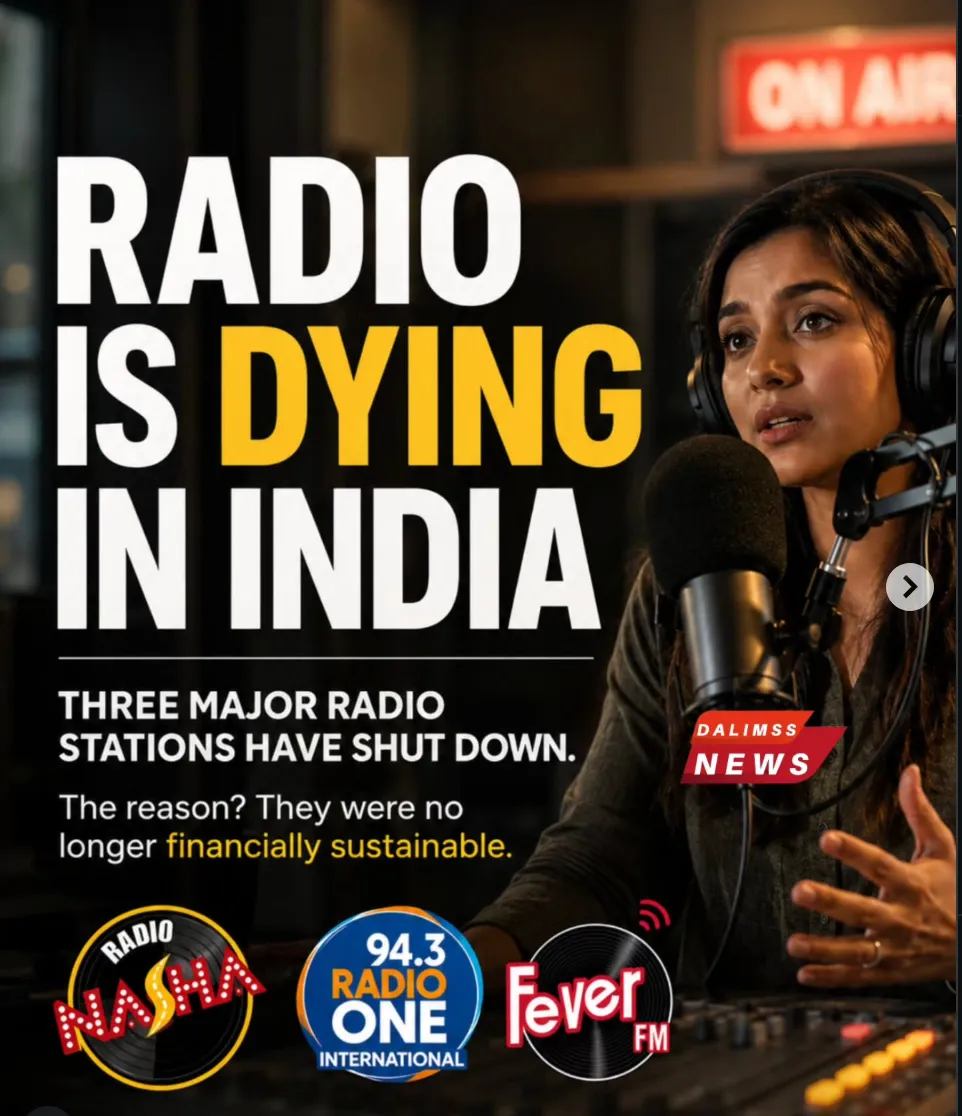
In a move that has sent shockwaves through India’s media landscape, HT Media officially ceased all operations for Radio Nasha, Radio One, and Fever FM in select metro markets on June 15, 2026 [1.1.1, 1.2.5]. The stations, which were a fixture of daily commutes and city culture in Delhi, Mumbai, Bengaluru, and Chennai, have gone off-air, marking a significant retrenchment in the country's private FM radio sector [1.1.2, 1.2.5].
Why the Stations Went Dark
The decision to surrender the licenses was entirely voluntary, with HT Media clarifying that no regulatory action, policy violations, or government penalties were involved [1.1.1, 1.2.5]. Instead, the company pointed to the "financially and strategically unviable" nature of these radio properties [1.1.2, 1.2.5].
Several factors contributed to this strategic exit:
Mounting Financial Losses: Despite being valid until 2030 and 2031, the stations were closed years ahead of schedule [1.1.2, 1.2.5]. In FY2024–25, these operations generated only ₹29.19 crore in revenue—a mere 1.62% of HT Media’s consolidated revenue—while carrying a negative net worth of ₹172.08 crore [1.1.1, 1.1.4, 1.2.5].
Shifting Media Consumption: Listeners are increasingly migrating from traditional broadcast radio to digital audio streaming platforms, podcasts, and online media [1.1.3, 1.2.4].
Advertiser Preferences: Advertisers have followed the audience shift, moving their budgets toward digital platforms and away from legacy FM radio, which faces ongoing challenges like ad clutter and weak monetization [1.1.4, 1.2.5].
A Warning for the FM Industry
The shutdown has sparked a broader debate about the future of private FM radio in India. Industry observers note that the sector is battling a "perfect storm" of high license and spectrum costs, restrictive content policies, and the lack of a robust measurement system [1.2.5].
Critics of the current model argue that FM radio has been hollowed out by years of repetitive programming, heavy ad loads, and a failure to innovate [1.2.5]. While radio still possesses unique strengths as a community-building medium, the HT Media exit has served as a "wake-up call" for policymakers and broadcasters alike [1.2.5].
As the airwaves fall silent on these frequencies, the industry is left facing a hard question: can the private FM model survive without significant policy relief and a fundamental transformation in how it delivers value to both listeners and advertisers in an era of algorithmic, individualized streaming [1.2.4, 1.2.5]?
Related Stories

Namo Ghat Transforms into Hub of Wellness Ahead of 12th International Yoga Day

Mining Officer Narrowly Escapes Injury in Late-Night Road Accident Near Sidhauna
Inside the Quiet Battle for Mental Health in Varanasi

Breaking the Silence: New OTT Talk Show 'Let's Not Pretend' Strips Away the Illusion of Perfect Parenting

Five IAF Personnel Killed in AN-32 Aircraft Crash in Jorhat