Teenage Kanwariyas Carry a Grandmother’s Kashi Tradition to the Ghats
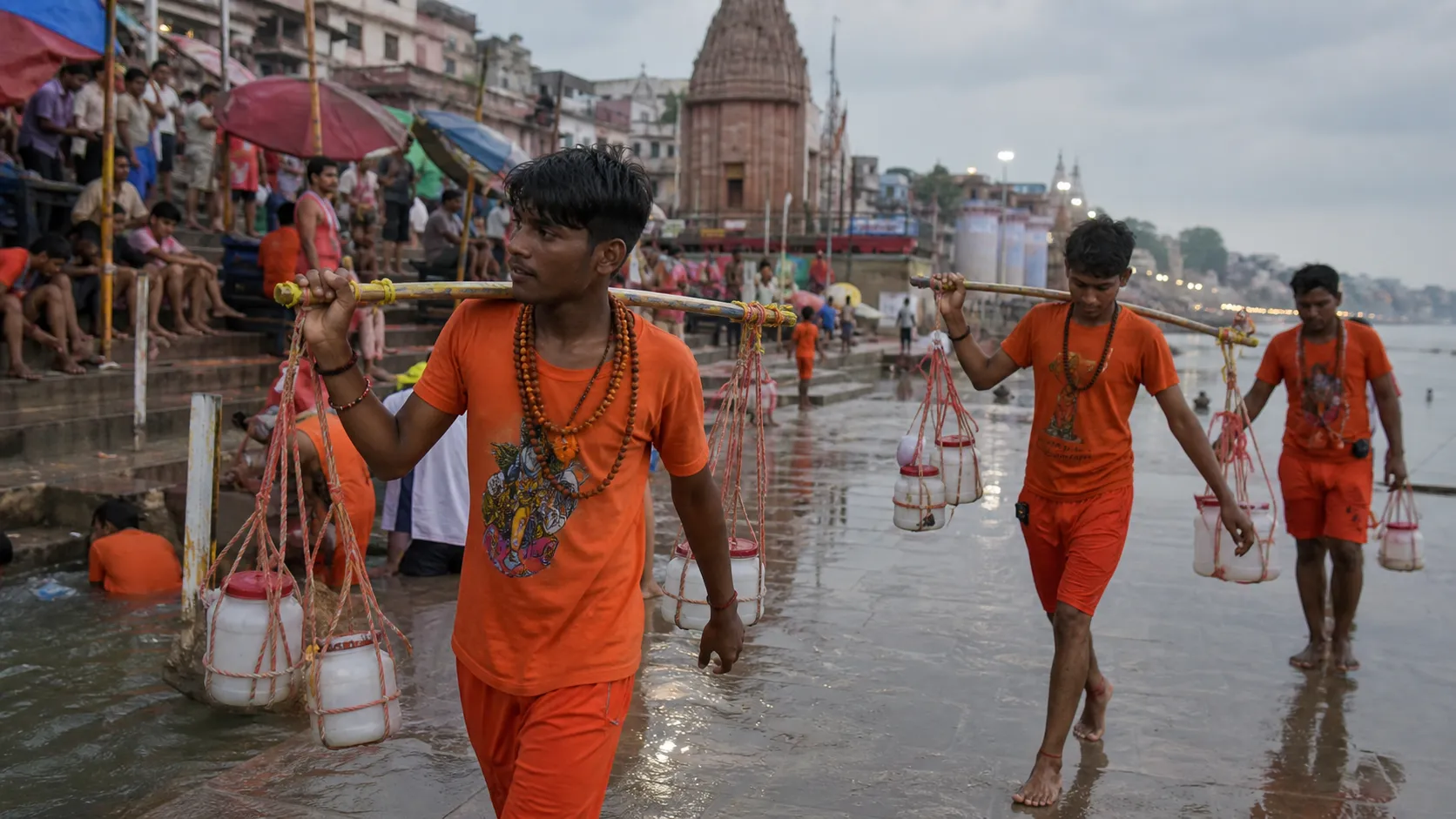
At Dashashwamedh Ghat on Wednesday, a group of teenage kanwariyas from Ara offered a small example of how Varanasi’s religious customs travel across generations. Led by 17-year-old Virendra Kumar, the boys had come to bathe in the Ganga and carry water for worship during Sawan. Their route, however, came with a rule from home: Kashi’s water was to be offered within Kashi.
The instruction came from Virendra’s 84-year-old grandmother, Besar Devi. When he proposed bringing Ganga water back for her, she firmly told the family that water and soil from Kashi should not be taken outside the sacred city. The belief belongs to a particular devotional tradition rather than a civil regulation, but the teenagers chose to honour it.
After bathing, each member tied two white containers to a rope and balanced them on his shoulder. One was intended for an offering at Kashi Vishwanath; the other would be used at additional temples in the city. Their practice turned a simple collection of water into a mapped pilgrimage, with the contents assigned before the group left the ghat.
The more revealing moment came when the boys met pilgrims from Bhadohi preparing to carry Kashi water to Trilochan Mahadev at Jalalpur in Jaunpur. Virendra repeated his grandmother’s understanding of the custom. The other group reportedly reconsidered and decided not to take the water out of Varanasi.
There is no single kanwar practice across northern India. Routes, sources of water and family observances vary, and devotees may follow the custom taught in their own communities. That diversity deserves to be reported without turning one family’s belief into a universal rule. What happened at Dashashwamedh was a conversation between pilgrims, not an enforcement action.
Still, the episode says something recognisable about Kashi. The city’s religious life is not transmitted only through priests, texts or institutions. Grandparents pass on tiny instructions—where to pause, what not to carry, which shrine comes next—and young people decide whether those instructions still feel meaningful. Tradition survives through that repeated negotiation.
The teenage group also complicates the assumption that ritual knowledge belongs only to older devotees. These boys arrived with smartphones and plastic containers, but the logic guiding their journey came from an 84-year-old woman at home in Bihar. Modern travel and inherited belief occupied the same shoulder pole.
During Sawan, Varanasi sees immense crowds and understandably focuses on barriers, queues and traffic. Yet the season is also made of quieter exchanges like this one. Virendra’s group did not stage a programme or issue a message. They followed a grandmother’s rule, explained it to strangers and continued towards the temples—a modest scene in which Kashi’s cultural memory found its next set of carriers.
Sources and reporting
Based on field reporting at Dashashwamedh Ghat on 5 August 2026 involving a teenage group from Ara led by 17-year-old Virendra Kumar.
Related Stories

Court Issues Arrest Warrant for HSVP Brass
MCG Finalises Sohna Site for Fresh Waste

GMDA Seeks Station-Wise Metro Parking Plans

Thar Rams Rapido Cab After Sector 89 Quarrel

FDA Raids 3 Outlets Over Paneer Quality