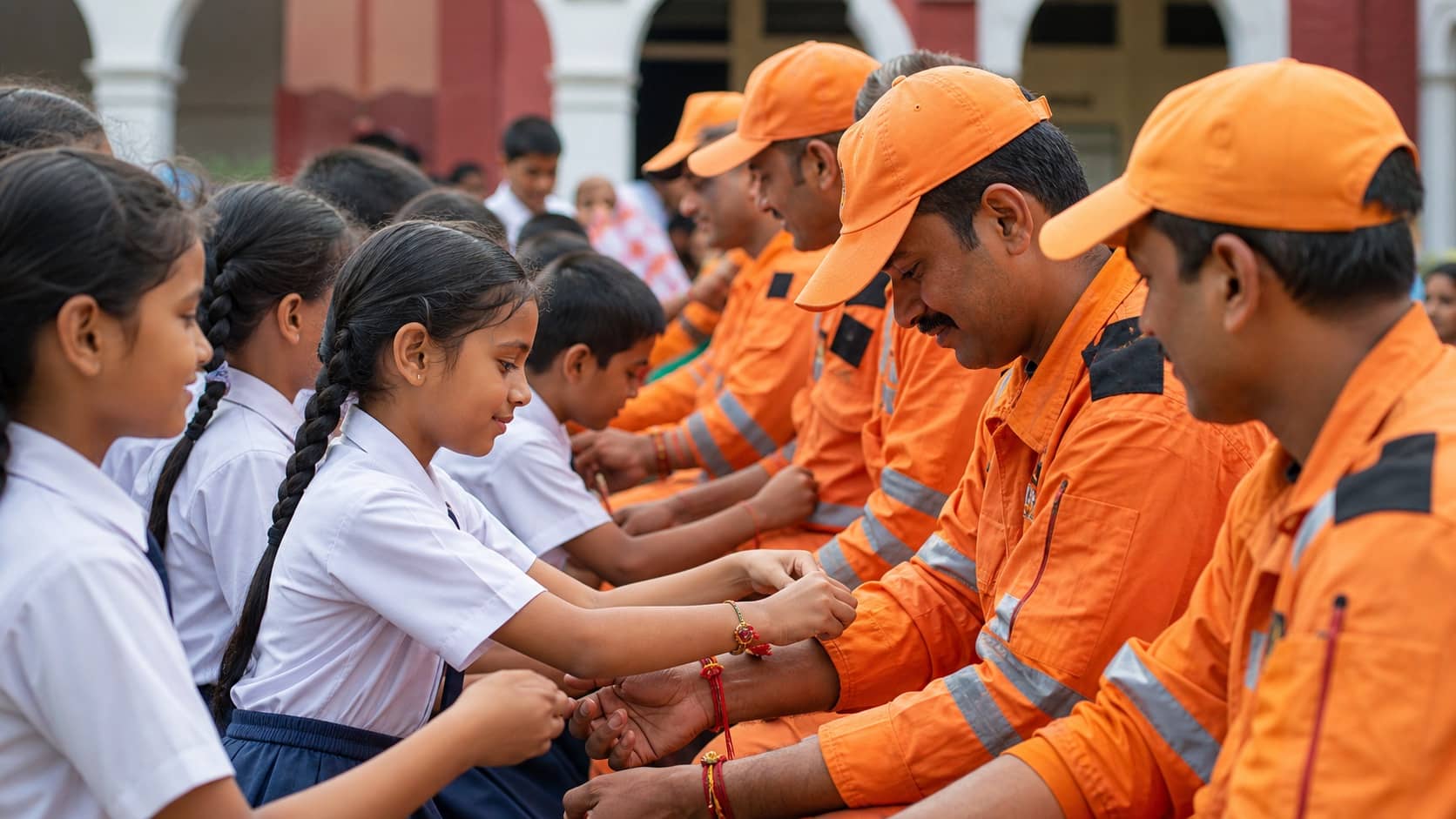
School students marked Raksha Bandhan with personnel of the 11th Battalion of the National Disaster Response Force in Varanasi, tying rakhis and meeting rescuers whose work often places them in floods, collapsed buildings and other emergencies. Commandant Anup Singh Bisht led the battalion’s participation.The programme used the festival’s promise of protection in a public-service context. NDRF personnel renewed their commitment to safety and assistance, while the students offered a personal gesture to teams more often seen in helmets, life jackets and rescue boats during a crisis.For children, the value of the visit lies partly in making disaster response understandable. A rescue force can otherwise seem remote until a flood or accident brings it into the neighbourhood. Meeting personnel in a calm setting allows students to ask what the force does, why training matters and how ordinary people should behave when an emergency occurs.Varanasi has direct experience of the conditions in which such teams work. Rising rivers, crowded ghats, old buildings and large religious gatherings all require careful preparedness. NDRF units are deployed in several cities and may be moved rapidly when weather or another emergency demands a larger response.The interaction also offers an opening for basic safety education. Knowing emergency numbers, avoiding floodwater, following evacuation instructions and not crowding a rescue scene can save time for responders. Schools can build on a ceremonial visit by practising evacuation drills and teaching students how to share verified information rather than rumours.For the personnel, Raksha Bandhan away from home can carry its own emotion. Operational duties do not pause for festivals, and teams may be stationed far from their families. A rakhi tied by a student acknowledges that absence without turning the programme into spectacle. It connects the rescuer’s professional role with the community that depends on it.The battalion event ended as a celebration, but its deeper purpose was civic familiarity. Trust during a disaster is easier when people understand who is giving instructions and why. By bringing students and responders together before an emergency, the programme made the idea of protection concrete: trained teams accept responsibility for public safety, and citizens—including children—can learn how to cooperate when those teams are called into action.The students’ rakhis will eventually be removed, but the relationship need not end with the festival. A later demonstration of rescue equipment or first-aid basics could give the same group practical knowledge to carry home.
The exchange was brief, but its meaning rested in recognition. Disaster-response personnel are usually seen during emergencies; the campus ceremony allowed students to meet them in an ordinary setting and understand the preparation behind rescue work.