To check a BIS silver hallmark, read the BIS mark with the word SILVER, the purity grade and the article's six character HUID, then verify that code through BIS Care. A number such as 925 states the fineness of the silver alloy. It is only one part of the hallmark, so the number alone does not establish the complete BIS certification record.
| Mark or number | What it tells you |
|---|---|
| BIS mark with SILVER | The standard mark identifies the metal |
| 925 or 999 | Fineness expressed in parts per thousand |
| HUID | The unique identifier used to retrieve the article's record |
How to check a silver hallmark online
The Consumer Affairs Ministry's silver HUID explanation describes the code as alphanumeric and laser marked on each hallmarked item. Read it from the article itself rather than relying only on a label or the seller's description. The verification exercise connects the physical marking with the recorded article.
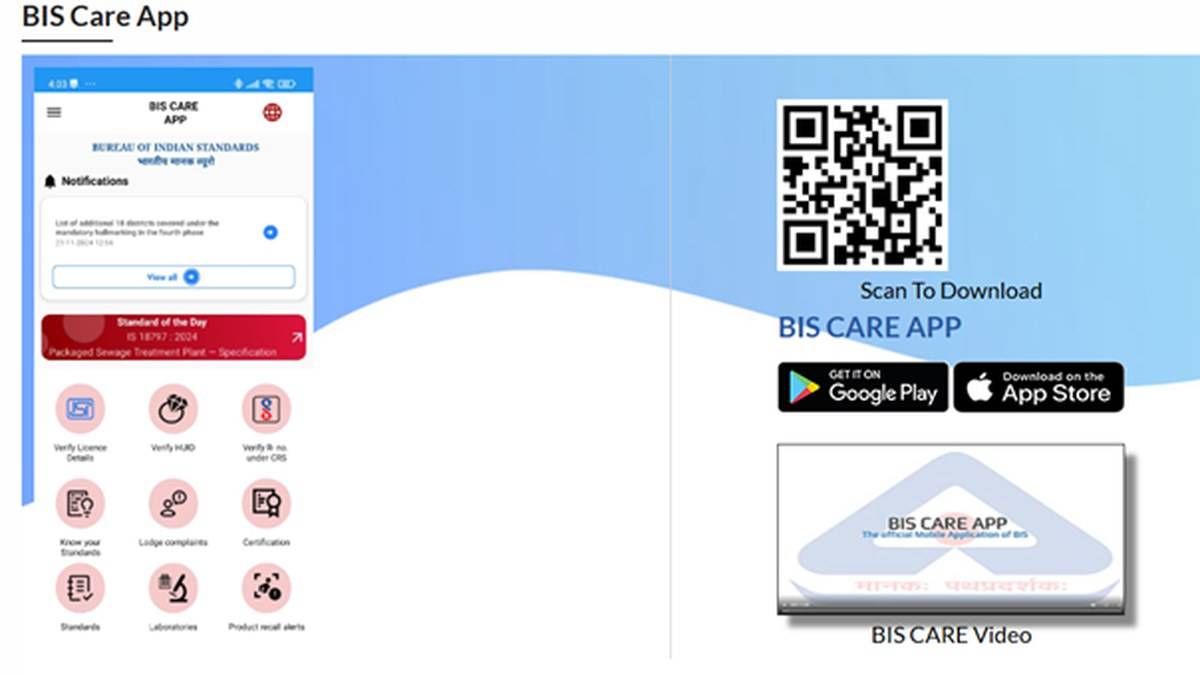
Open BIS Care and select Verify HUID. Enter the code and compare the returned details with the item in front of you. The ministry says the record identifies purity, the type of article, the jeweller who submitted it for hallmarking and the Assaying and Hallmarking Centre. A ring and an anklet are different article types, so check the description as well as the grade.
For example, if a seller describes an ornament as 925 silver, the grade on the article, its verification record and its invoice should tell a consistent story. A result showing a different article type or purity needs clarification. Keep the bill and a record of what the check displayed so the discrepancy can be explained precisely.
BIS's official app page distinguishes Verify HUID from Verify Licence Details. The first is the relevant feature for a hallmarked jewellery item carrying HUID. The app also provides information on standards and laboratory locations, and a Complaints facility for product quality or misuse of BIS marks. Finding a jeweller's registration information does not replace checking an individual item's identifier.
What does 925 silver mean compared with 999?
Fineness is expressed in parts per thousand. The percentage calculation is straightforward: silver percentage = fineness divided by 10. Thus, 925 corresponds to 92.5% silver and 999 corresponds to 99.9%. The numbers describe the proportion of silver in the alloy. They do not state the price, the making charge or the amount a seller must pay on resale.
Consider an illustrative 20 gram sample made entirely of a 925 grade alloy. Its silver content calculation is 20 multiplied by 925 divided by 1,000, or 18.5 grams. The equivalent calculation for a 999 grade sample is 19.98 grams. These are worked examples, not laboratory findings for a particular ornament. Do not substitute a finished item's gross weight when that weight includes components outside the silver alloy being assessed.
The current BIS hallmarking brief, read on 14 November 2026, lists eight silver grades under IS 2112:2025 with its October 2026 Amendment No. 1: 800, 835, 900, 925, 958, 970, 990 and 999. Older explanatory material may show a different list. Use the amended standard when checking which grades are currently recognised.
Is silver hallmarking mandatory in India?
The distinction is between entering the scheme and following its requirements. BIS says the silver hallmarking scheme is voluntary, but a silver article submitted for hallmarking under that scheme must carry the HUID based hallmark. The system became operational from 1 September 2025. This should not be described as a blanket requirement that every silver article on sale must be hallmarked.
Consequently, the absence of HUID and a claim of BIS hallmarking need careful interpretation together. Ask exactly what certification the seller is claiming. A plain 925 stamp describes a claimed fineness; verifying a BIS hallmark involves the prescribed mark and article record as well. The code check is useful because it makes that certification claim traceable.
What should a silver jewellery bill show?
BIS's brief says sale invoices should separately describe the article, its net precious metal weight, purity or fineness and hallmarking charges. It also says the invoice should mention the consumer's option to have purity verified at a recognised centre. These details give a reader something concrete to compare with the physical item and the HUID result.
For an independent test, the BIS consumer protection page says consumers can take jewellery or samples, hallmarked or unhallmarked, to a BIS recognised Assaying and Hallmarking Centre. Testing is chargeable, and the centre must issue an assay report identifying the article. An app lookup retrieves a record; an assay examines the material.
For the financial context, read our silver benchmark and bill explanation and gold benchmark and jewellery bill guide. If a transaction becomes a consumer dispute, our consumer complaint filing explainer sets out the documents and process.