Form 10-IEA is the declaration that eligible taxpayers with business or professional income use to leave the default new tax regime or return to it. For AY 2026-27, the Income Tax Department says an eligible business taxpayer choosing the old regime must furnish it by the applicable return filing due date under section 139(1). Someone without business or professional income can exercise the regime choice in the return itself.
| Question | Official position |
|---|---|
| Who needs it? | Eligible taxpayers with business or professional income changing regime |
| Submission method | Online through the e-Filing portal |
| Deadline | Applicable ITR due date under section 139(1) |
| Annual filing? | No, if an earlier valid old regime choice continues |
| Revision after submission? | Not permitted |
Who has to file Form 10-IEA?
The test is whether income falls under profits and gains from business or profession. The department's Form 10-IEA FAQs cover individuals, Hindu Undivided Families, associations of persons other than cooperative societies, bodies of individuals and specified artificial juridical persons. Having a salary as well does not remove the business income question.
Consider a salaried individual who also reports professional income. That person should not assume that the salary component makes the declaration unnecessary. Conversely, the FAQs say a taxpayer without business income who files ITR-1 or ITR-2 does not need this form. The relevant regime option is exercised in the return within the prescribed deadline.
A separate choice concerns the tax calculation. Our AY 2026-27 old and new regime comparison explains that calculation. Form 10-IEA records an eligible business taxpayer's election; submitting it is not evidence that either regime produces a lower liability.
Form 10-IEA due date and annual filing rule
The deadline follows the return due date applicable to that taxpayer under section 139(1). It is not one universal calendar date for every business. The official form asks the filer to select the applicable due date and provides a help document for that selection. Choosing the correct option matters to whether the declaration is accepted.
The FAQs say a late form is invalid and does not secure the old regime benefit. They also explain that a form initially shown as valid can become invalid if an incorrect due date was selected and the actual filing was late. A fresh form can be filed for a subsequent assessment year, subject to that year's requirements.
If a person with business income validly opted out in an earlier assessment year and wants to continue in the old regime, another Form 10-IEA is not required every year. Before starting a new declaration, check the earlier filed form and its status. Continuing an existing choice is different from making a fresh switch.
How to file Form 10-IEA on the official portal
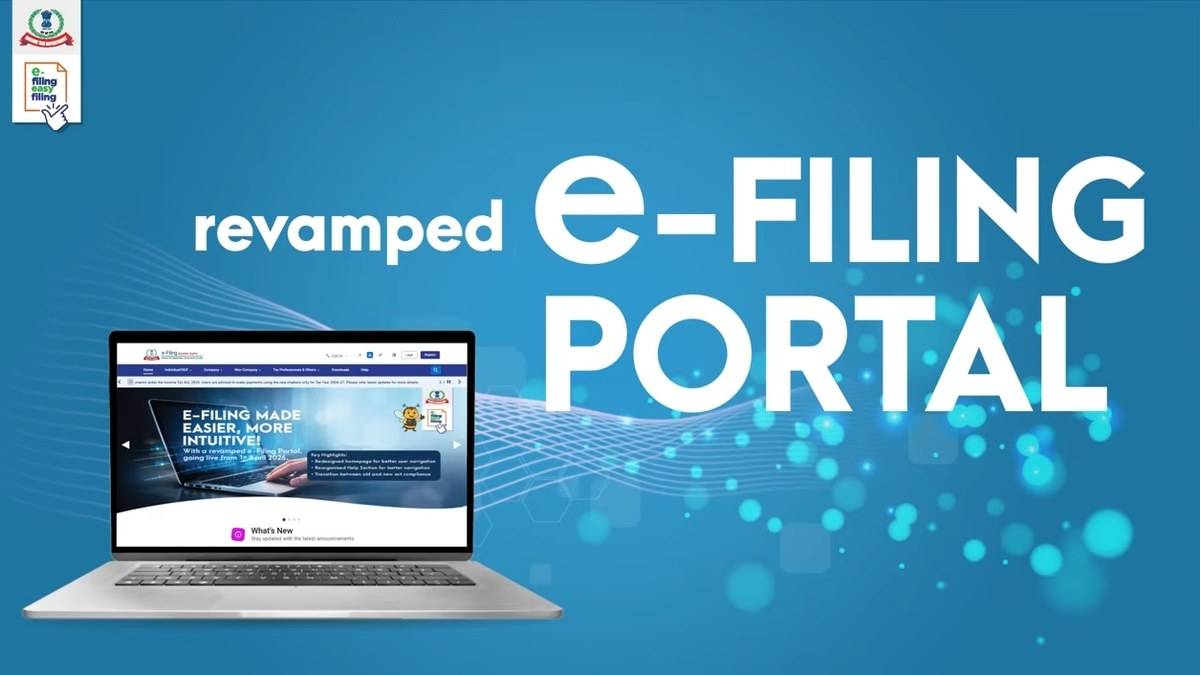
The department's public user manual sets out the following route. A valid portal user ID and password, together with business income in total income, are its listed prerequisites.
- Sign in to the official e-Filing portal. Open e-File, then Income Tax Forms, then File Income Tax Forms.
- Find Form 10-IEA under Persons with Business/Professional Income, or search for Form 10IEA.
- Select the relevant assessment year, continue and review the information shown before choosing Let's Get Started.
- Answer the business or professional income question, select the applicable return due date and confirm the regime selection.
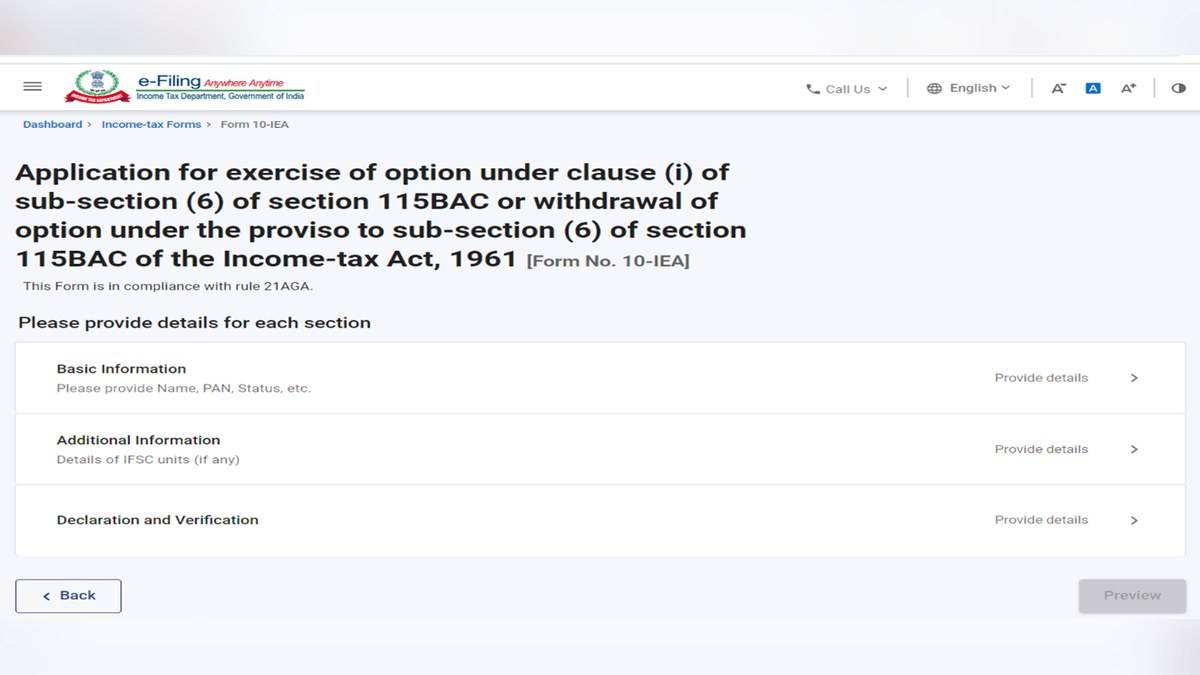
- Review Basic Information, Additional Information, and Declaration and Verification. Save the required sections.
- Preview the details, proceed to e-Verify, complete verification and confirm submission.
Basic Information includes prefilled identity details and the assessment year. The manual says the opting out selection appears for a first filing, while the re-entering selection appears where the system has a valid earlier opting out form. Additional Information concerns IFSC units, if applicable, and is greyed out when opting out.
The FAQs list Aadhaar OTP, an electronic verification code and a digital signature certificate as verification methods. After successful submission, retain the transaction ID and download the form and receipt. The department advises filing the declaration before the ITR because its acknowledgement number and filing date are required in the return.
Can business taxpayers switch regimes every year?
No. The department's AY 2026-27 business taxpayer guidance says re-entry into the new regime is available in a subsequent assessment year and only once. The form FAQs add that after returning to the new regime, the old regime cannot be chosen again except when the person ceases to have business or professional income.
Submitted forms cannot be revised or withdrawn in the same year. To inspect the result, use e-File, Income Tax Forms, View Filed Forms, select forms under the Income Tax Act, 1961, and find Form 10-IEA. Check whether it is valid or invalid. Before completing the return, readers can also review our guides to AIS and TIS records and old regime deduction limits.