Algae and Stench Cloud Silokhra Pond Months After Rs 3 Crore Restoration
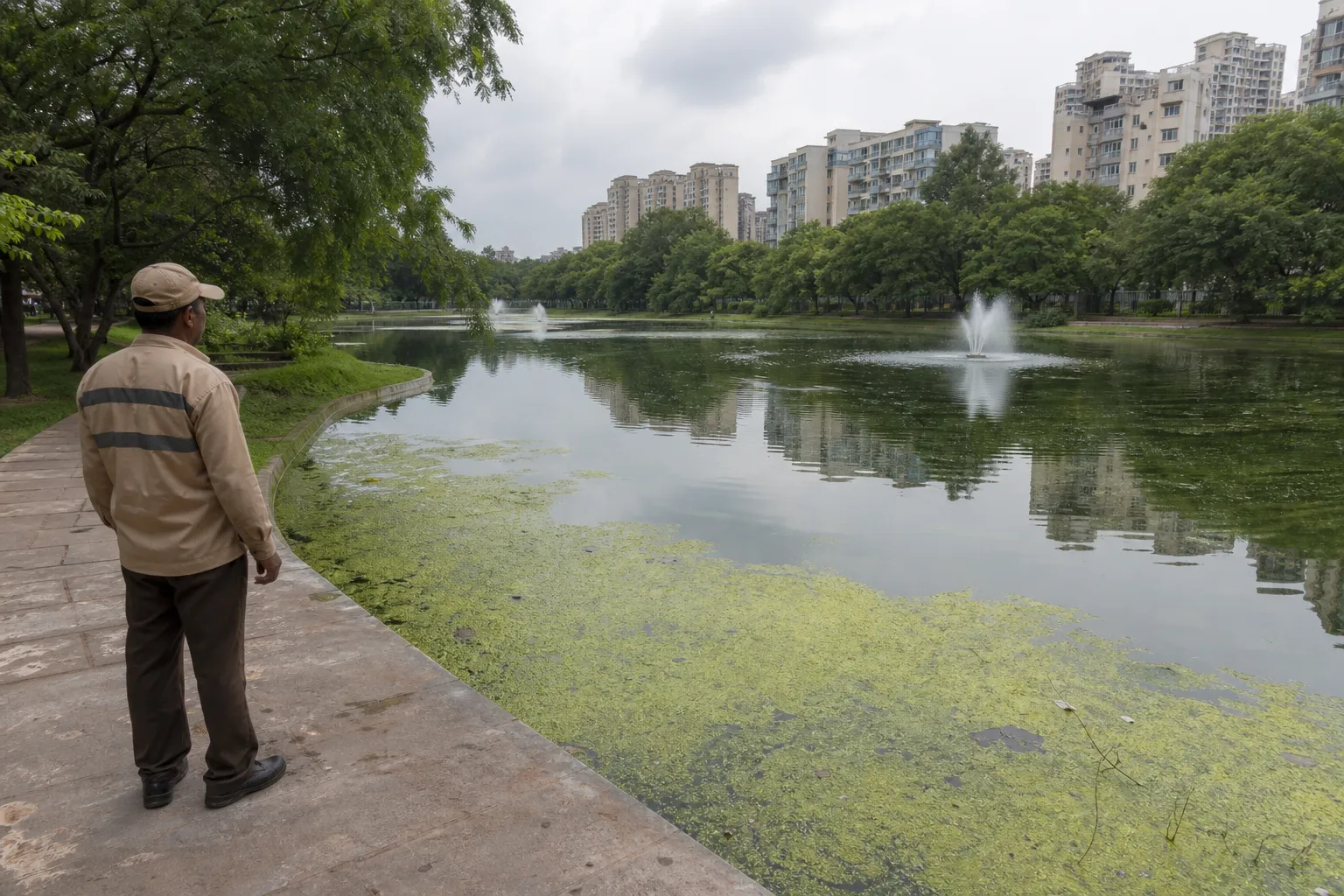
GURUGRAM: Silokhra pond is again at the centre of a neighbourhood conservation debate, barely months after the final phase of its Rs 3 crore restoration was completed. Residents have reported a layer of algae, an unpleasant smell and uneven walking surfaces around the roughly five-acre water body, raising questions about whether the revived pond has received the sustained ecological maintenance it needs.
The restoration was intended to protect a historically important water body while creating a usable public space in a rapidly urbanised part of the city. Work began last year and the final phase was completed in May. Residents say conditions began deteriorating within two to three months, with green growth spreading across parts of the water surface and odour becoming noticeable near the edge.
At this stage, the residents’ concerns about water quality are observational. No independent test result or scientific assessment has been placed in the public domain to establish the cause of the algae or the precise quality of the water. That makes prompt sampling important: a laboratory assessment can distinguish seasonal growth from a larger problem involving nutrient load, circulation or the quality of water entering the pond.
The Gurugram Metropolitan Development Authority has said treated water from a sewage treatment plant formed part of the original restoration design and should not be confused with untreated sewage. Officials have also pointed to installed fountains and said fish will be introduced to support the pond’s ecological balance. A team inspection has been indicated, while upkeep is being handled through a corporate social responsibility arrangement.
Residents, however, want maintenance to move beyond occasional visual checks. Their concerns include regular testing of incoming water, removal of excessive algae, adequate aeration and a clear schedule for inspecting the pathways. Uneven paving near a water body creates a separate safety issue, particularly for senior citizens and children using the site during early morning and evening hours.
Silokhra’s history makes the outcome especially important. The land was recorded as a natural drain area before a commercial development proposal brought the site into dispute. Environmental proceedings eventually led to directions for restoration. Residents who campaigned to protect the pond now see daily upkeep as the real test of that order, not merely the completion of landscaping work.
Urban ponds require active management because treated-water inflow, heat, nutrient levels and slow circulation can quickly change their condition. A credible response would therefore publish basic water-quality readings, identify the source of nutrient buildup and assign responsibility for corrective work. Introducing fish without first confirming suitable water conditions would be premature.
The revived pond still has the potential to become a valuable blue-green space for central Gurugram. But restoration cannot end at a ribbon-cutting moment. Silokhra will need scientific monitoring, transparent maintenance and careful public access if it is to function as a healthy water body rather than a landscaped basin that repeatedly slips into neglect.
Related Stories

Gurugram Court Gives 20-Year Term in POCSO Case

Gurugram Logs 71 Percent Excess Rain in Weekly IMD Spell

GMRL Seeks 40,254 Sq M HSVP Land for Metro Stations

DTCP Seals 27 Buildings, Over 240 Rooms in Colony Drive
HSPCB Gives Sites Four Days to Install Dust Webcams