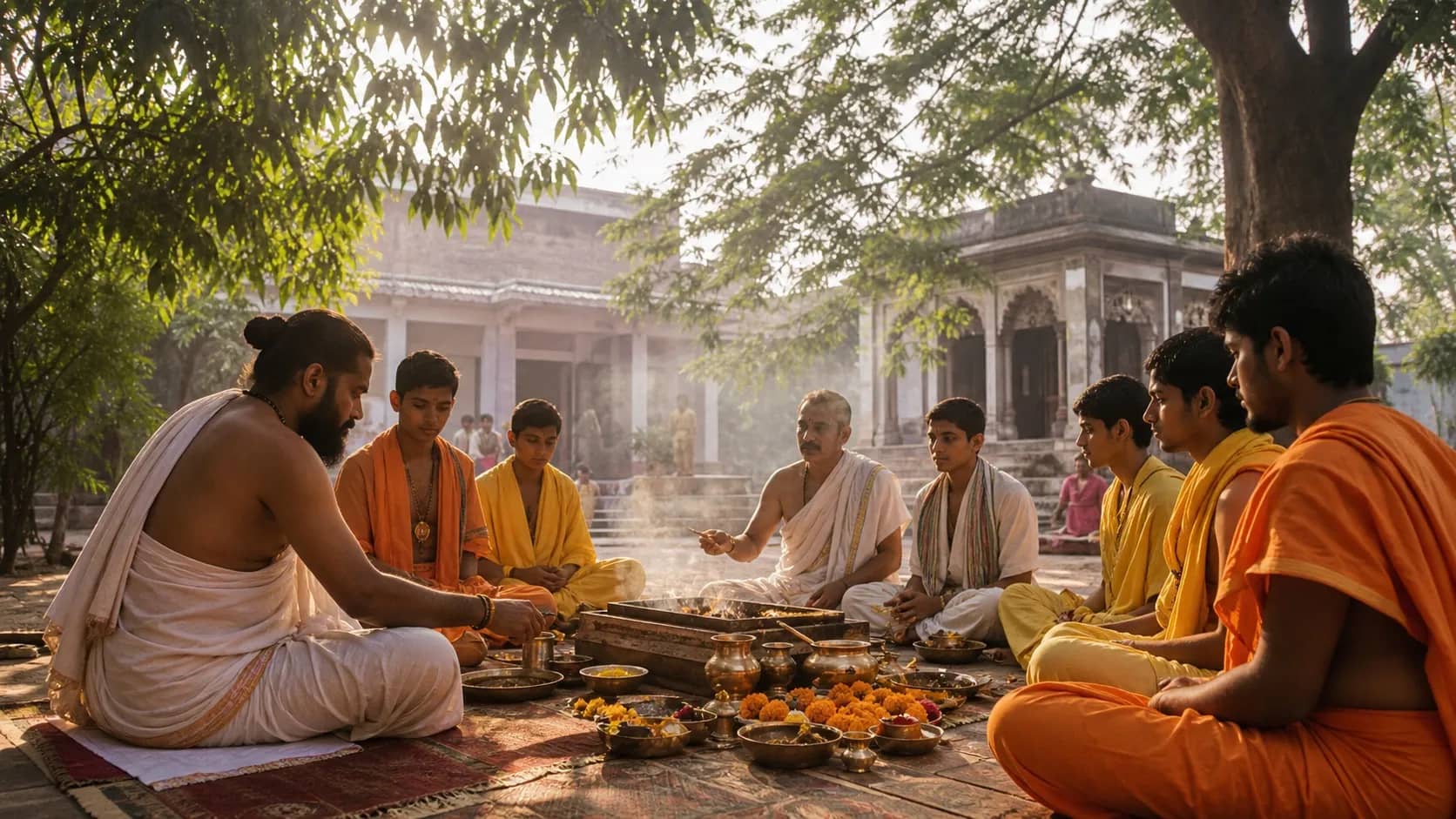
The Sant Shri Kachha Baba Ashram in Chiraigaon observed Shravani Upakarma with a sequence of Vedic rites that brought teachers, students and devotees together on Shravan Purnima. The programme included ritual bathing, rishi tarpan, worship and the replacement of the yajnopavita, or sacred thread.
Unlike a public festival built around spectacle, Upakarma is centred on study, discipline and renewal. Participants begin by undertaking purification rites and remembering the rishis associated with the transmission of Vedic learning. The old sacred thread is then replaced with one consecrated through mantras, marking a fresh commitment to conduct and learning for the year ahead.
At the Chiraigaon ashram, Vedic acharyas guided the ceremony in the prescribed order. The gathering used water, kusha grass and other ritual materials while recitations continued through the programme. Rishi tarpan—the offering of water in remembrance and gratitude—formed a central part of the observance. Worship at the ashram followed before participants completed the sacred-thread change.
The location gives the ceremony a distinctly local character. Chiraigaon lies beyond the busiest temple corridor of central Varanasi, yet the same traditions practised on the city’s ghats remain active in its ashrams and villages. That continuity matters because it shows how Kashi’s ritual calendar is sustained not only by large institutions but also by smaller teaching centres and community networks.
Shravani Upakarma is observed by different Vedic traditions with variations in date and method. The common thread is the annual return to study and self-examination. It is often associated with the recommencement of formal Vedic learning after a period devoted to other religious observances. The act of changing the thread is therefore treated as a visible sign of an inward pledge, not merely as a ceremonial formality.
For younger students, taking part alongside experienced acharyas is also an exercise in learning by practice. The order of the rites, pronunciation of mantras and handling of ritual materials are difficult to understand from written instructions alone. A collective observance allows that knowledge to be demonstrated and corrected in real time.
The programme at Kachha Baba Ashram concluded with participants taking new resolutions linked to purity, study and ethical conduct. In a city where ancient customs can sometimes be reduced to tourist imagery, the Chiraigaon ceremony offered a quieter picture: a living tradition being repeated, taught and carried forward within the community that practises it.
The ashram’s observance also carried a record-keeping value for the community. Annual ceremonies allow organisers to compare participation, identify younger learners ready for greater responsibility and keep a chain of teachers connected across generations.