
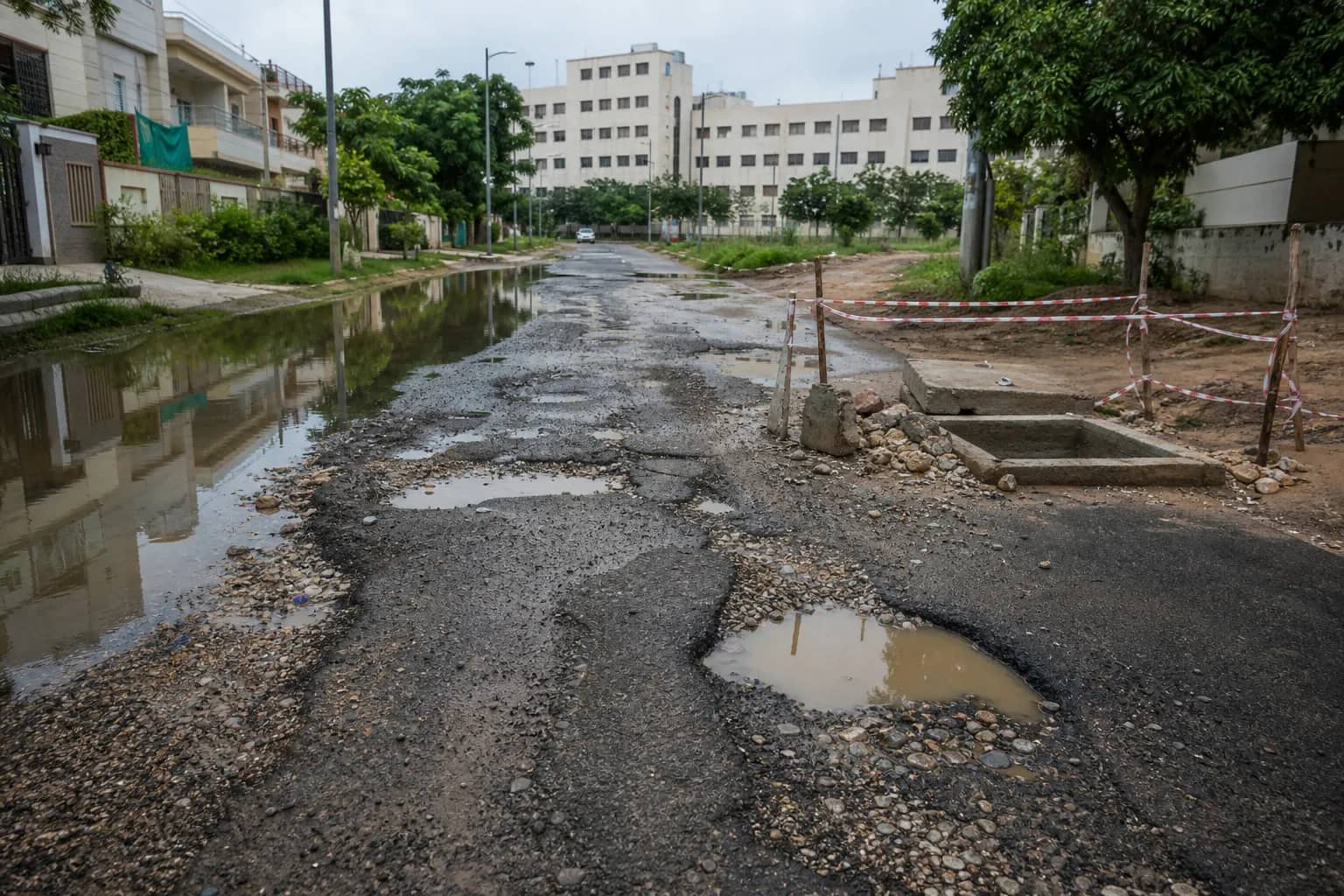
GURUGRAM: Sector 10's monsoon trouble is no longer confined to the hour it rains. Residents say water remains on key stretches, potholes deepen around the neighbourhood and open utility chambers create hazards on routes used by more than 2,000 families and visitors to Gurugram's Civil Hospital.
Recurring waterlogging has been reported near a local school, the bus depot and along Basai Road towards the hospital. Residents describe knee-deep water at the worst points after heavy showers. That depth is a local account rather than a city measurement, but photographs and repeated complaints indicate that drainage remains inadequate at several pockets.
Hospital access magnifies a neighbourhood failure
A broken internal road is inconvenient anywhere; near an emergency hospital it can delay ambulances, patients and staff. Potholes hidden below muddy water are difficult for two-wheelers to judge, while autos and cars brake suddenly or move into the opposite lane to avoid them. Pedestrians are left to choose between the carriageway and submerged edges.
Residents have also flagged uncovered sewer or rainwater-harvesting chambers. These require immediate rigid barricades and lids, not a painted stone placed nearby. Even a shallow sheet of water can hide an opening completely, turning a drainage defect into a fall or vehicle hazard.
MCG says desilting work under way in the sector has contributed to temporary disruption and that conditions should improve after completion. The corporation has tenders in place and says pumps and suction tankers are being deployed where water accumulates. A drainage project valued at about Rs 5.5 crore is around halfway complete, with the balance expected to resume after the monsoon.
The agency has also indicated that bituminous road repairs will follow the drain work. That order can avoid laying a fresh surface only to cut it again, but it leaves residents with a difficult interim period. Temporary patching, safe trench covers and continuous access to the hospital cannot wait for the final road contract.
Stray cattle add another moving risk
Residents say cattle wandering on damaged and waterlogged streets are making traffic less predictable. MCG estimates that more than 7,000 stray cattle remain across Gurugram and launched a fresh capture campaign on 21 August with four teams after problems with an earlier contractor. City-wide numbers do not show how many animals are in Sector 10, so daily ward-level removal data would be more useful.
The sector needs one coordinated site plan rather than separate responses from road, sewer, drainage and veterinary teams. It should mark every standing-water point, damaged road patch, open chamber and active excavation, with a responsible officer and expected closure date.
Residents can reasonably accept that permanent bitumen work is poor practice during frequent rain. They should not be asked to accept invisible manholes, unmarked pits or an unusable emergency route. Those are immediate safety issues and can be managed before the monsoon ends.
Sector 10's test is straightforward: water should drain within a defined period after rain, the Civil Hospital must remain accessible, and every open chamber must be secured. Until those basics are visible on the ground, percentages of project completion will offer little comfort to the families navigating the same hazards each day.