Sarnath Tourism Push Takes Centre Stage At International Buddhist Seminar
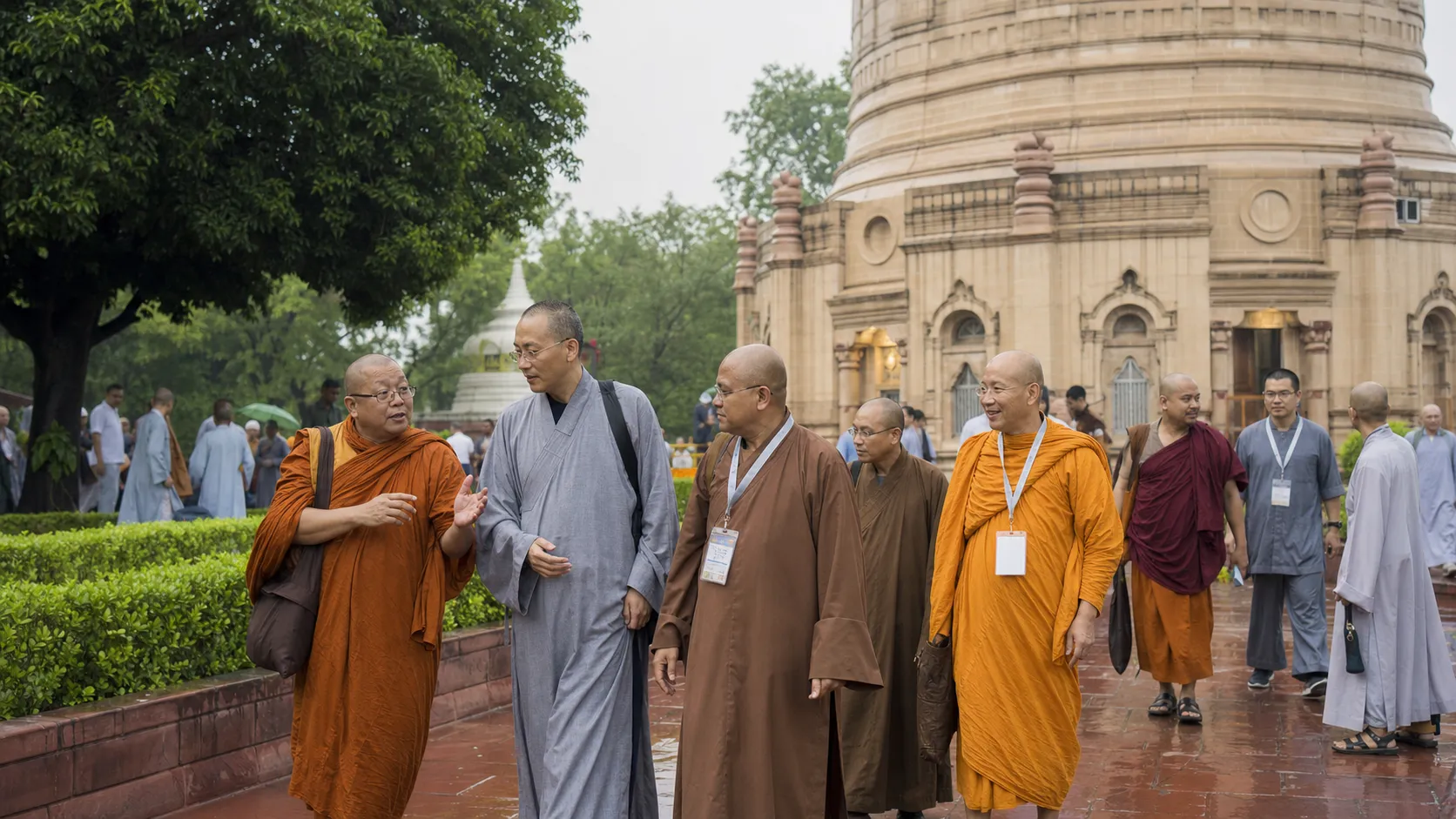
VARANASI: Sarnath’s next chapter as a global Buddhist destination came into focus on Wednesday as monks, scholars and officials gathered at Mulagandha Kuti Vihara for an international seminar marking Ashadha Purnima and Dhammachakka Pavattana Day.
The two-day programme is significant because it moves the conversation beyond Sarnath’s new World Heritage recognition. The immediate question for the city is what happens after the celebration: how the site handles larger international footfall, improves the visitor experience and protects the calm that gives the Buddhist circuit its character.
Uttar Pradesh Tourism and Culture Minister Jaiveer Singh, who attended the inaugural session, said the state was working to develop Sarnath as a global centre of Buddhist tourism. He placed better facilities for Indian and overseas visitors at the centre of that effort. The announcement did not come with a new project list, but it set a clear administrative direction for the heritage zone.
Sarnath is where the Buddha delivered his first sermon after enlightenment, making it one of the most important sites in the Buddhist world. Visitors from Sri Lanka, Thailand, Japan, Myanmar, Tibet and several other regions are a familiar part of its streets. Yet the area must balance pilgrimage, archaeology, neighbourhood life, transport and commercial activity within a relatively compact landscape.
That balance matters more now. Global recognition can raise visibility quickly, but a destination is judged on details: clean walking routes, dependable information, accessible public facilities, multilingual interpretation, sensible traffic management and respect for sacred spaces. Local traders and guides also need a fair place in the tourism economy rather than being pushed to its edges.
The seminar was organised jointly by the International Buddhist Research Institute under the state culture department and the Mahabodhi Society of India. Its central theme examined the significance of Dhammachakka Pavattana Day. Monks and scholars from India and abroad joined the discussion, connecting the history of the first sermon with contemporary ideas of peace and compassion.
The timing gives the gathering an added layer. Sarnath has recently been recognised as India’s 45th World Heritage Site and the fourth in Uttar Pradesh. The status brings prestige, but it also increases responsibility. Conservation rules, local planning and tourism promotion will now be watched more closely by residents as well as the global heritage community.
For Varanasi, the opportunity is wider than a single monument. A well-managed Sarnath can extend visitor stays, create work for trained guides and hospitality workers, and strengthen the city’s place on the international Buddhist circuit. Poorly managed growth, however, could produce congestion and erode the reflective atmosphere people come to experience.
The seminar continues with academic and cultural sessions. Its most practical message is that Sarnath’s global profile must now be matched by patient work on the ground. Heritage recognition opens the door; thoughtful city management will decide what visitors find when they walk through it.
Related Stories
Hindi Diwas Marked Across BHU, Sanskrit University and Kashi Vidyapith
Lohta Police Register FIR After Bhitari Villager Alleges Hostage Beating
Baragaon Police Book Named Youths After Kazisaray Tea-Stall Assault and ₹1,900 Loot
Mayor Announces Stricter MCG Drive Against Stray Cattle
Ganeshotsav Opens Across Varanasi Pandals With Modak Bhog and Pran Pratishtha