Sarnath Becomes India’s 45th UNESCO World Heritage Site
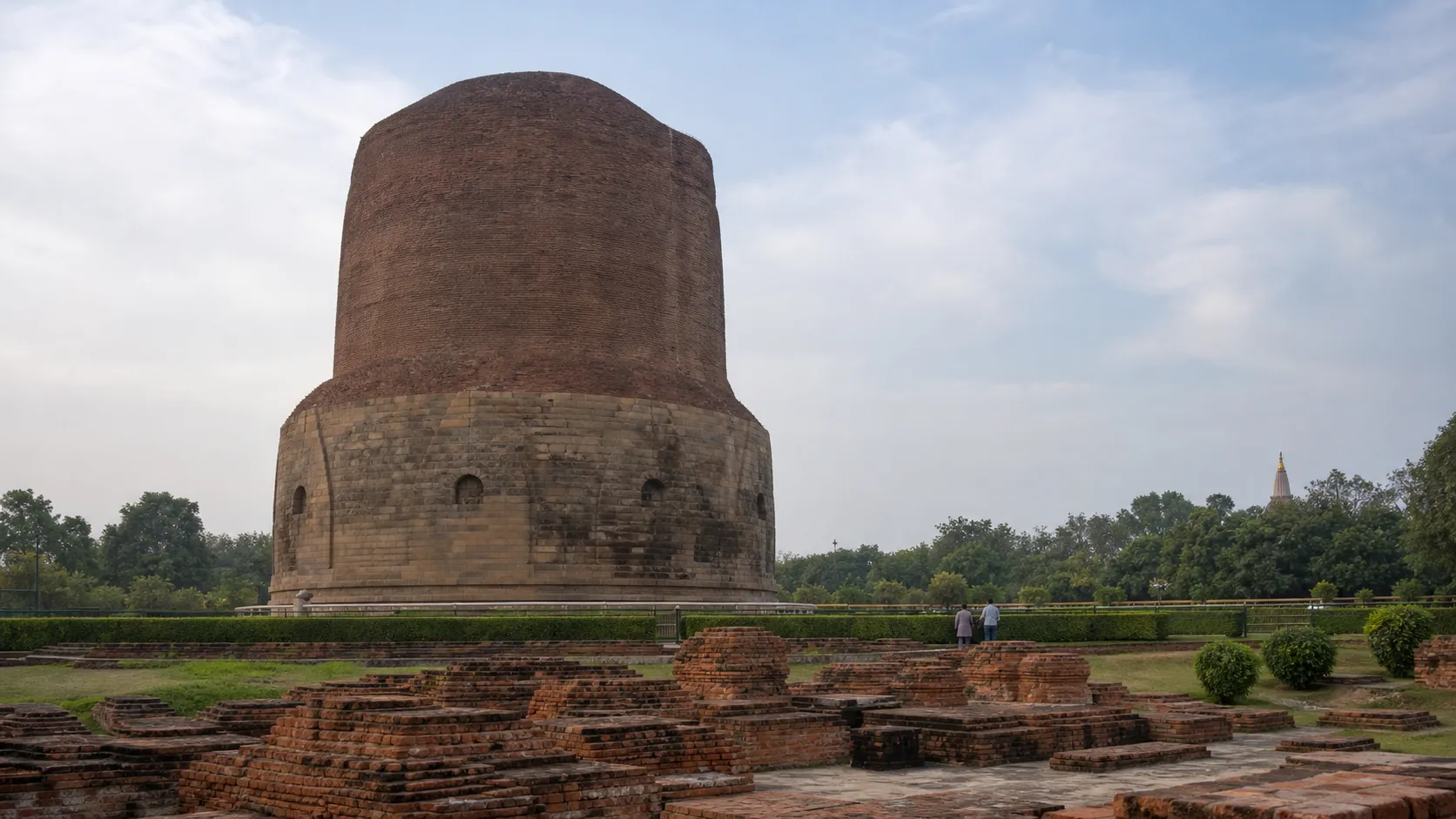
Sarnath has entered the UNESCO World Heritage List, giving Varanasi one of its most significant cultural milestones in years. The Ancient Buddhist Site of Sarnath was inscribed on July 25 during the 48th session of the World Heritage Committee in Busan, Republic of Korea, becoming India’s 45th World Heritage property.
The recognition covers the architectural and archaeological remains associated with the place where the Buddha is believed to have delivered his first sermon and met his earliest disciples. For more than 2,500 years, Sarnath has remained a centre of Buddhist memory, pilgrimage and scholarship, even as the physical site went through long cycles of growth, decline, excavation and conservation.
UNESCO’s listing records the property under cultural criteria (iii) and (vi). The core property covers 8.05 hectares, supported by a 72.2-hectare buffer zone. Those figures matter on the ground because World Heritage status is not a decorative badge placed only around the Dhamek Stupa. It brings attention to a wider archaeological landscape of stupas, monasteries, temple remains and spaces still used by pilgrims from India and abroad.
For Varanasi residents, the immediate reaction is naturally one of pride. Sarnath has always carried global importance; the inscription formally places that importance within UNESCO’s international conservation framework. The harder work begins after the celebration. Visitor pressure, traffic, roadside commercial growth, waste management and construction around the buffer zone will now require even more careful handling.
The designation does not automatically rebuild footpaths, fix every approach road or create unlimited funding. Nor does it remove the role of Indian authorities in managing the site. What it does is raise the standard by which planning decisions will be judged. Any intervention near the protected landscape must respect the qualities for which Sarnath was inscribed, including its archaeological evidence and continuing spiritual association.
That means local agencies will need a joined-up plan rather than isolated beautification. The Archaeological Survey of India, district administration, tourism department, development bodies and civic teams have different responsibilities, but visitors experience Sarnath as one place. Signage, parking, pedestrian movement, drainage, street-vendor organisation and accessibility should work together without turning the archaeological zone into an over-designed theme park.
The listing can also create new opportunities for local guides, artisans, small hotels and responsible cultural tourism. Those gains will be stronger if interpretation improves and visitors are encouraged to stay longer, understand the site and explore it respectfully instead of treating the stupa as a quick photo stop. Training for guides and clear multilingual information would help connect the archaeology with the living traditions around it.
Sarnath’s new status is a global recognition of a place Banaras has long understood as exceptional. The real measure of the moment will be visible a decade from now: whether the ruins are better protected, whether the neighbourhood develops sensitively and whether pilgrims, scholars and local families can still encounter the quiet historical depth that made the site worthy of the World Heritage List.
Related Stories
Manduadih Police Arrest Raju Rajbhar After Paan-Shop Theft Opposite a Picket
Kashi Vishwanath CEO Vishwa Bhushan Mishra Transferred to UPSSSC as Deputy Secretary
Varanasi Waste Hits About 1,100 Tonnes a Day; Nagpal Orders Karsada Capacity Lift

Kashika Colours-and-Ragas Festival Opens at Town Hall With Nirala Staging and Mishra Recital
House Owner Allegedly Manhandles DTP in Sushant Lok Demolition