Sampurnanand Sanskrit University Convocation Honours 11,958 Students
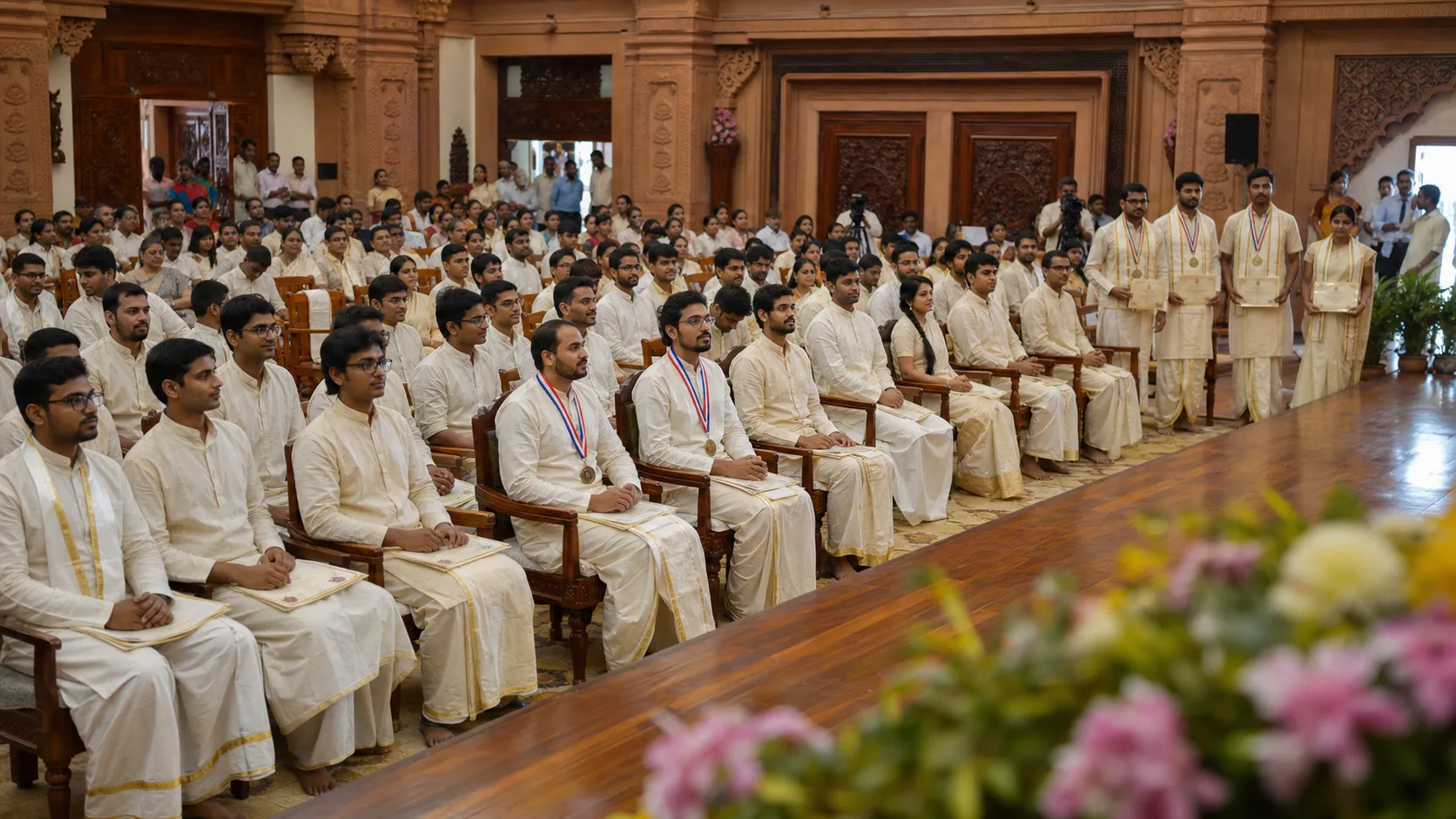
VARANASI: Sampurnanand Sanskrit University completed its 44th convocation on Wednesday, awarding degrees and certificates to 11,958 students and placing the future of Sanskrit education, manuscripts and campus standards at the centre of the ceremony.
Governor Anandiben Patel, who serves as chancellor of the state university, presented medals to meritorious students and addressed teachers, graduates and guests. A total of 51 gold medals went to 29 students who secured the highest marks in their examinations. Seventeen male students received 35 medals, while 12 female students received 16.
The ceremony was the culmination of weeks of preparation on the historic campus. Previous Dalimss reports covered the new venue, competitions and readiness work. Wednesday’s event was the actual academic milestone: thousands of students formally closed one stage of study and stepped into teaching, research, priesthood, public service and other careers.
Patel asked young people to connect education with responsible conduct and public contribution. She also raised concerns about excessive mobile-phone use, online language and the pressure of digital culture. Her remarks were pointed, but the more useful question for the university is how an institution built around classical knowledge can help students navigate a modern information environment without becoming cut off from it.
The governor also turned attention to campus cleanliness and asked teachers to prioritise the university’s development. For a 235-year-old institution, maintenance is not a cosmetic issue. Students and researchers work in a living heritage campus where classrooms, libraries, manuscript collections and public spaces all require sustained care.
Manuscript preservation received particular emphasis. Patel said the condition of the collection had concerned her during an earlier visit, while progress had since been made under the university’s conservation efforts. The work matters because manuscripts are not valuable merely as old objects; they are research material that must be catalogued, preserved, studied and made accessible without exposing fragile originals to unnecessary damage.
The university draws students from Uttar Pradesh and from states including Bihar, Rajasthan, Maharashtra, Punjab, West Bengal, Jharkhand, Sikkim, Jammu and Kashmir, and Uttarakhand. That national footprint gives Sampurnanand a role beyond Varanasi. It trains scholars and teachers who carry Sanskrit and Indian knowledge traditions into institutions across the country.
Four teachers were also honoured for work in teaching, research and academics. A school student who spoke Sanskrit fluently received appreciation, prompting a call for the university to train more children in conversational Sanskrit and connect younger learners with manuscript heritage.
The convocation did not need to choose between tradition and the present. Its strongest moments suggested that the two must work together: ancient texts preserved with modern methods, classical languages taught with contemporary clarity, and graduates encouraged to build careers without losing intellectual discipline.
For the students leaving with medals, degrees and family photographs, the ceremony will be remembered as a personal achievement. For the university, it begins another year of harder, less visible work—improving the campus, supporting research and proving that a historic centre of learning can remain ambitious in 2026.
Related Stories

Railways Orders Weekly Puja Special 09465 via Varanasi Through November
Hindi Diwas Marked Across BHU, Sanskrit University and Kashi Vidyapith
Lohta Police Register FIR After Bhitari Villager Alleges Hostage Beating
Baragaon Police Book Named Youths After Kazisaray Tea-Stall Assault and ₹1,900 Loot

Mayor Announces Stricter MCG Drive Against Stray Cattle